Buying From a Wholesale Grower When You Are Not in the Trade
Catchment groups, schools, trusts and landowners can buy from New Zealand wholesale growers when they order like the trade: in quantity, a season ahead, on the grower's terms. This page explains who sells to whom, what an NZBN and GST change, grades from root trainers to PB bags, eco-sourcing and proof of it, lead times and Plant Pass.
Updated 25 September 2026. Figures from the live nz.hortosapp.com plant pages and regional hubs on 24 September 2026; medians will follow with the first New Zealand edition of the HortOS Plant Price Index.

On this page
A catchment group with a stream margin to fence and plant, a school with a bare bank, a landowner with a wetland to restore, a marae planting its reserve: each finds a wholesale nursery's availability list, sees a root trainer cell priced at a dollar or two and a PB3 bag at a few dollars more, and asks the same question. Can we buy from these people, and how? The answer that matters most is that a wholesale grower sells to whoever behaves like the trade: orders in quantity, orders a season ahead, collects or arranges freight, and pays on the grower's terms. Whether you hold an NZBN matters less than whether your order is worth a grower's morning.
This page gathers what the Department of Conservation says about eco-sourcing and community nurseries, what Tāne's Tree Trust and the New Zealand Plant Conservation Network say about provenance and about choosing nursery-raised seedlings, what Inland Revenue and business.govt.nz say about GST, what the NZBN register says about business numbers, and what New Zealand Plant Producers Incorporated and Plant Pass say about the nursery industry and its biosecurity standard. It adds what is printed on HortOS, a free directory of New Zealand wholesale plant growers with their published availability and trade prices. It summarises that advice and is not a substitute for asking the grower or your accountant.
Quick facts
| Who can buy | Each grower sets its own terms: some sell to anyone who orders in quantity, some to trade accounts only, most sit between. The grower's page and list say which; if neither does, ask. |
|---|---|
| The NZBN | Needed to sign up and order on HortOS. The NZBN register describes it as a unique identifier available to every New Zealand business, with an application path for charities and other organisations. |
| GST | Trade list prices are ex GST. Add 15 per cent unless your organisation is registered and claims it back. Registration is compulsory once turnover reaches $60,000 in any 12 months (Inland Revenue). |
| The sizes to buy | Root trainers, tubes and cells for a large planting; PB2 and PB3 planter bags for most revegetation (Tāne's Tree Trust); PB5 and larger pots where a plant must look planted on day one. |
| Eco-sourcing | Seed or cuttings from nearby, similar ecosystems; the Ecological District framework is the starting point, and a nursery that grows and specialises in eco-sourced plants is the one to buy from (Department of Conservation). |
| Lead time | The main growing season runs from August to the end of December (Department of Conservation), so stock for a winter planting is sown the spring before. Order a season ahead, and for eco-sourced stock a year ahead. |
Who sells to whom, and how to tell
New Zealand Plant Producers Incorporated, the industry body, describes its members as the nursery businesses that propagate and grow seedlings and rootstock for revegetation and ecology, food and wine, homes and gardens, and public amenity plantings. Some of those businesses sell only to landscapers, councils and garden centres; some sell to anyone who orders a tray; many community groups grow their own, which is why the Department of Conservation publishes a guide to establishing a community nursery for groups with several restoration projects or one large one running over several years. The line between trade and public is real but it is not a wall, and the grower decides where it sits.
On HortOS, three places tell you where a grower stands.
- The grower's page. Every grower in the directory has a page with its contact details and its current list, and a grower that has set a minimum order shows it there.
- The list itself. A line can be priced or price on application, and the grower's note beside a line tells you the unit: a T28 tray, a root trainer, an Ellepot cell, a PB3 bag.
- The plant page. Every plant page shows who lists that plant, by region and by grade, with the date each list was last updated. The page for cabbage tree (Cordyline australis) showed 38 growers on 24 September 2026, six of them in Auckland, five in Waikato, five in Northland and four in Canterbury, in 51 grades from cells to 700 mm pots.
If a grower's page says nothing about who it sells to, email and ask three things: whether it sells outside the trade, what the minimum is, and whether you can collect. HortOS itself is a trade platform. Reading the directory and the prices needs no account; ordering through it needs a trade sign-up with an NZBN, and every order goes to the grower to confirm. The terms are each grower's own, and HortOS never answers about stock or terms on a grower's behalf.
The NZBN, GST and what a trade account changes
The New Zealand Business Number register describes the NZBN as a globally unique identifier available to every New Zealand business, from the self-employed to a major corporation, and its application pages cover charities and other organisations alongside companies, partnerships and trusts. Most catchment groups, trusts and school boards already hold one; the register shows whether yours does.
GST is the part that changes the arithmetic. Inland Revenue says an entity must register when its turnover from a taxable activity was at least $60,000 in the last 12 months or is expected to be in the next 12, or when it adds GST to its prices; business.govt.nz puts the rate at 15 per cent and notes that a registered business claims back the GST it pays. Trade lists and the HortOS plant pages quote prices ex GST. A registered organisation pays the GST and claims it back; an unregistered group pays it and keeps the receipt. So a cell listed at $2.00 costs an unregistered group $2.30 before freight.
A trade account with a grower is usually an application with your NZBN, delivery address and a contact, followed by the grower's terms: payment before dispatch for a new account, an invoice on terms once you are known, and the minimum. Signing up on HortOS asks for the NZBN. Neither costs anything, and neither changes the list price; what changes is the grower's willingness to hold stock and invoice you.
Grades, trays and pooling an order
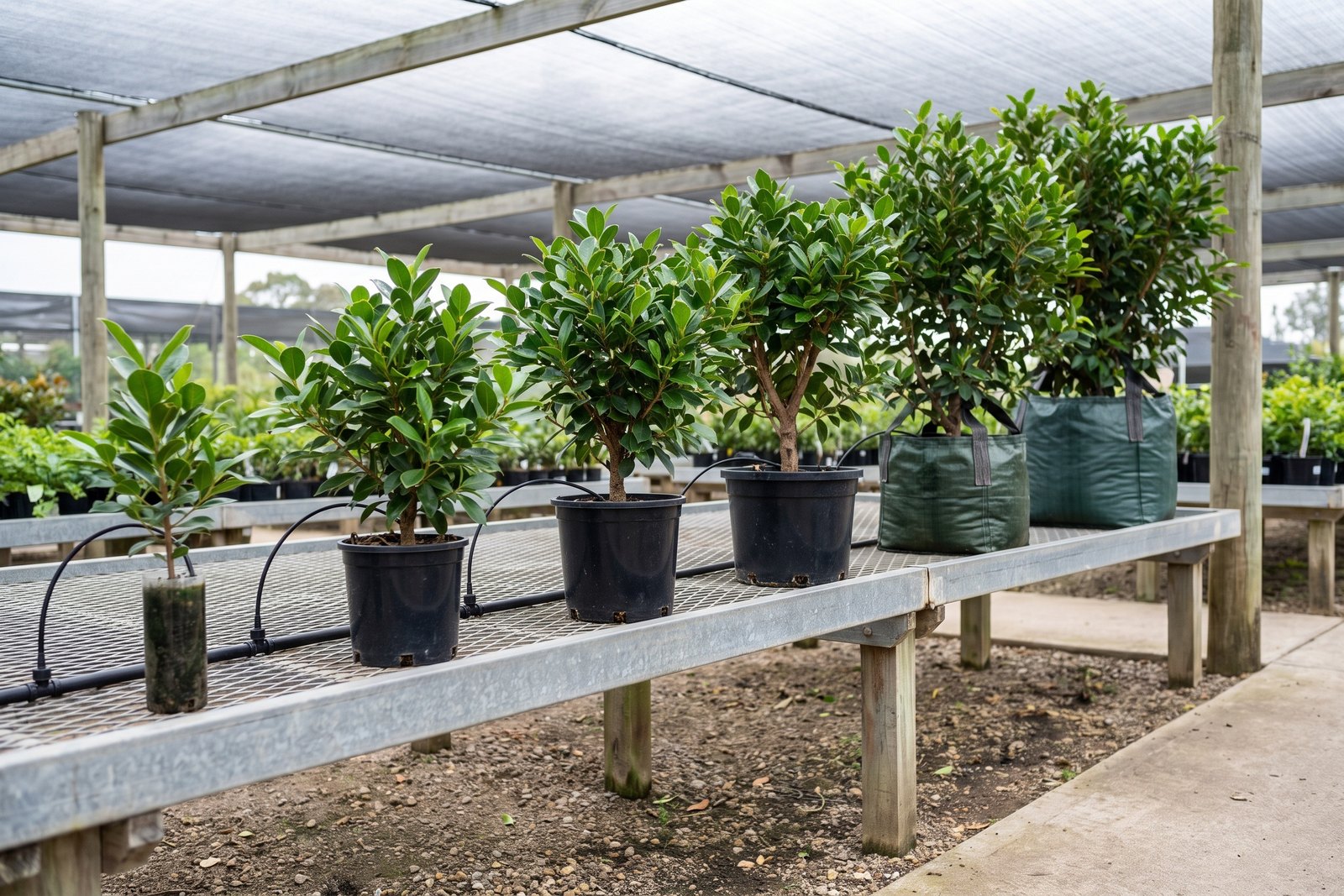
Tāne's Tree Trust, in its factsheet on selecting nursery-raised native seedlings, describes the containers New Zealand nurseries use for large-scale revegetation: planter bags of flexible black polythene in grades PB three-quarter, PB2 and PB3, about 10 to 15 cm across and 14 cm high, solid plastic pots such as the RX90 at a similar size and cost, root trainers, and cells. It says the cost of seedlings varies with the grade of the bag and the size of the order, that seedlings left too long in a container end up with distorted roots, and that the size, quality and grade should be checked at the nursery by pulling a sample out of its container, whether the order was pre-ordered or not. The Department of Conservation's community nursery guide describes the same ladder from the other end: seedlings pricked out into root trainers or tubes and grown on to PB2, PB5 or PB8 before planting.
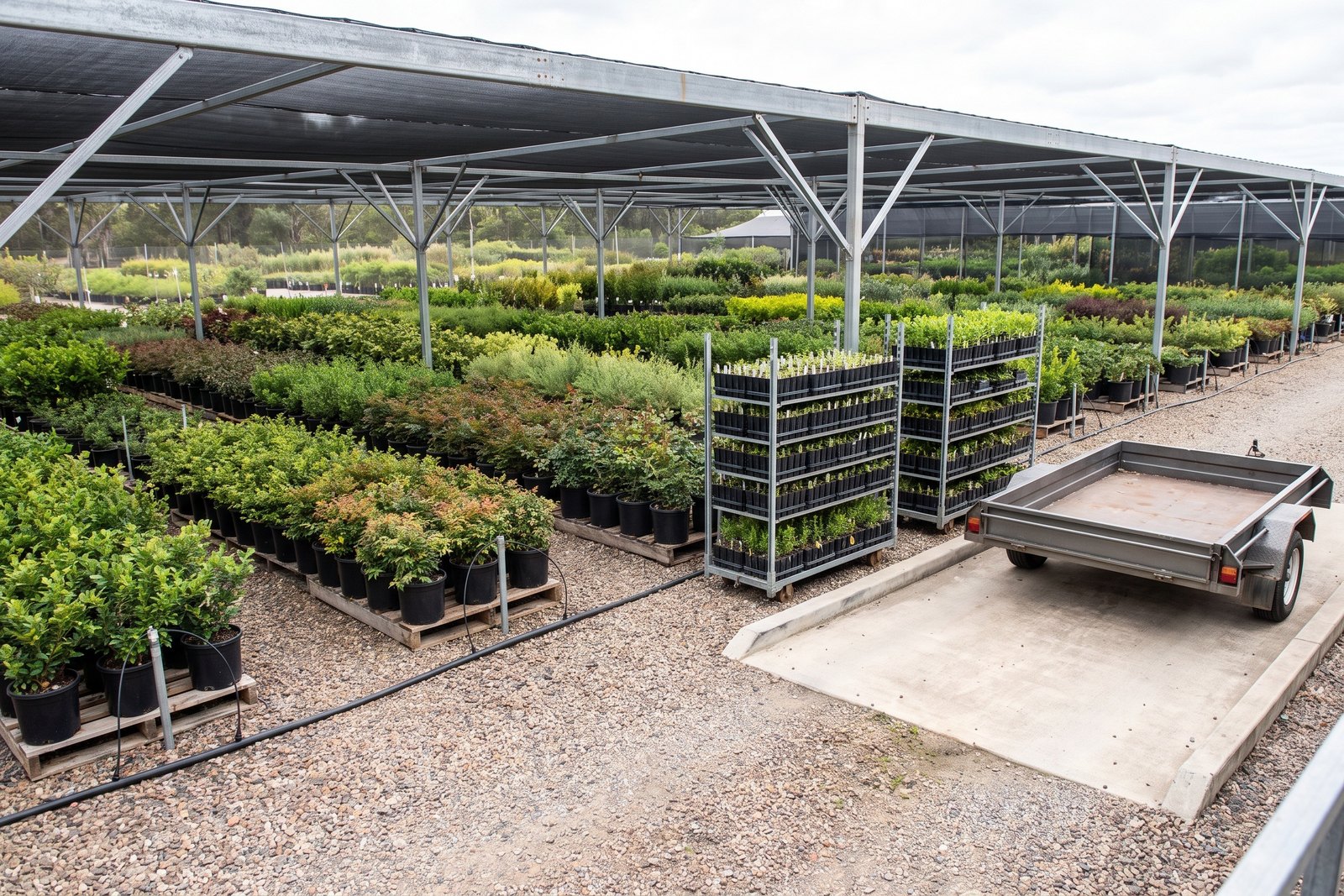
That ladder is the reason for minimums. Cells and root trainers are grown as a tray, and a line listed on HortOS as a T28 tray, a 35F, an RT or an Ellepot is telling you the unit it was grown in; pulling six cells out of a tray for one buyer costs more in handling than they earn. The answer for a small buyer is to pool: a catchment group orders for several landowners in one consignment, a school joins a council's planting order, a trust orders for a season of working bees.
The plants that make up most of a riparian or wetland order are the ones New Zealand growers list most. Compiled from growers' current lists on HortOS on 24 September 2026, the most listed natives were cabbage tree (Cordyline australis, 38 growers), mountain ribbonwood (Plagianthus regius, 33), tōtara (Podocarpus totara, 33), mountain flax (Phormium cookianum, 35), harakeke (Phormium tenax, 31), kahikatea (Dacrycarpus dacrydioides, 26), kōwhai (Sophora microphylla, 26), Carex secta (26), Carex virgata (27), mānuka (Leptospermum scoparium, 27), lancewood (Pseudopanax crassifolius, 24), silver tussock (Poa cita, 23) and oioi (Apodasmia similis, 23). Every one of those plant pages lists cells or root trainers as well as bags, and most list a 1 litre or 1.5 litre pot between them. HortOS shows each grower's own published price beside its line; it does not yet publish New Zealand medians, because a median needs several growers pricing the same grade on trade lists, and the first New Zealand edition of the HortOS Plant Price Index is still being prepared.
Eco-sourcing: asking for local stock
A native plant is not necessarily a local plant. The Department of Conservation defines eco-sourcing as collecting seeds or cuttings from nearby, similar ecosystems to grow native plants for restoration, and says it applies its eco-sourcing guidelines in regulatory work, including as conditions on resource consents. Its guidelines use the Ecological District and Region framework as the starting point, 85 regions and 268 districts, with the nearest source within the adjacent district at furthest, and its seventh guideline is the one for a buyer: if purchasing plants from a nursery, support one that grows and specialises in eco-sourced plants. The New Zealand Plant Conservation Network adds why it matters for particular species: mānuka, kānuka and kōwhai show marked genetic variation between populations, kānuka has been split into at least eight species, and planting the wrong one mixes populations that never grew together.
Tāne's Tree Trust is blunt about the nursery end. Assurance that stock is eco-sourced relies on the integrity of the nursery and on evidence such as seed collection records linked to labelled beds of seedlings; it is up to those paying for the seedlings to demand proof and to check they are getting eco-sourced stock; and the growth of growing-on lines, where one nursery buys young seedlings from another and grows them to planting height, makes provenance harder to track. For a buyer that means three questions: where did the seed for this line come from, can you show the collection record, and can you grow to order from seed collected in our district. A nursery that specialises in eco-sourced stock will answer all three; a production nursery growing a national range may not be able to.
Lead times, freight and biosecurity
- Order a season ahead. The Department of Conservation's community nursery guide says the main growing season runs from August to the end of December, when seedlings are pricked out and potted on. Stock for a winter planting was sown the spring before, and eco-sourced stock grown to order needs a year. A grower's list on HortOS shows what it holds today, with the date it was updated: useful for a top-up order and no guide to next winter.
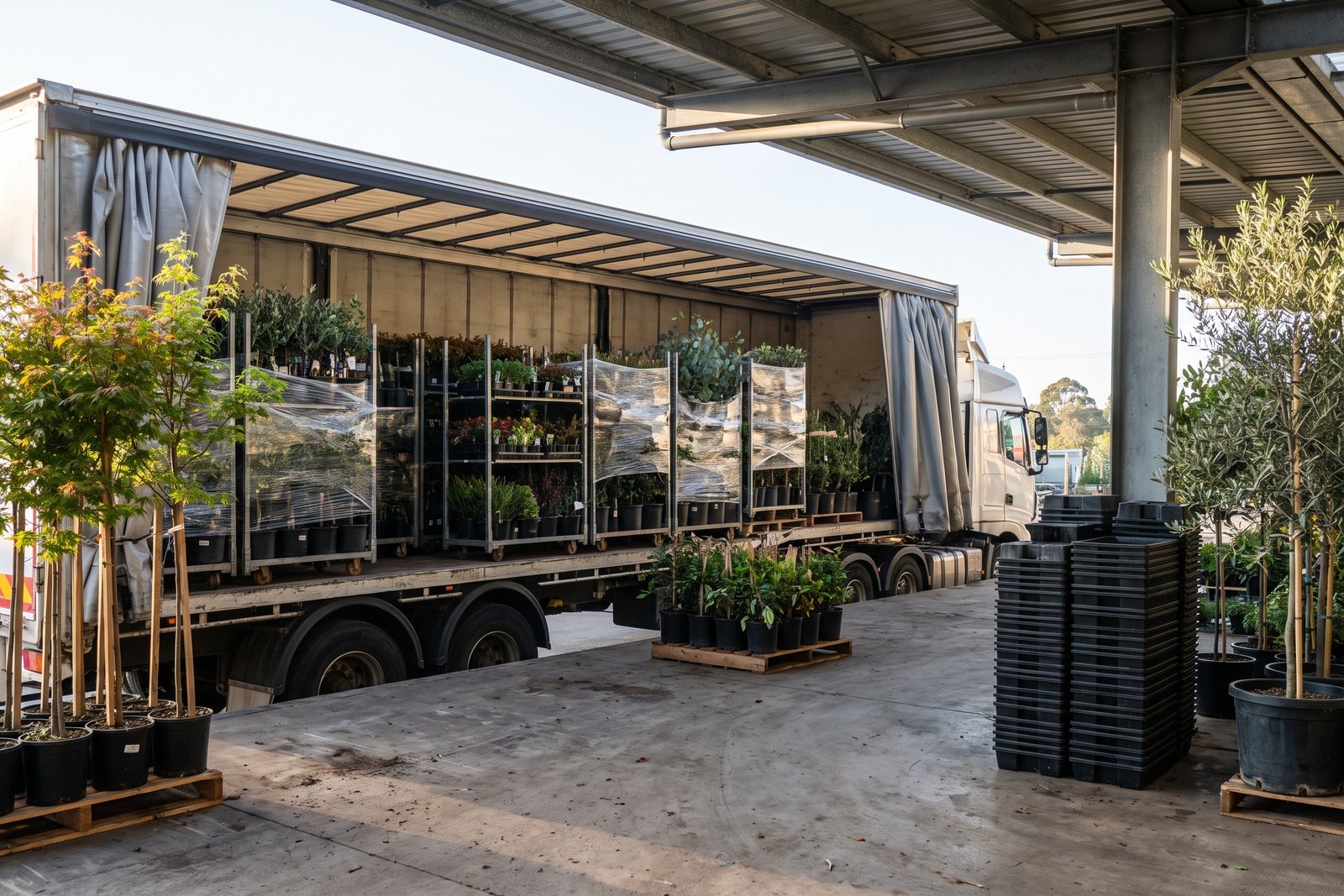
- Collect where you can. Trade prices never include freight, and cells travel best in their own trays over a short distance. Growers cluster: the Auckland, Canterbury, Waikato, Bay of Plenty and Northland hubs list the most, with Wellington and Otago behind them, each by town.
- Check the biosecurity standard. Plant Pass describes itself as New Zealand's nursery production standard for plant health and biosecurity, co-designed by industry and government since 2022, and keeps a register of certified producers. A council or funder may ask for it, and for plantings near remnant bush it is the cheapest insurance against carrying a pest in on a tray.
What to watch for
- Treating the list price as the delivered price. Add GST if you are not registered, then freight, then guards, stakes and releasing; the plants can be the smaller half of a revegetation budget.
- Ordering in the planting season. Winter stock was sown the previous spring. An order placed in June buys what is left.
- Reading native as local. A cell of mānuka from a national grower may carry seed from another district. Ask, and specify, if eco-sourcing matters to the site, the consent or the funder.
- Asking a grower for six plants. Below the minimum you are asking for retail service from a business that does not offer it. Pool, or buy the six from a garden centre.
- Taking the grade on trust. Tāne's Tree Trust says to pull a sample from its container at the nursery and look for root-bound or distorted roots before the order leaves.
Getting it right
- Settle the species list with your regional council's planting guide for the ecological district, and set quantities from the spacing for the site.
- Shortlist growers on the regional hub and the plant pages: in your region, listing the grades you need, with a list updated recently.
- Check your organisation's NZBN and GST registration, then sign up on HortOS or apply for the grower's own account.
- Email three growers with species, quantities, eco-sourcing requirement, planting date and whether you will collect, and ask each for a written quote ex GST with a dispatch date.
- Order a season ahead, a year for eco-sourced stock grown to order, and order guards and stakes at the same time.
- Confirm the count and the date a week before collection, and check a sample of roots before the trays leave.
A word of caution
The grower counts on this page are what the HortOS plant pages printed on one date; the live pages change as lists arrive, so a figure there may differ from the ones quoted here. GST and NZBN rules are Inland Revenue's and the register's, and an accountant or the organisation's treasurer should confirm how they apply to you. Eco-sourcing conditions on a consent are the council's to set. On stock, terms and provenance, the grower's word is the one that counts.
Sources
- Department of Conservation, eco-sourcing, collecting and propagating seeds: what eco-sourcing is.
- Department of Conservation, eco-sourcing guidelines: ecological districts, buying from a nursery.
- Department of Conservation, establish a community nursery: growing season and grades.
- Tāne's Tree Trust, selecting nursery-raised native seedlings: planter bags, pots, checking roots.
- Tāne's Tree Trust, ecosourcing of native species for planting: proof of provenance.
- New Zealand Plant Conservation Network, eco-sourcing: species with marked genetic variation.
- Inland Revenue, registering for GST: the $60,000 threshold.
- business.govt.nz, GST: the 15 per cent rate and claiming it back.
- New Zealand Business Number, about the NZBN: who can hold one.
- New Zealand Plant Producers Incorporated: the industry body.
- Plant Pass: the nursery biosecurity standard and register.
More guides
Buying Plants in Bulk for a Community Group
Garden clubs, community gardens, schools and friends groups can buy plants by the tray and the trolley from wholesale growers when they order like the trade. This page explains what bulk means to a grower, the three ways a group buys, how to turn a plan into quantities, what a quote request needs and how collection day works.
Plant Grades and Container Sizes, Market by Market
A #3 in Florida, a 200 mm pot in Sydney, a PB5 in Hamilton and a #2 in Ontario are roughly the same plant. This page sets the four markets' size ladders side by side from plug to field grown tree, explains what each grade is and how old, and names the standard each market specifies against.
Reading a Grower's Price List and Trade Terms
A grower's price list is an offer written in shorthand, and the terms are part of the price. This page reads a trade list column by column and term by term, from the tax and freight basis to minimums, price on application, holds, substitutions, payment and claims, and turns two quotes into landed costs.