Plant Grades and Container Sizes, Market by Market
A #3 in Florida, a 200 mm pot in Sydney, a PB5 in Hamilton and a #2 in Ontario are roughly the same plant. This page sets the four markets' size ladders side by side from plug to field grown tree, explains what each grade is and how old, and names the standard each market specifies against.
Updated 24 October 2026. Grower counts from the live nz.hortosapp.com regional hubs on 24 September 2026; median trade prices are not published for most New Zealand plants yet.
On this page
A plant list from another country reads like a code. A #3 in Florida, a 200 mm pot in Sydney, a PB5 in Hamilton and a #2 in Ontario are roughly the same plant: a shrub about a year in the nursery with three to five litres of mix around its roots. The one idea that matters most is that every market's size names describe the container or the stem, not the plant, and that a buyer who asks for the height and the age behind the name gets the plant it expected.
This page sets the four markets' size ladders side by side, from a plug to a field grown tree, explains what each grade is and roughly how old, and says which standard each market specifies against. New Zealand growers name small stock by the cell or the bag, root trainer, PB2, PB3, PB5 and PB8, where the PB number is roughly the number of pints the bag holds, and larger stock by litres, 25 L, 45 L and up. It draws on the standards' publishers and on HortOS, a free directory of New Zealand wholesale plant growers with their published availability and trade prices. It is a reference to the names; the growing time and the price behind them are each grower's own.
Quick facts
| The size is the container | Every system names the pot, the bag, the cell or the stem calliper, never the height of the plant. Ask for height and potting date on anything that matters. |
|---|---|
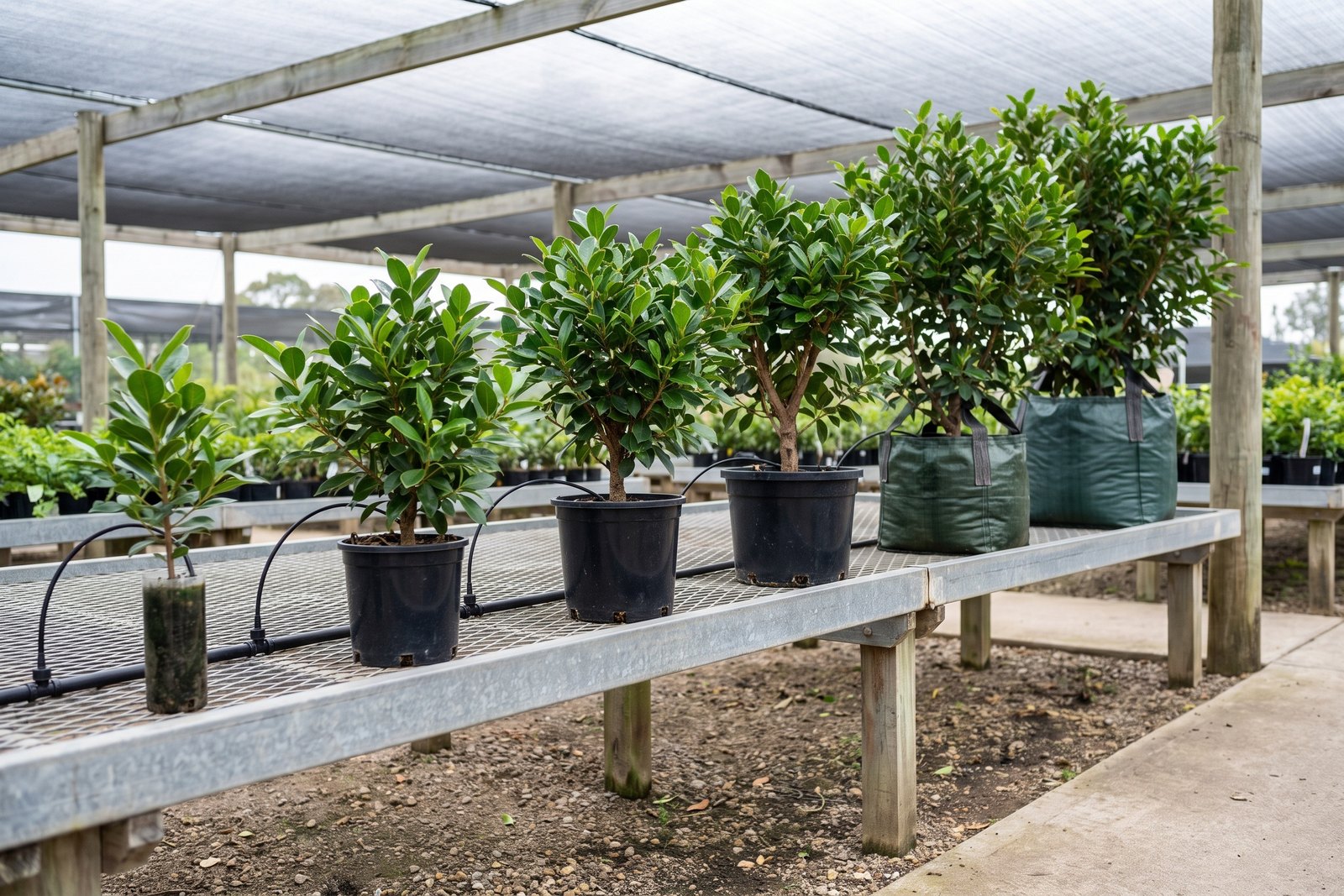
| Four ladders, one plant | A #1, a 140 to 200 mm pot, a PB3 and a #1 are the same stage; a #3, a 200 to 250 mm pot, a PB5 and a #2 the next; a #15, a 45 litre bag and a 50 mm calliper tree the first advanced grade. |
| The standards | Australia specifies to AS 2303, the United States to ANSI Z60.1, Canada to the Canadian Nursery Stock Standard, and New Zealand to the specification a council or landscape architect writes. The specification a council or its landscape architect writes, since New Zealand has no single national nursery stock standard is the one for this market. |
| Grown to a grade | A grade is reached by potting on, each move costing a season. A tube is months old, a 200 mm pot or a #3 about a year, a 45 litre bag or a #15 three to four years, a 200 litre bag or a #65 five or more. |
| The price steps with the grade | Median trade prices are not published for most New Zealand plants yet; each grower's published price sits beside its line on the plant pages, and the pattern is the same, a step up in price at every step up in grade. |
| Field grown | Trees dug from the field arrive with a root ball, bagged or in a wire basket, graded by calliper; the standards pair each calliper with a root ball size. |
The four ladders side by side
The table lines the grades up by stage. The equivalences are approximate, because each system draws its lines in different places and a grower's own pot may sit at the edge of a class, but a buyer who reads across a row will order the stage it means in any market.
| Stage | Australia | United States | Canada | New Zealand |
|---|---|---|---|---|
| Propagation cell | tube, 50 mm | plug or liner | plug or liner | root trainer |
| Small pot, under a litre | 75 or 100 mm | 4 inch or quart | 10 cm | PB2 |
| First saleable pot, 1 to 2 L | 140 mm | #1 | #1 | PB3 |
| Shrub grade, 3 to 5 L | 200 mm | #2 to #3 | #2 | PB5 |
| Large shrub, 8 to 15 L | 250 to 300 mm | #3 to #5 | #3 to #5 | PB8 to PB12 |
| Small tree, 25 to 35 L | 400 mm or 25 L | #7 to #10 | #7 to #10 | 25 L |
| Advanced tree, 45 to 50 L | 45 L | #15 | #15 or 40 mm calliper | 45 L |
| Larger advanced, 75 to 100 L | 75 to 100 L | #25 to #30 | 50 to 60 mm calliper | 75 to 100 L |
| Mature stock, 200 L and over | 200 L, 400 L | #45 to #100 and boxes | 70 mm calliper and over | 200 L and over |
| Field grown | ex ground, by calliper | balled and burlapped, by caliper | field grown, by calliper | field grown or open ground |
The litre figures in the first column are the mix a plant of that stage has around its roots, not a measured pot. New Zealand growers name small stock by the cell or the bag, root trainer, PB2, PB3, PB5 and PB8, where the PB number is roughly the number of pints the bag holds, and larger stock by litres, 25 L, 45 L and up. Nursery pot sizes explained sets out the Australian and American ladders in detail with the volume, height and age behind each step.
What each grade is
- Plugs, tubes and root trainers. A cell in a tray, a few months from seed or cutting, sold by the tray. The grade for revegetation, meadows, hedges planted small and anything a volunteer plants in hundreds. Roots should hold the mix together when the plant is slid out.
- The first saleable pot. A #1, a 140 mm pot or a PB3: six to twelve months old, the grade a garden centre sells perennials in and a landscaper plants groundcovers from. Median trade prices are not published for most New Zealand plants yet; each grower's published price sits beside its line on the plant pages tells how a market prices it.
- The shrub grades. A #2 or #3, a 200 mm pot, a PB5: about a year old, the working grade of hedges, mass planting and most shrub orders, and the grade most growers price.
- Small trees. A #7, a 400 mm pot or 25 litres: two to three years, a tree a metre or more tall that one person can lift. The grade for a park infill or a school planting.
- Advanced trees. A #15, a 45 litre bag or a 40 to 50 mm calliper tree: three to four years, two to three metres, two people or a trolley. The first grade a street planting specifies.
- Mature and field grown stock. A #45 or larger, 200 litres and over, a 70 mm calliper field grown tree: five years or more, a crane or a loader, and a price that reflects every season it spent in the nursery. The standards set a root ball size for each calliper, and a buyer may measure it.
The standards behind the names
Each market's size names are defined in a standard the trade writes to. The specification a council or its landscape architect writes, since New Zealand has no single national nursery stock standard is this market's. The standards agree on the principle, that the container or root ball a plant is sold in should match its stem and height, and differ in units and in where they draw the lines between classes. A buyer specifying across a border names the standard the quote should meet, and asks the grower to state the equivalent in its own system.
Specifying and procuring trees explains how a clause is written to the standard, and what makes a nursery plant good quality the checks a buyer applies to a grade when it arrives.
Reading a grade on a list
On HortOS a grower's list shows each plant by size in the grower's own words, and the plant pages gather every grower's lines for a plant by size. A buyer sees at once which grades a plant is listed in and by how many growers. Median trade prices are not published for most New Zealand plants yet, so this guide quotes none; each grower's own published price sits beside its line on the plant pages. The region hubs (Auckland, Canterbury, Waikato, Bay of Plenty) show which growers near a site list each grade.
Three habits save an order. Read the size as a container and ask for the height. Ask for the potting date, because a plant moved up a grade last month is a small plant in a big pot. And where a list uses a word the table above does not, a bag, a box, a standard or a pleached form, ask what it means in the grower's own system before pricing it.
What to watch for
- Reading a class as a gallon or a litre. A #3 is not three gallons and a 200 mm pot is not two litres. The class is a label with a volume range behind it; the standard says the range.
- Height as the specification. Height is the easiest thing to grow and the least useful to specify. Pair it with the calliper or the container.
- Potting date ignored. A grade reached last week is not the same plant as a grade reached last season. Ask, and lift a sample.
- Cross-border equivalents taken as exact. The table's rows are stages, not conversions. Specify in the receiving market's standard and let the grower state its equivalent.
- A bag read as a pot. A 45 litre bag and a 45 litre pot hold the same mix and travel differently; a bag folds into a trailer and a pot does not. Ask which the grower uses.
Getting it right
- Decide the stage the planting needs, then write it in this market's grade names and the standard they come from.
- Ask every grower for height and potting date against each grade quoted.
- Read the plant pages on HortOS for which grades a plant is listed in and by how many growers, and shortlist growers on the hubs.
- Where an order crosses a border, name the receiving market's standard and ask for the grower's equivalent in writing.
- Lift a sample of each grade at the nursery before dispatch.
A word of caution
The grades and ages on this page are the trade's common practice and the standards' definitions as their publishers state them; a grower's own pot, bag or cell may sit at the edge of a class, and the equivalences across markets are stages, not conversions. The prices are what HortOS printed on 24 September 2026 and in the September 2026 Index edition, and the live pages change. The grower's word on what a size name means on its own list is the one that counts.
Sources
- New Zealand Plant Producers Incorporated: the plant producers' national body.
- Plant Pass, New Zealand's plant production biosecurity scheme: certified nursery biosecurity practice.
- New Zealand Arboricultural Association: the arborists' national body.
- New Zealand Institute of Landscape Architects: the landscape architects' institute.
More guides
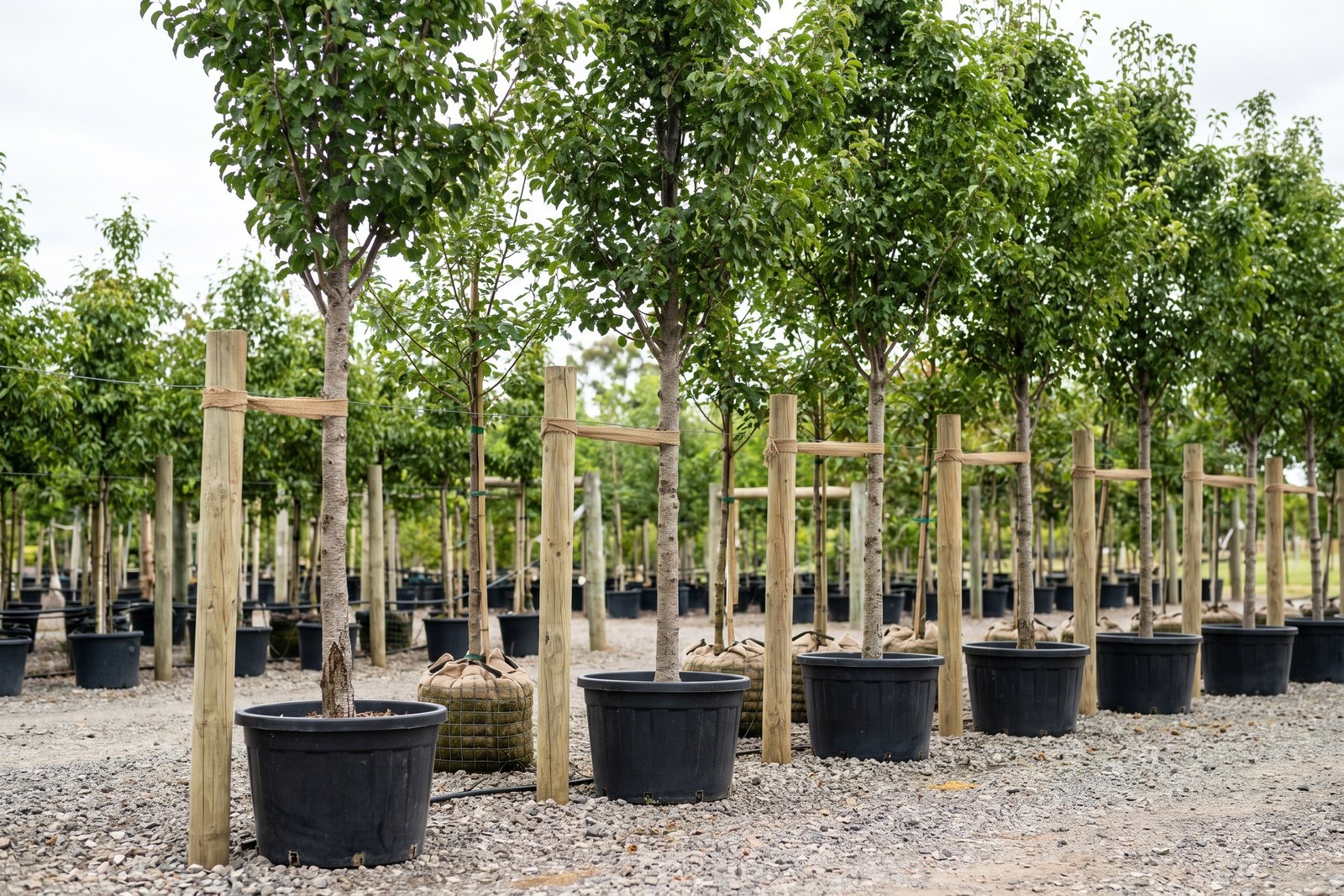
Specifying and Procuring Trees for a Street or Park Planting
A street or park planting fails at the specification more often than at the planting. This page explains the nursery stock standard to specify against, what goes in the clause, how the trade grows and grades advanced trees, where the growers are, the quote and tender process, and the inspection at the nursery and at delivery.
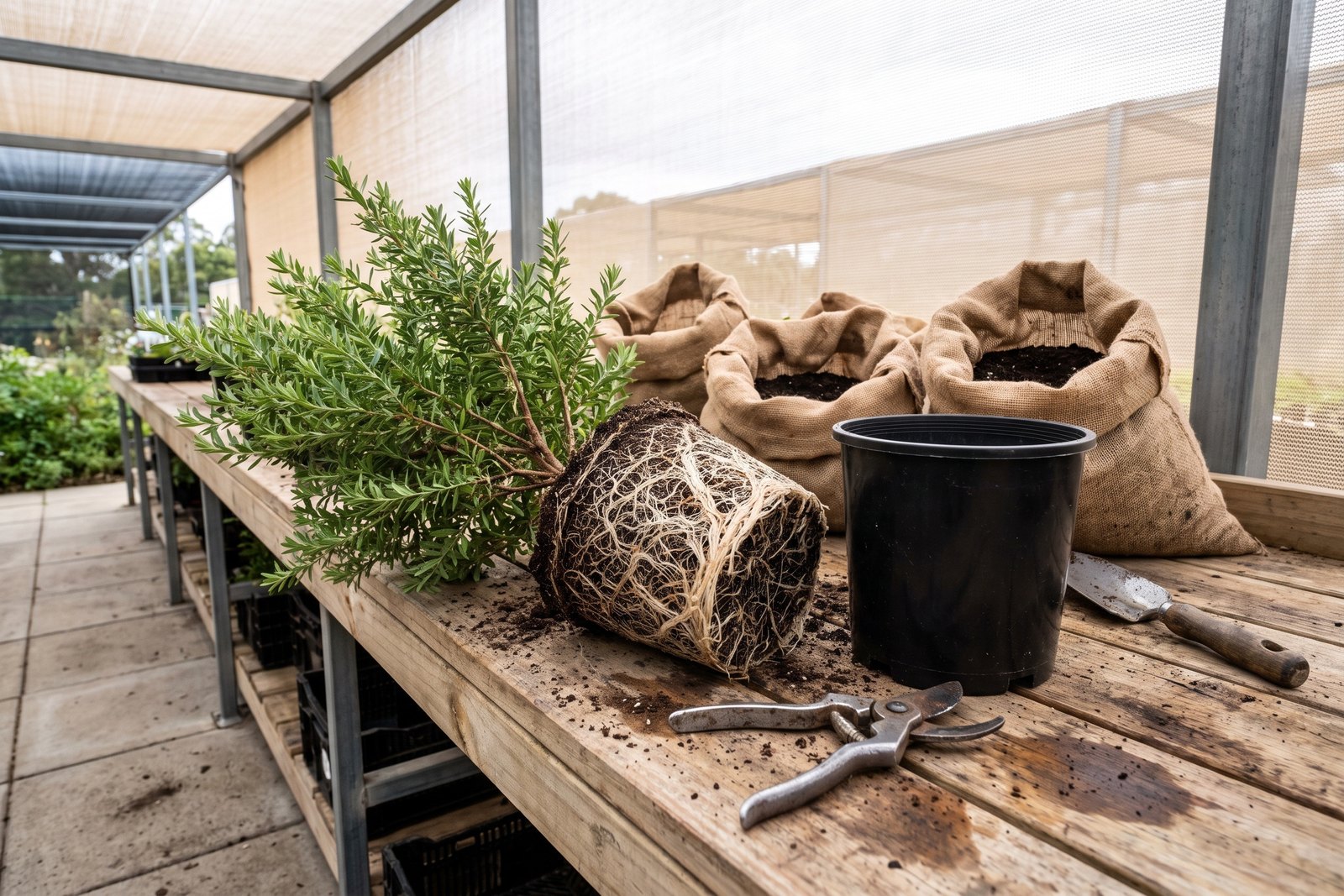
Nursery Plant Quality: Roots, Pests and Hardening Off
Quality in a nursery plant is mostly below the mix, in the roots, and a buyer who lifts one plant from each line sees what the price list cannot say. This page is the checklist: roots, stem and canopy, pests and diseases, hardening off, weeds and labels, the questions to send with the order, and the schemes that certify practice.

Buying From a Wholesale Grower When You Are Not in the Trade
Catchment groups, schools, trusts and landowners can buy from New Zealand wholesale growers when they order like the trade: in quantity, a season ahead, on the grower's terms. This page explains who sells to whom, what an NZBN and GST change, grades from root trainers to PB bags, eco-sourcing and proof of it, lead times and Plant Pass.