Guides
Plain reference pages for the trade and the people who buy from it, built from growers' published availability and the HortOS Plant Price Index.
Plant selection and horticulture
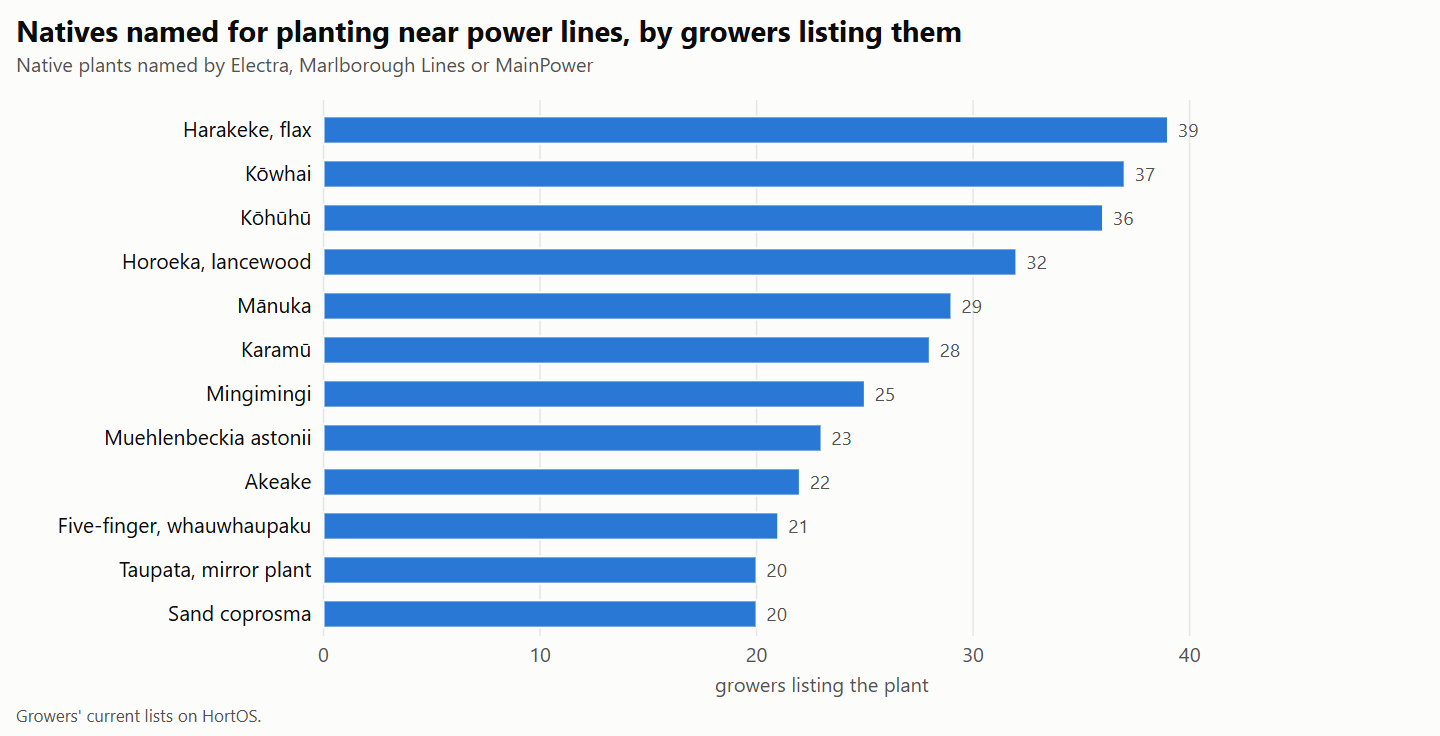
Trees and shrubs for planting near power lines, and who lists them
The zones New Zealand's Electricity (Hazards from Trees) Regulations 2003 set around power lines, and the dates in 2026, 2027 and 2028 on which the latest changes take effect. The page sets beside them what seven lines companies publish about planting height and the native plants three of them name, with the growers listing each plant by region.
Updated 17 October 2026. Grower counts are what the live nz.hortosapp.com plant pages printed; medians are not published for most New Zealand plants yet.
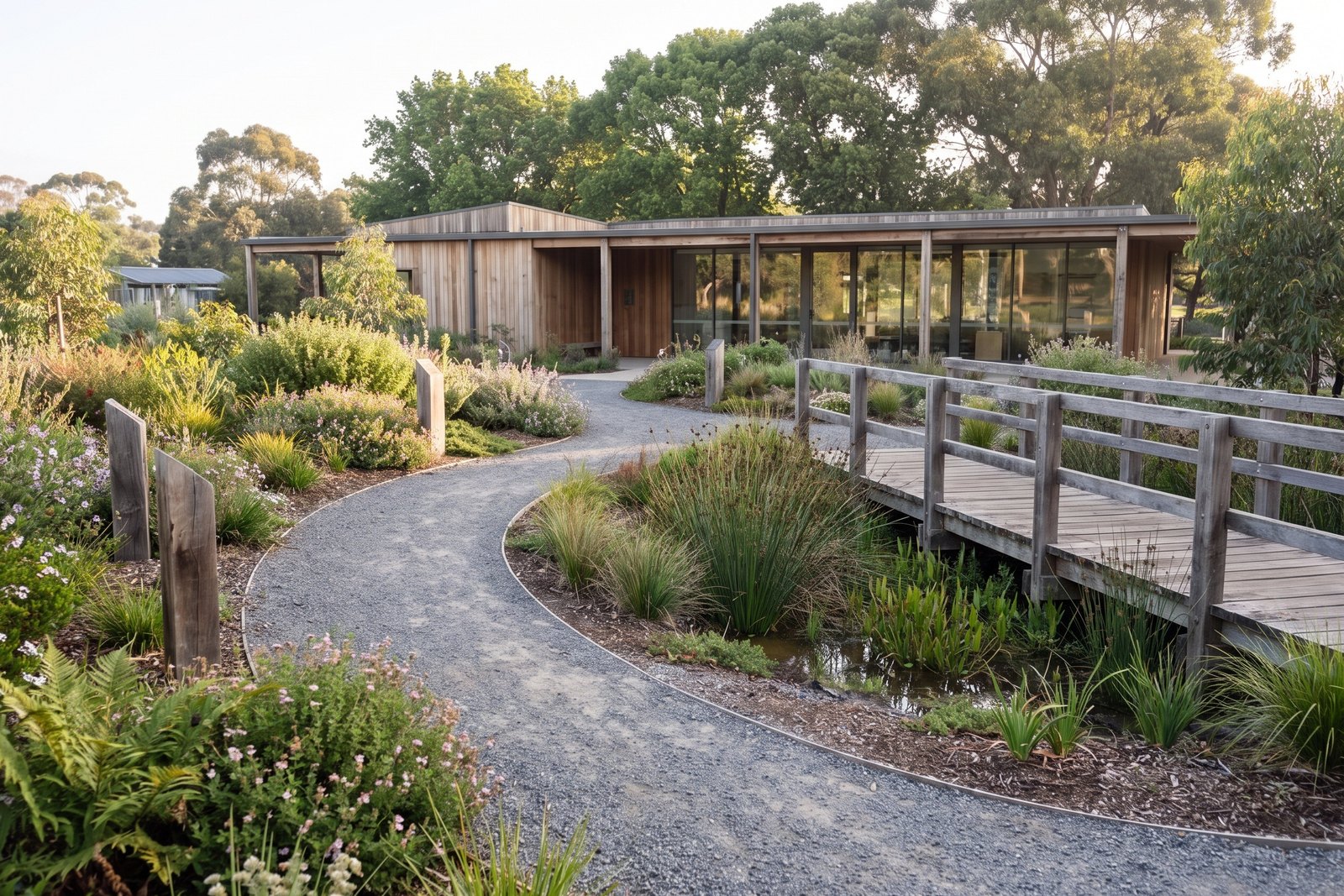
Choosing Plants for a Nature Centre or Demonstration Garden
A demonstration garden should show plants visitors can find, buy and grow, at a standard of care a home can manage. This page covers choosing themes, choosing plants growers list in numbers, labels and interpretation, care at the visitor's scale, and the records that keep the garden useful.
Updated 24 October 2026. Plant counts from the live nz.hortosapp.com plant pages on 25 October 2026; median trade prices are not published for most New Zealand plants yet.
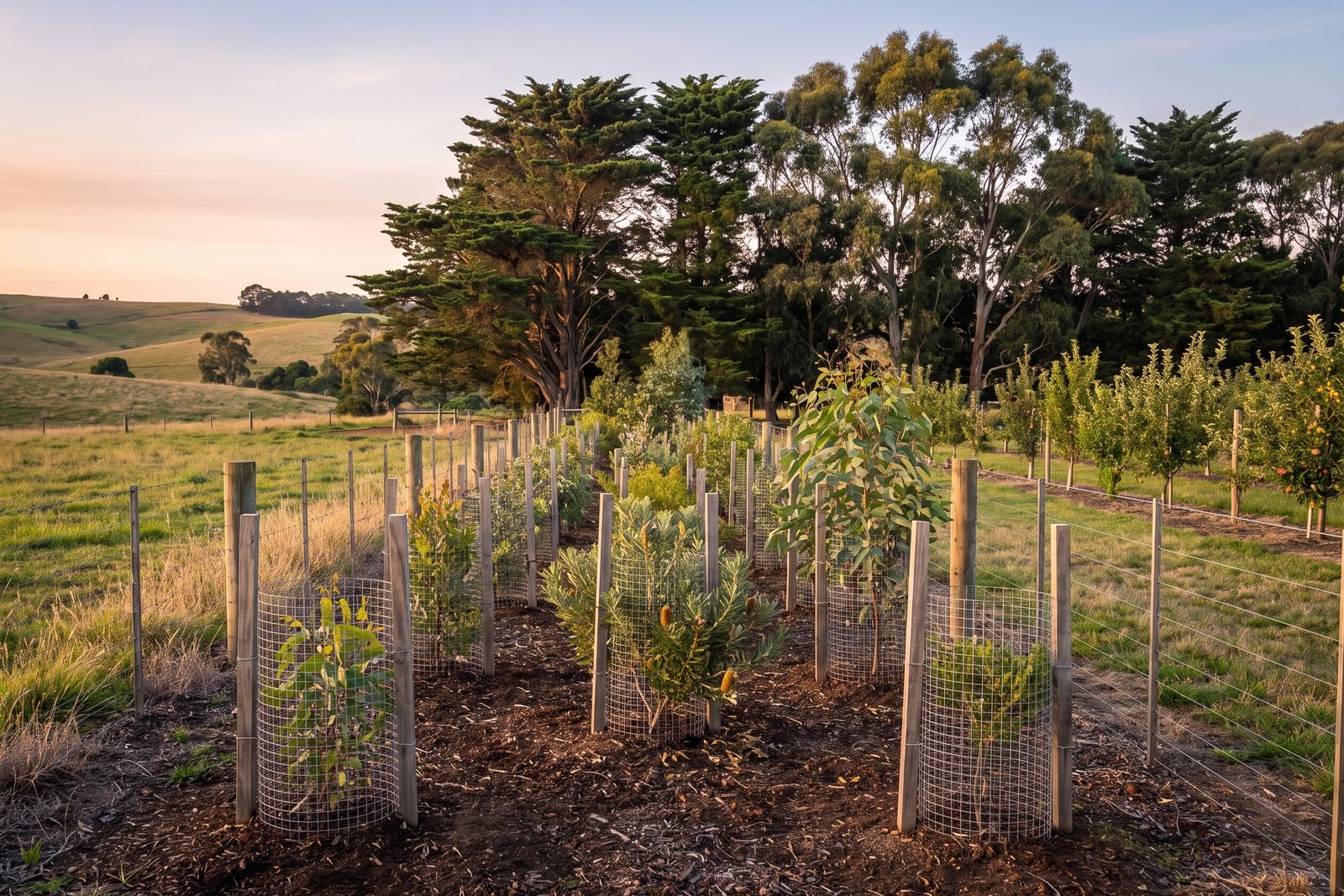
Hedgerows and Windbreaks for Small Farms
A windbreak or hedgerow protects in proportion to its height and length, and only works planted without gaps across the damaging wind. This page covers what belts do, the design rules agencies publish, species and layers, planting and protecting a belt, and where small farms find help.
Updated 24 October 2026. Plant counts from the live nz.hortosapp.com plant pages on 25 October 2026; median trade prices are not published for most New Zealand plants yet.
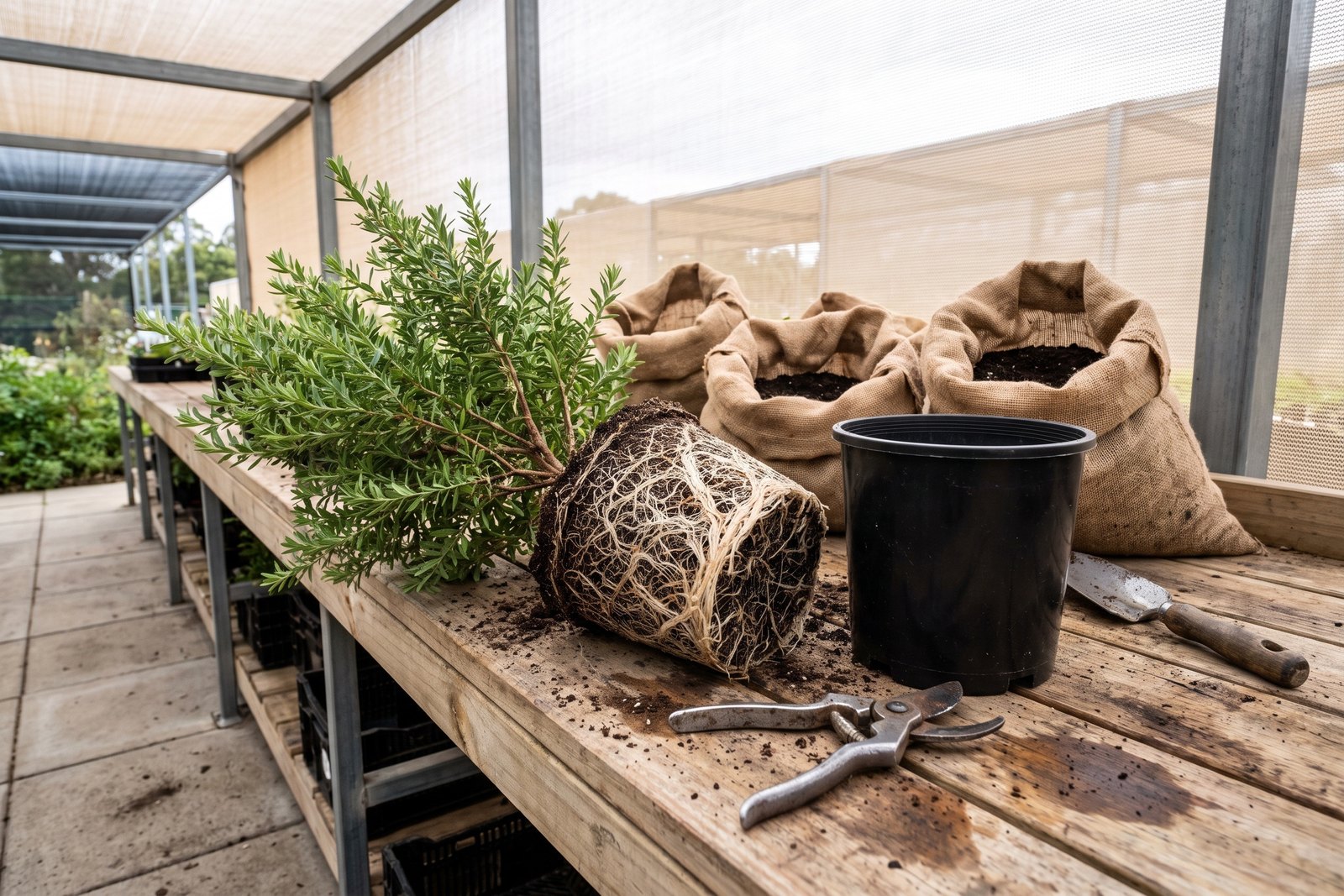
Nursery Plant Quality: Roots, Pests and Hardening Off
Quality in a nursery plant is mostly below the mix, in the roots, and a buyer who lifts one plant from each line sees what the price list cannot say. This page is the checklist: roots, stem and canopy, pests and diseases, hardening off, weeds and labels, the questions to send with the order, and the schemes that certify practice.
Updated 24 October 2026. Grower counts from the live nz.hortosapp.com regional hubs on 24 September 2026; median trade prices are not published for most New Zealand plants yet.
Environment, wildlife and water
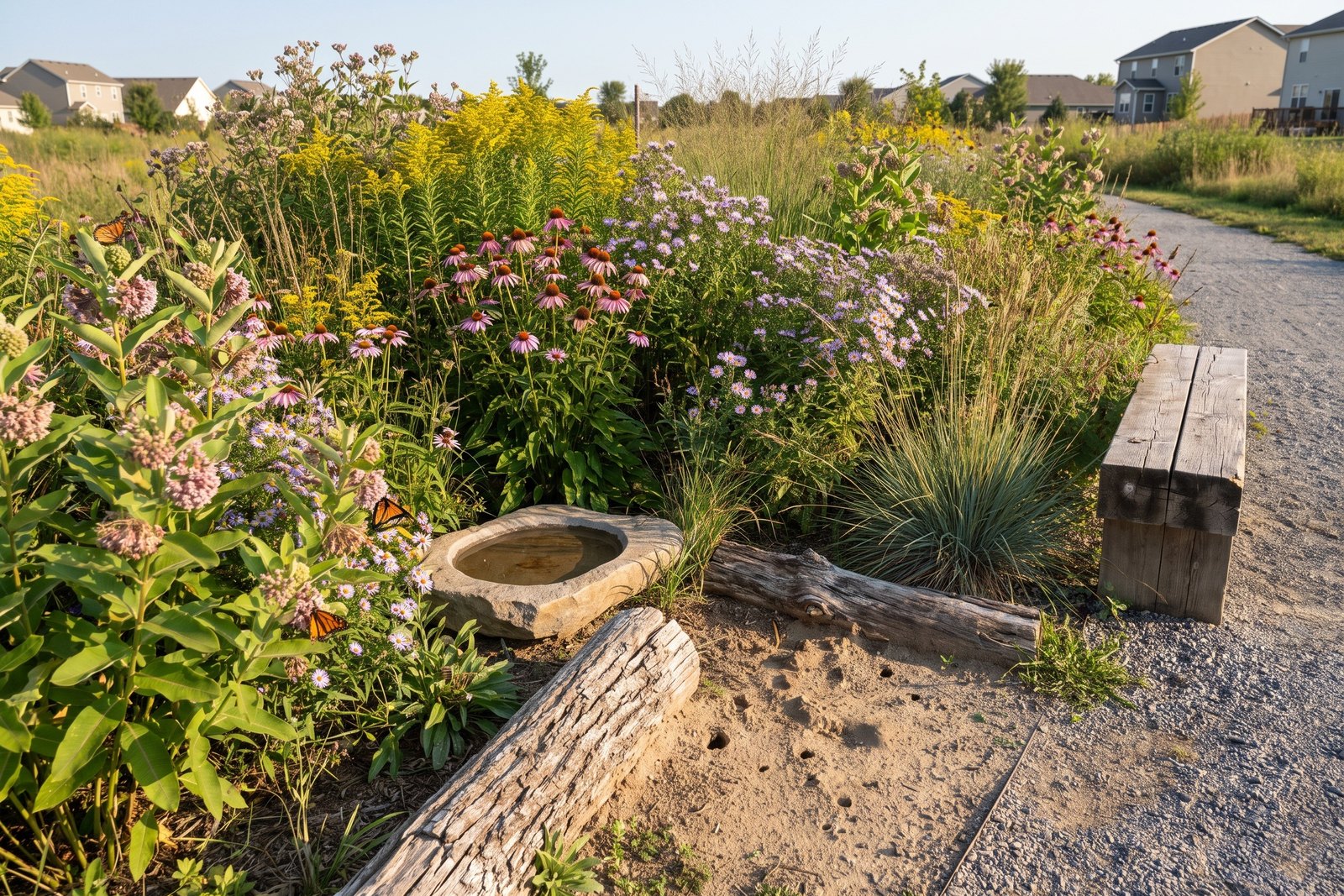
Native Plants for a Small Pollinator Patch
A small pollinator patch works when it does three jobs at once: flowers in sequence, host plants for caterpillars and places to nest, kept free of sprays. This page covers choosing the spot, native plants by the job they do, a flowering sequence and buying the plants from growers.
Updated 24 October 2026. Plant counts from the live nz.hortosapp.com plant pages on 25 October 2026; median trade prices are not published for most New Zealand plants yet.
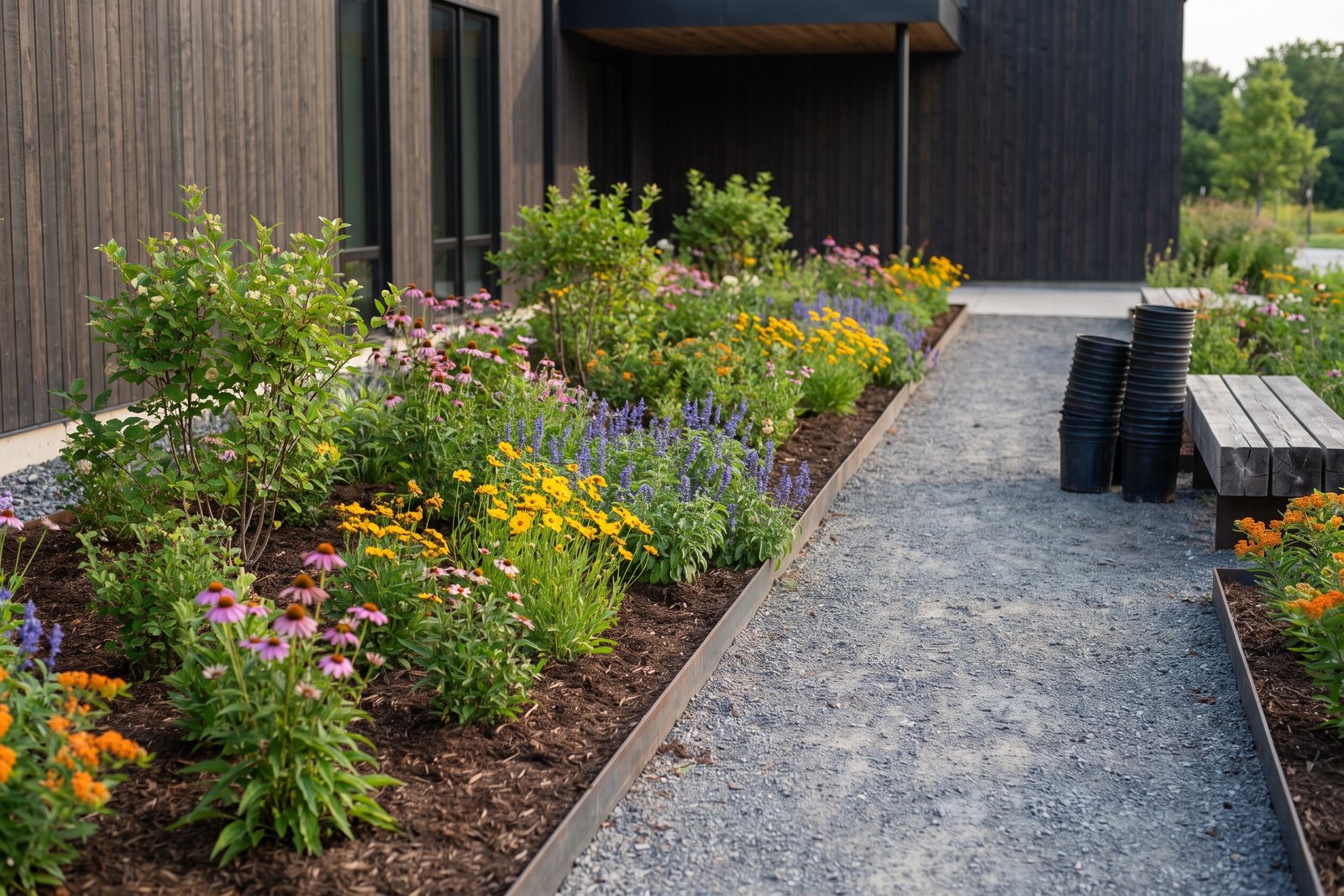
Planning a Pollinator Planting With Trade Suppliers
A pollinator planting list from a published regional guide is a wholesale order in disguise. This page shows how a club, a council or a conservation group matches the list to what growers list, chooses sizes and drifts, spreads flowering across the year, and asks the provenance, cultivar and chemical questions before the order goes in.
Updated 24 October 2026. Grower counts from the live nz.hortosapp.com regional hubs on 24 September 2026; median trade prices are not published for most New Zealand plants yet.
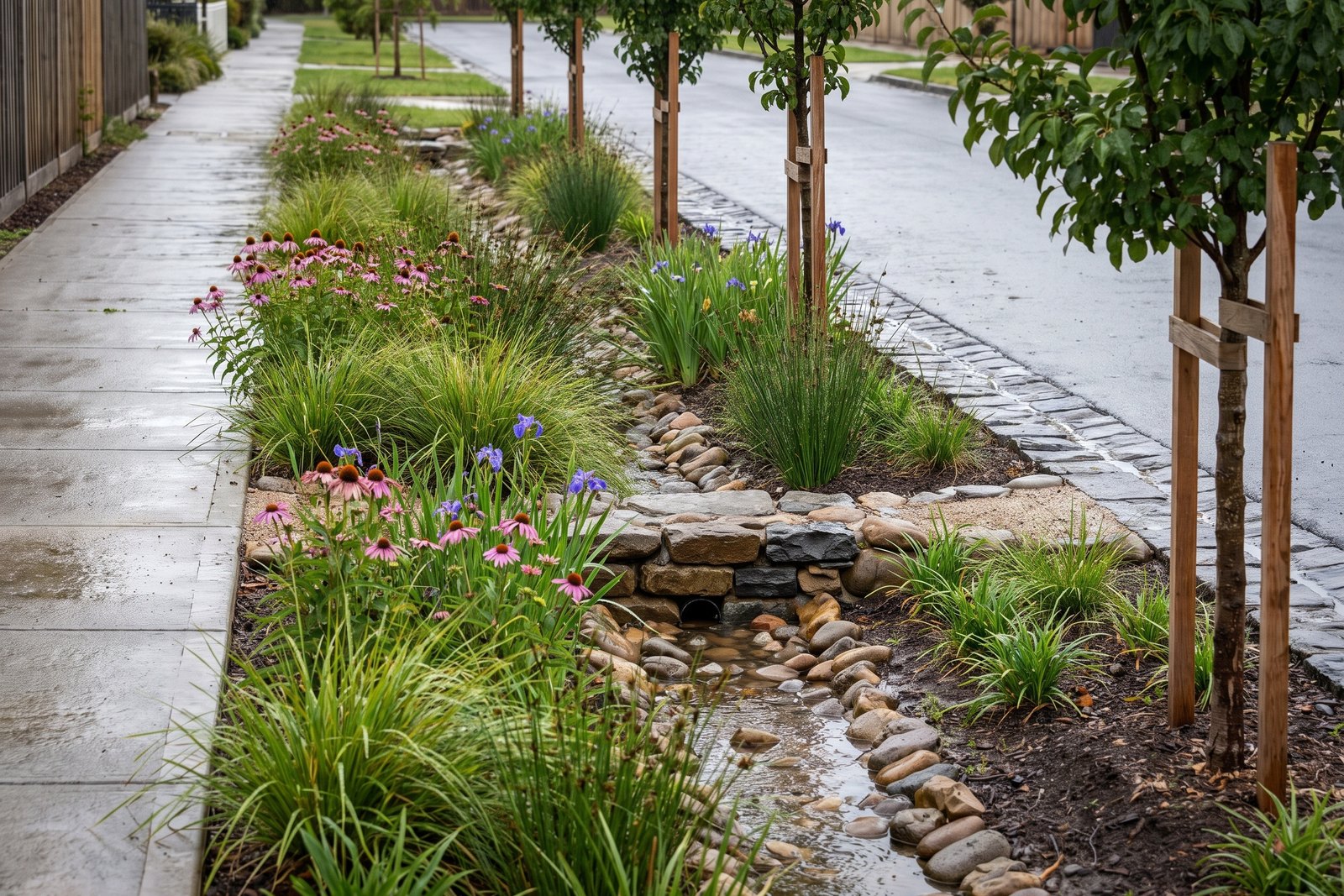
Rain Gardens and Bioswales: Siting, Soil and Plants
A rain garden is designed around the water first and the plants second, and its plants must take both a flood and a drought. This page covers what rain gardens and bioswales do, siting and sizing, the soil and the build, choosing plants for wet and dry, and looking after them.
Updated 24 October 2026. Plant counts from the live nz.hortosapp.com plant pages on 25 October 2026; median trade prices are not published for most New Zealand plants yet.
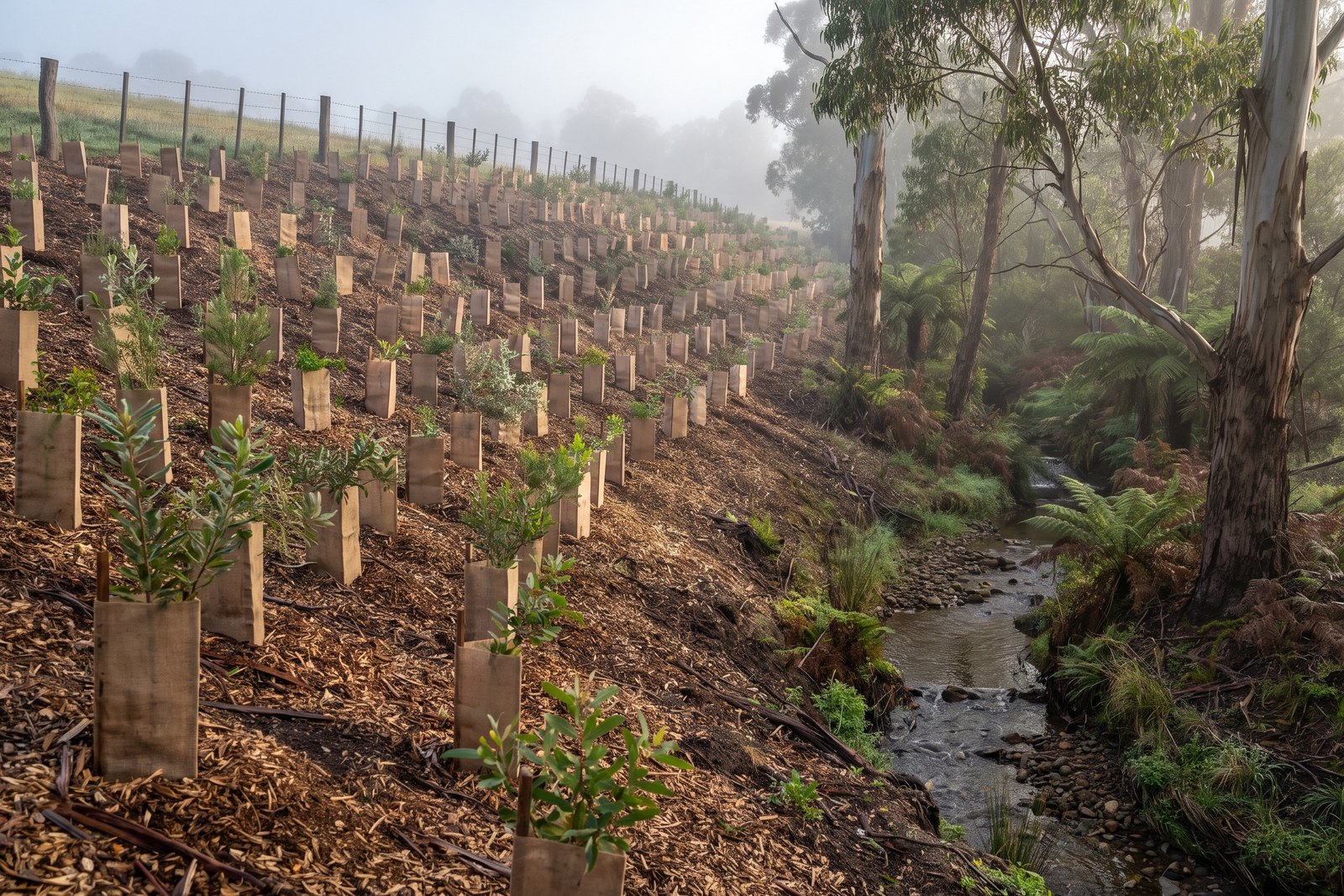
Restoration Planting and Local Ecotype Stock
A restoration planting is decided by site preparation and seed origin before the day, and by two or three years of follow-up after it. This page covers preparing the site, local ecotype stock and seed zones, planting small stock well, the first three years and counting survival.
Updated 24 October 2026. Plant counts from the live nz.hortosapp.com plant pages on 25 October 2026; median trade prices are not published for most New Zealand plants yet.
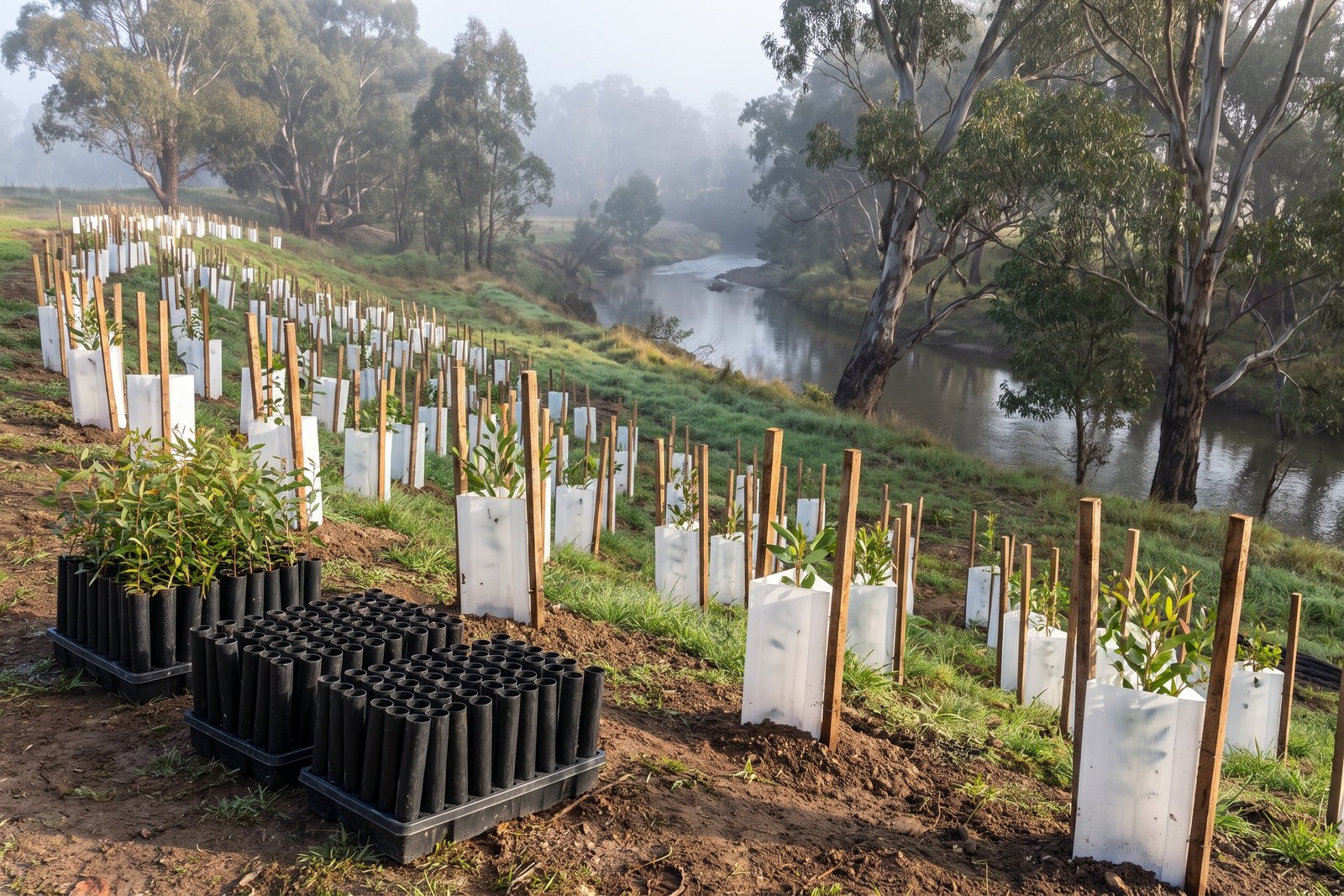
Sourcing Native Plants for a Restoration or Revegetation Project
Revegetation stock is grown to order, so a restoration project that books its growing a year ahead plants what the plan says. This page covers the provenance rule and how to ask for it, the grades the trade grows, contract growing and its timetable, reading the directory for a project, and what a grower's list cannot show.
Updated 24 October 2026. Grower counts from the live nz.hortosapp.com regional hubs on 24 September 2026; median trade prices are not published for most New Zealand plants yet.
Money, tax, grants and rebates
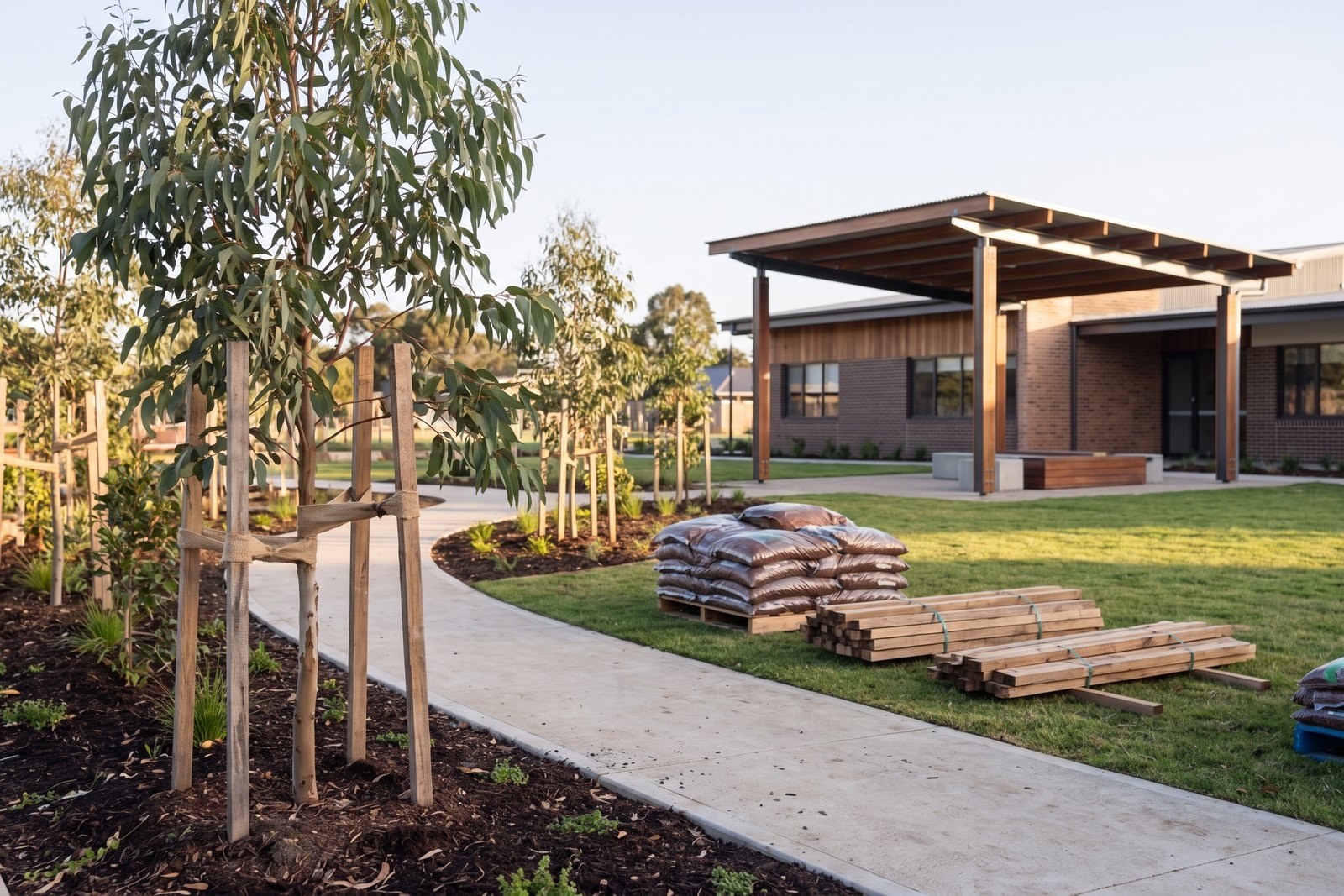
The trade and procurement

Buying From a Wholesale Grower When You Are Not in the Trade
Catchment groups, schools, trusts and landowners can buy from New Zealand wholesale growers when they order like the trade: in quantity, a season ahead, on the grower's terms. This page explains who sells to whom, what an NZBN and GST change, grades from root trainers to PB bags, eco-sourcing and proof of it, lead times and Plant Pass.
Updated 25 September 2026. Figures from the live nz.hortosapp.com plant pages and regional hubs on 24 September 2026; medians will follow with the first New Zealand edition of the HortOS Plant Price Index.
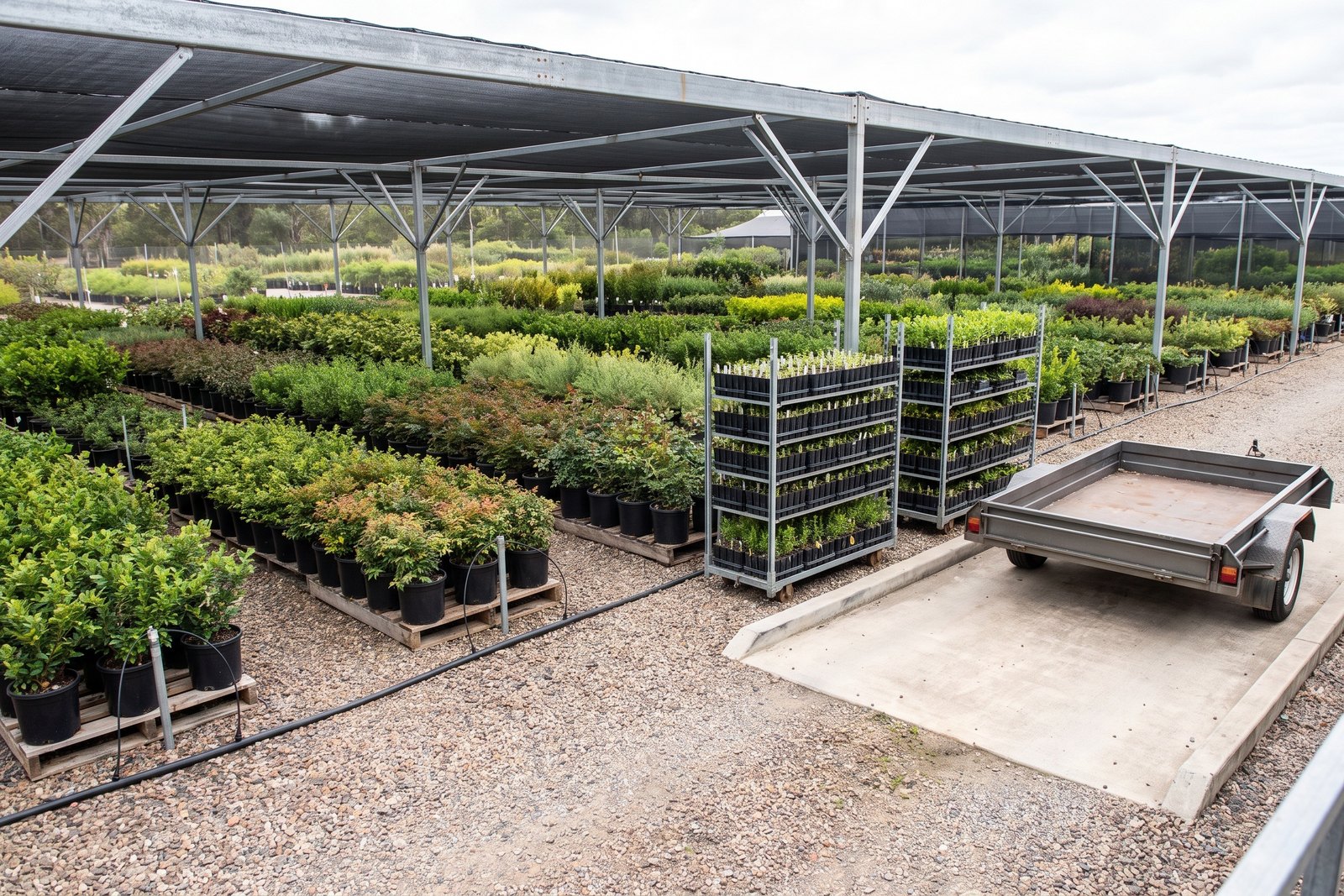
Buying Plants in Bulk for a Community Group
Garden clubs, community gardens, schools and friends groups can buy plants by the tray and the trolley from wholesale growers when they order like the trade. This page explains what bulk means to a grower, the three ways a group buys, how to turn a plan into quantities, what a quote request needs and how collection day works.
Updated 24 October 2026. Grower counts from the live nz.hortosapp.com regional hubs on 24 September 2026; median trade prices are not published for most New Zealand plants yet.
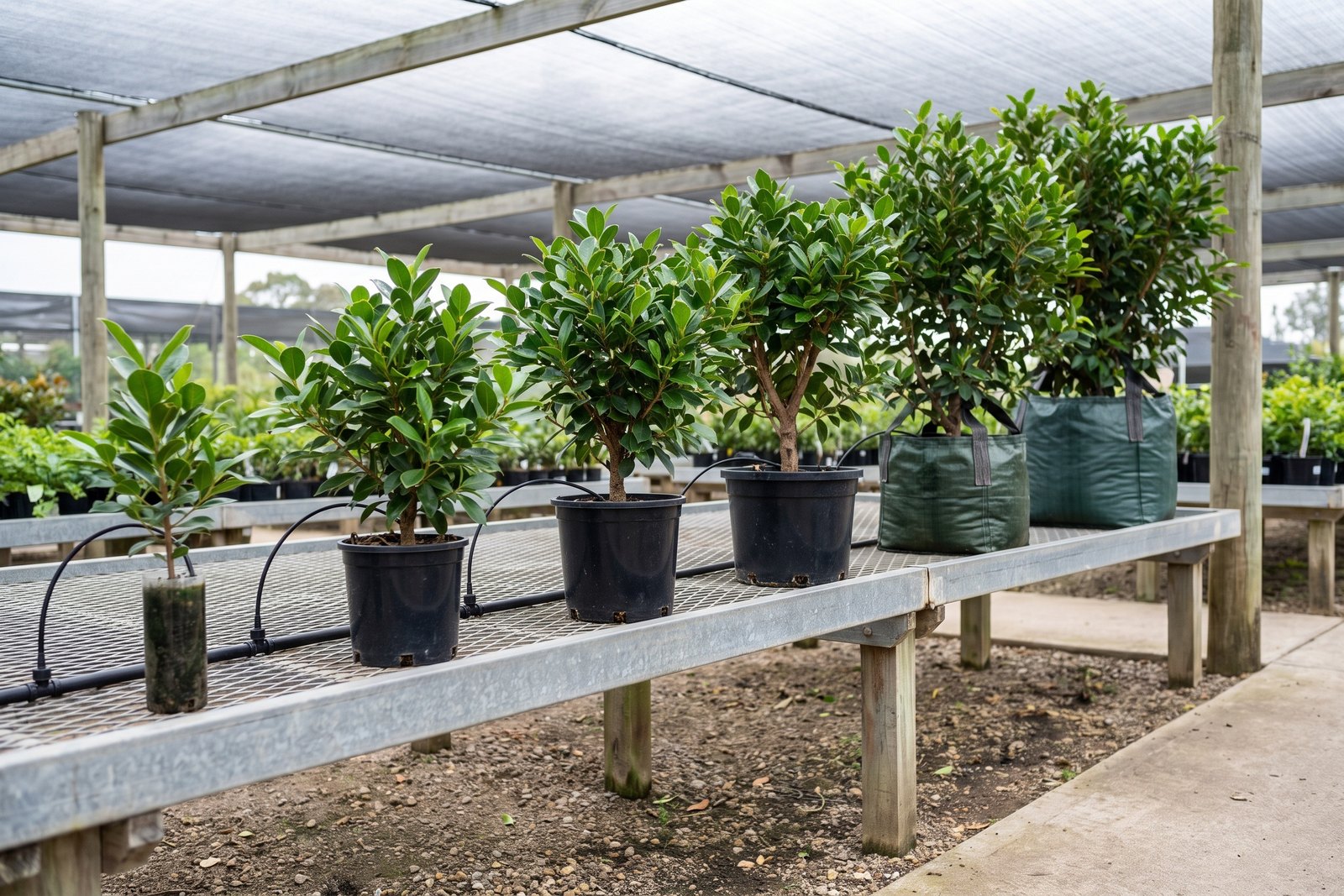
Plant Grades and Container Sizes, Market by Market
A #3 in Florida, a 200 mm pot in Sydney, a PB5 in Hamilton and a #2 in Ontario are roughly the same plant. This page sets the four markets' size ladders side by side from plug to field grown tree, explains what each grade is and how old, and names the standard each market specifies against.
Updated 24 October 2026. Grower counts from the live nz.hortosapp.com regional hubs on 24 September 2026; median trade prices are not published for most New Zealand plants yet.
Reading a Grower's Price List and Trade Terms
A grower's price list is an offer written in shorthand, and the terms are part of the price. This page reads a trade list column by column and term by term, from the tax and freight basis to minimums, price on application, holds, substitutions, payment and claims, and turns two quotes into landed costs.
Updated 24 October 2026. Grower counts from the live nz.hortosapp.com regional hubs on 24 September 2026; median trade prices are not published for most New Zealand plants yet.
Specifying and Procuring Trees for a Street or Park Planting
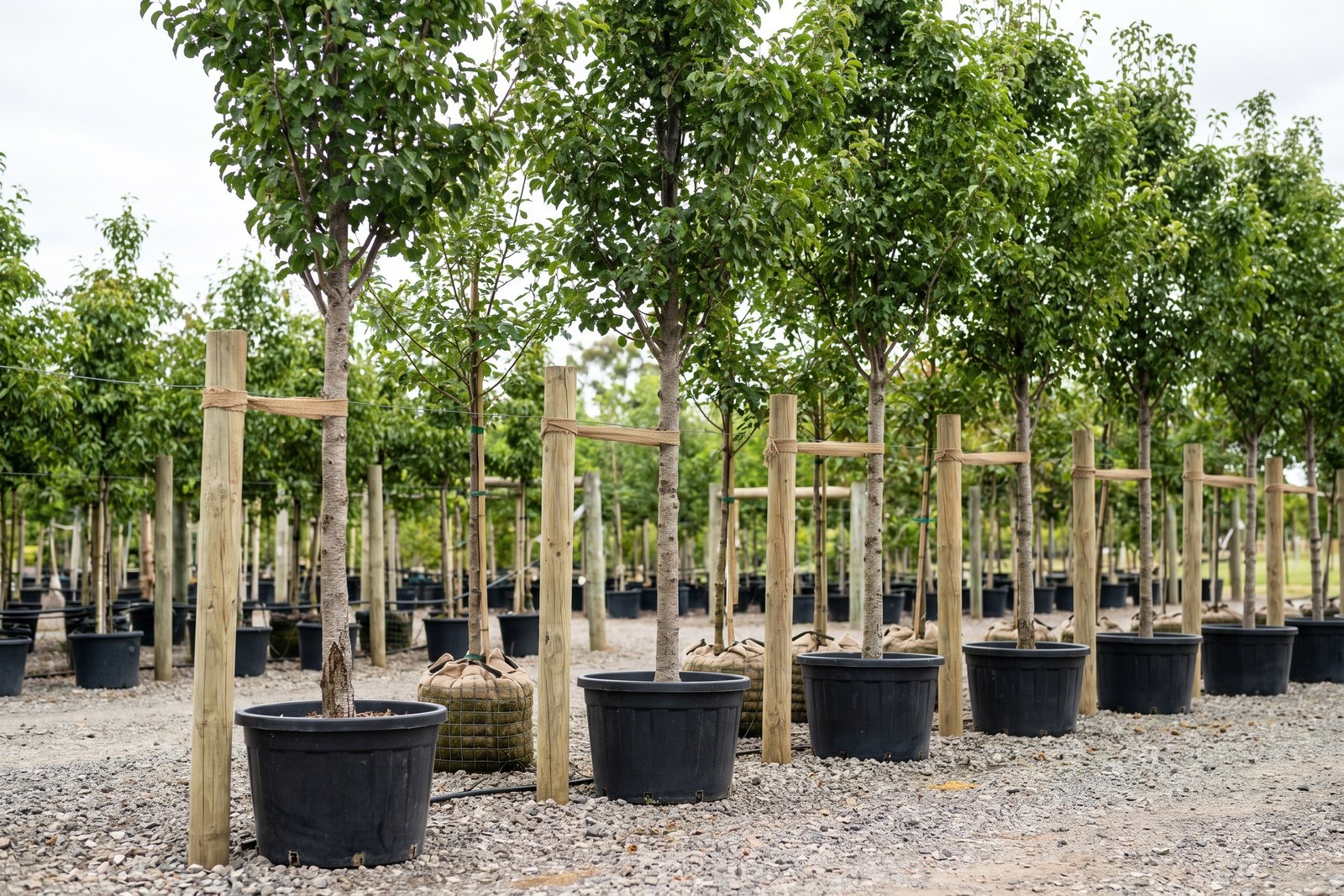
A street or park planting fails at the specification more often than at the planting. This page explains the nursery stock standard to specify against, what goes in the clause, how the trade grows and grades advanced trees, where the growers are, the quote and tender process, and the inspection at the nursery and at delivery.
Updated 24 October 2026. Grower counts from the live nz.hortosapp.com regional hubs on 24 September 2026; median trade prices are not published for most New Zealand plants yet.
When to Order: Lead Times, Pre-Orders and Contract Growing
Every plant on a grower's list is a decision made a season or more ago. This page explains how long each grade takes to grow, the three ways a buyer secures stock ahead of the season, what a growing contract contains, the planting calendar in this market and how to read a current list for the year ahead.
Updated 24 October 2026. Grower counts from the live nz.hortosapp.com regional hubs on 24 September 2026; median trade prices are not published for most New Zealand plants yet.
Community, schools and health
Poisonous plant guidance for New Zealand early childhood services
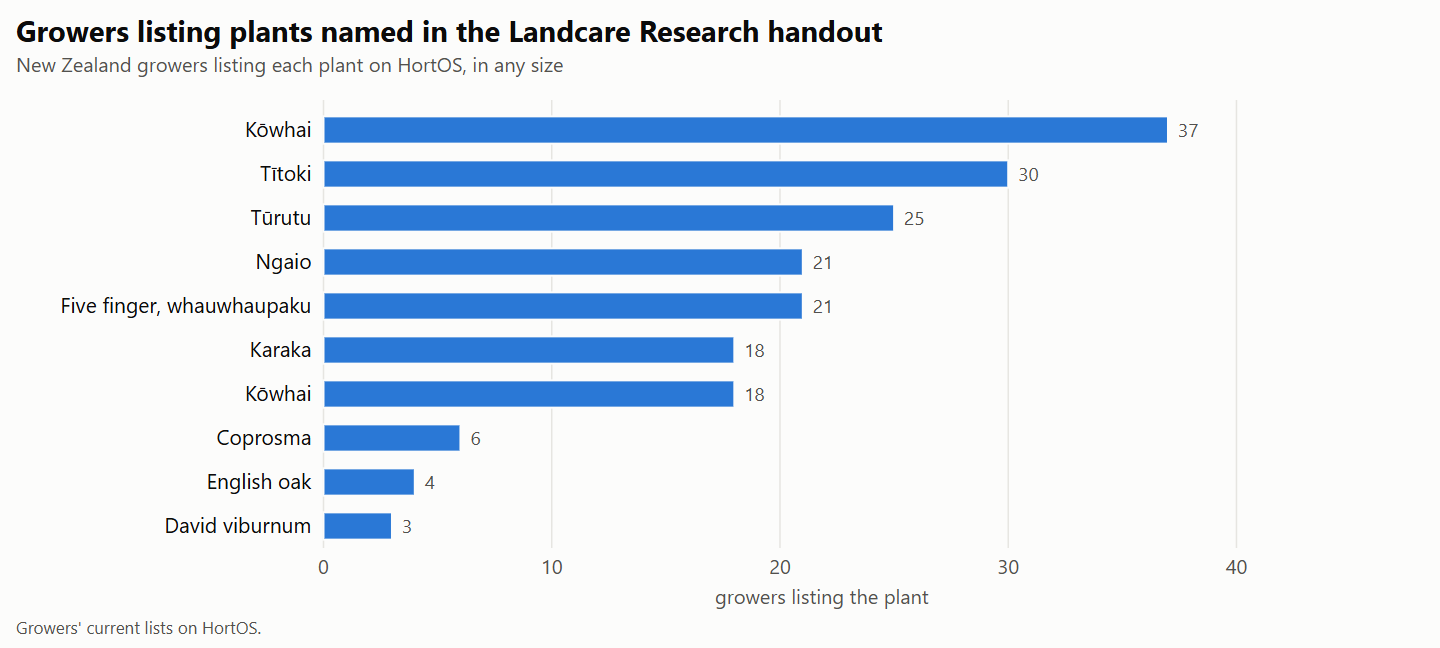
New Zealand's early childhood regulations set a general duty about hazards and name no plant. The plant lists reported here are Landcare Research handouts of 1999 and 2002. This guide reports both, and sets plants that the later handout names beside the growers listing each one on HortOS, with what the lists do not show.
Updated 7 October 2026. Grower counts are what the live nz.hortosapp.com plant pages printed; medians are not published for most New Zealand plants yet.
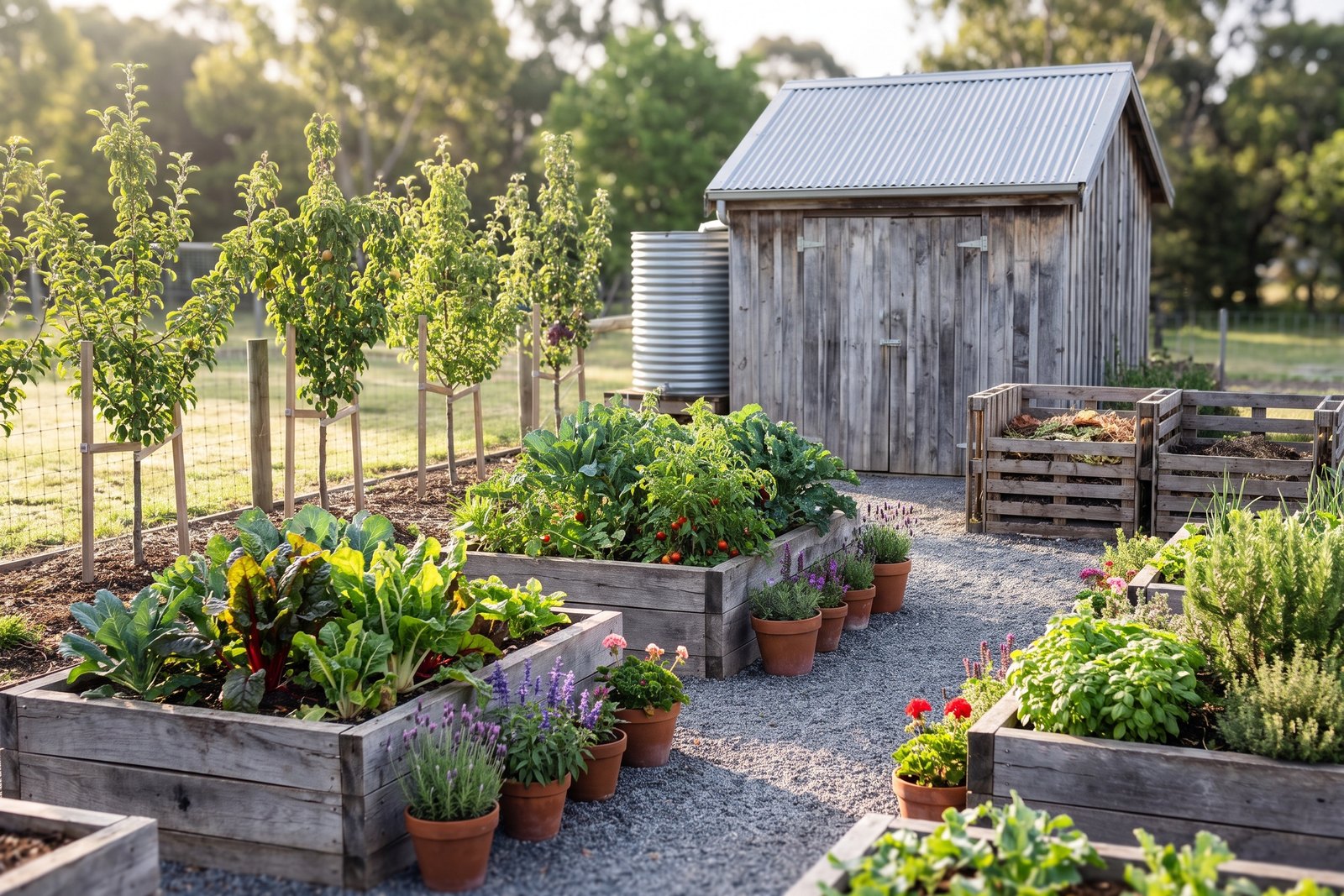
Choosing Plants for a Community Garden on a Budget
A community garden's plant budget goes furthest on plants that come back every year, bought small, from what growers list in numbers. This page sets out the order to spend in, the plants that earn their place, buying small and together, and where fruit and shade trees fit.
Updated 24 October 2026. Plant counts from the live nz.hortosapp.com plant pages on 25 October 2026; median trade prices are not published for most New Zealand plants yet.
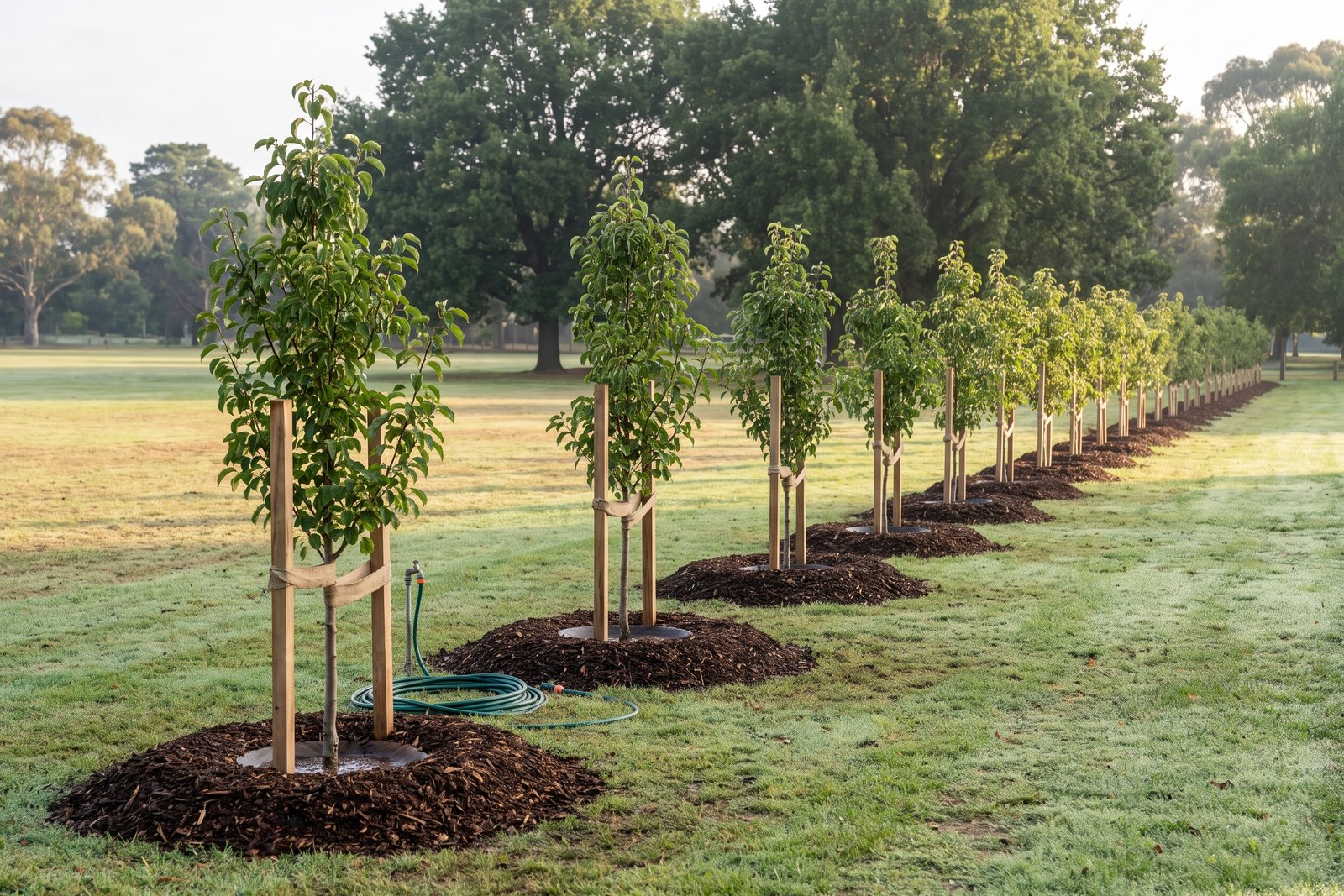
Planting Trees at a Park or Street Tree Event
A tree planting day is judged two summers later, and the sizes, spacing and aftercare plan decided before it keep the trees alive. This page covers sizes volunteers can plant, spacing for the mature canopy, the planting method arborists publish, running the day and the first two summers.
Updated 24 October 2026. Plant counts from the live nz.hortosapp.com plant pages on 25 October 2026; median trade prices are not published for most New Zealand plants yet.
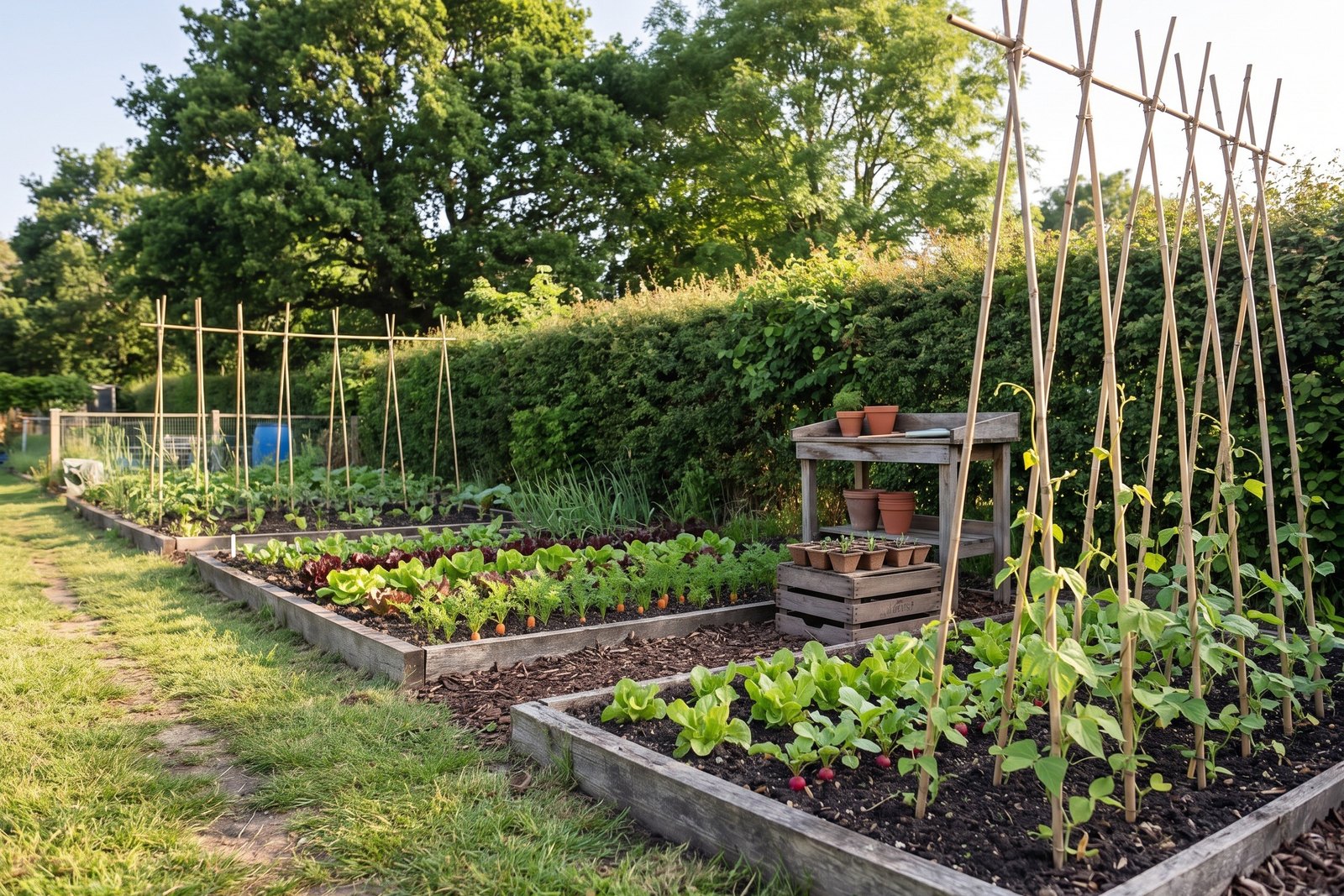
Planting an Allotment or Community Plot, Season by Season
A plot is planted by its own district's calendar, worked back from the frost dates, with permanent edges that stay while the beds turn over. This page explains reading a district's season, a planting calendar by season, the permanent plants that frame a plot and the plot rules that shape it.
Updated 24 October 2026. Plant counts from the live nz.hortosapp.com plant pages on 25 October 2026; median trade prices are not published for most New Zealand plants yet.
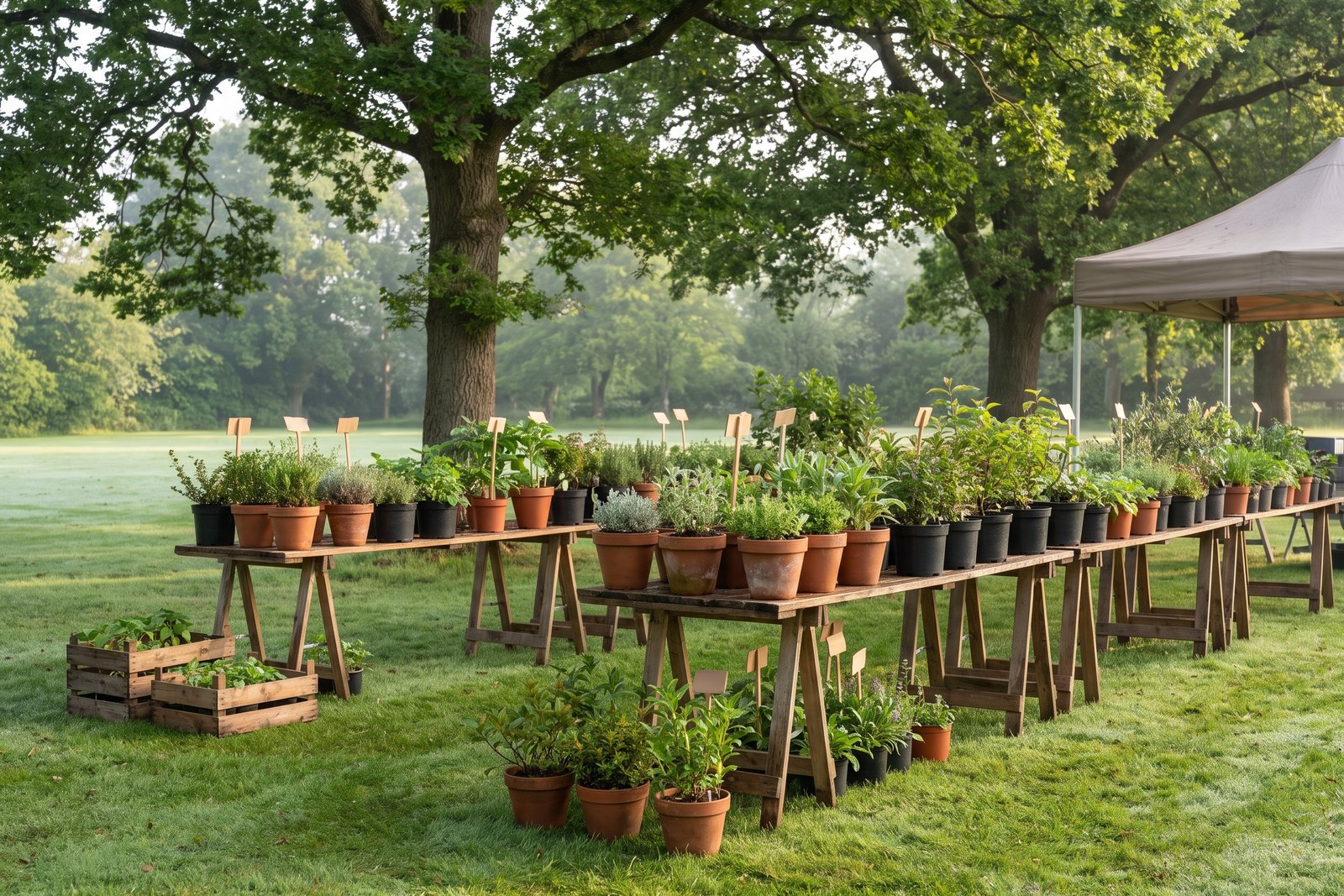
Running a Club or Society Plant Sale
A society plant sale works when member-grown stock and plants bought in from growers are planned together. This page covers the member-grown calendar, keeping members' pots healthy, filling the gaps from growers, labels and price bands, and the records that make next year's sale better.
Updated 24 October 2026. Plant counts from the live nz.hortosapp.com plant pages on 25 October 2026; median trade prices are not published for most New Zealand plants yet.
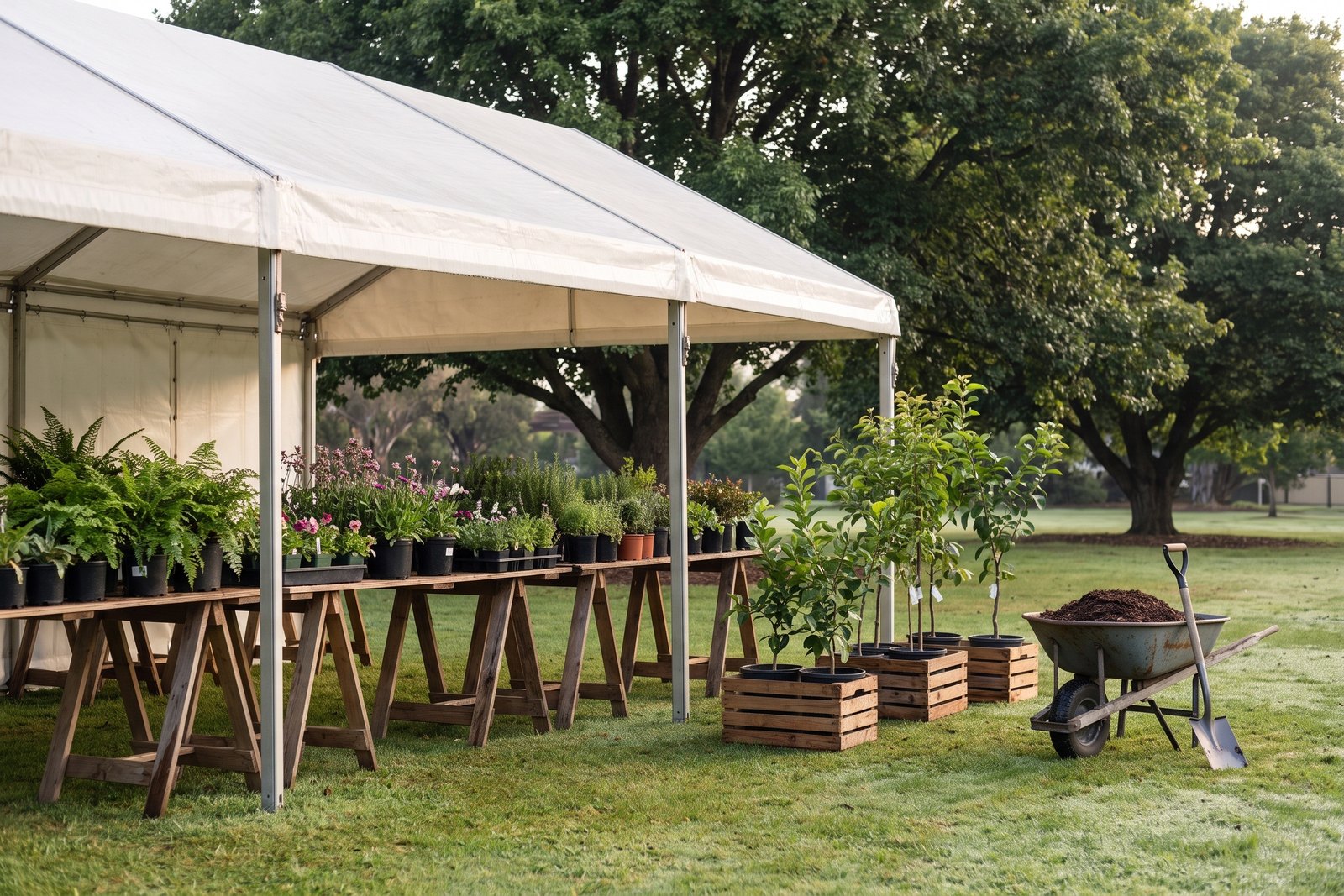
Running a Community Plant Sale or Tree Giveaway
A plant sale or a tree giveaway is a wholesale order with a date on it. This page sets out how a club, school, friends group or council plans the stock: what sells and what gives well, ordering for a date, receiving and holding the plants, the rules a sale meets, and the mistakes that send plants home unsold.
Updated 24 October 2026. Grower counts from the live nz.hortosapp.com regional hubs on 24 September 2026; median trade prices are not published for most New Zealand plants yet.
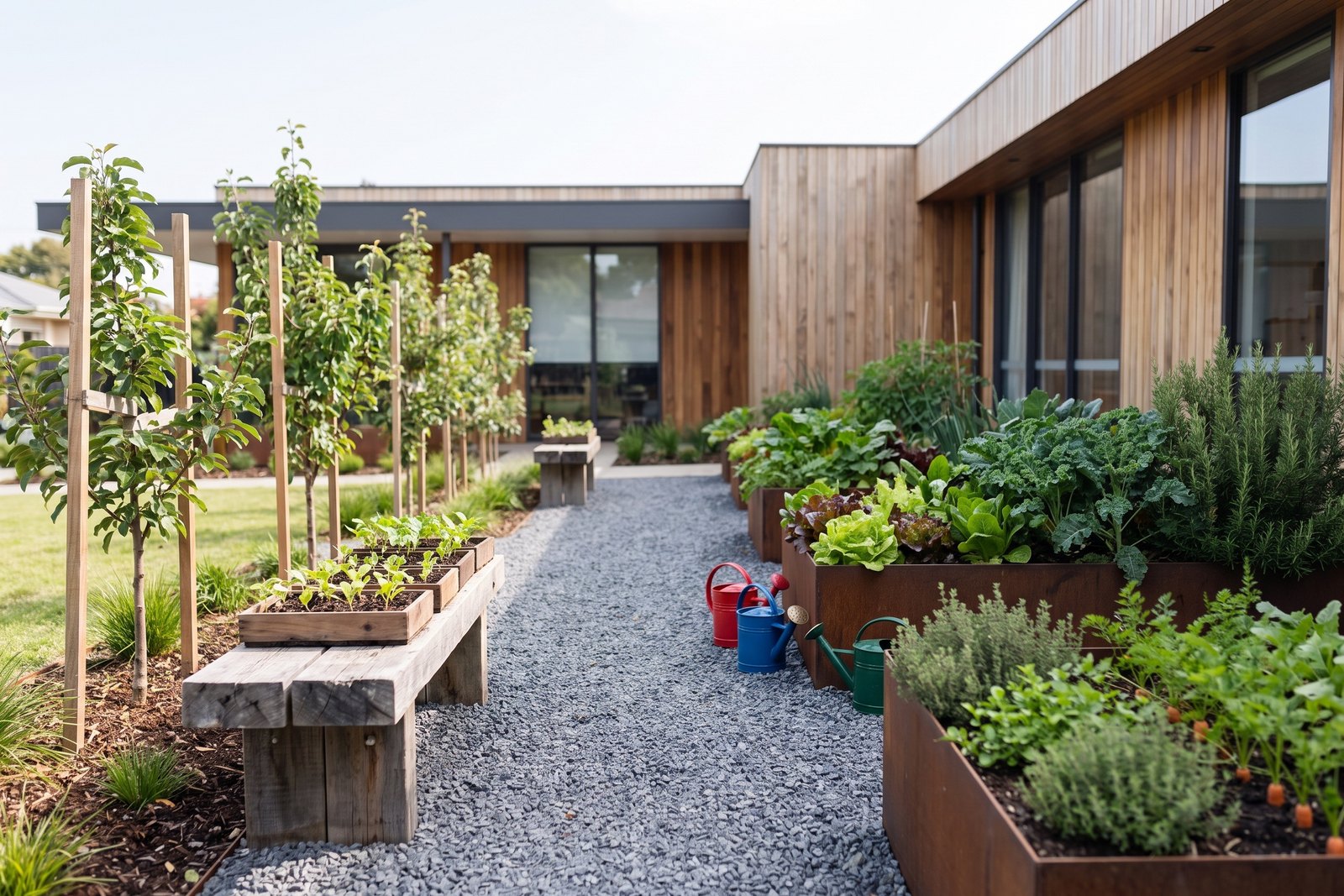
School Garden Planting and Buying for Teachers and Parent Groups
A school garden is planned around the school year, not the planting season, so its plants must survive the weeks the school is empty. This page covers planning around the holidays, who buys and how, choosing hardy plants, sizes for the planting day, and the programmes that help schools.
Updated 24 October 2026. Plant counts from the live nz.hortosapp.com plant pages on 25 October 2026; median trade prices are not published for most New Zealand plants yet.
Data and reference pages
New Zealand and Canada
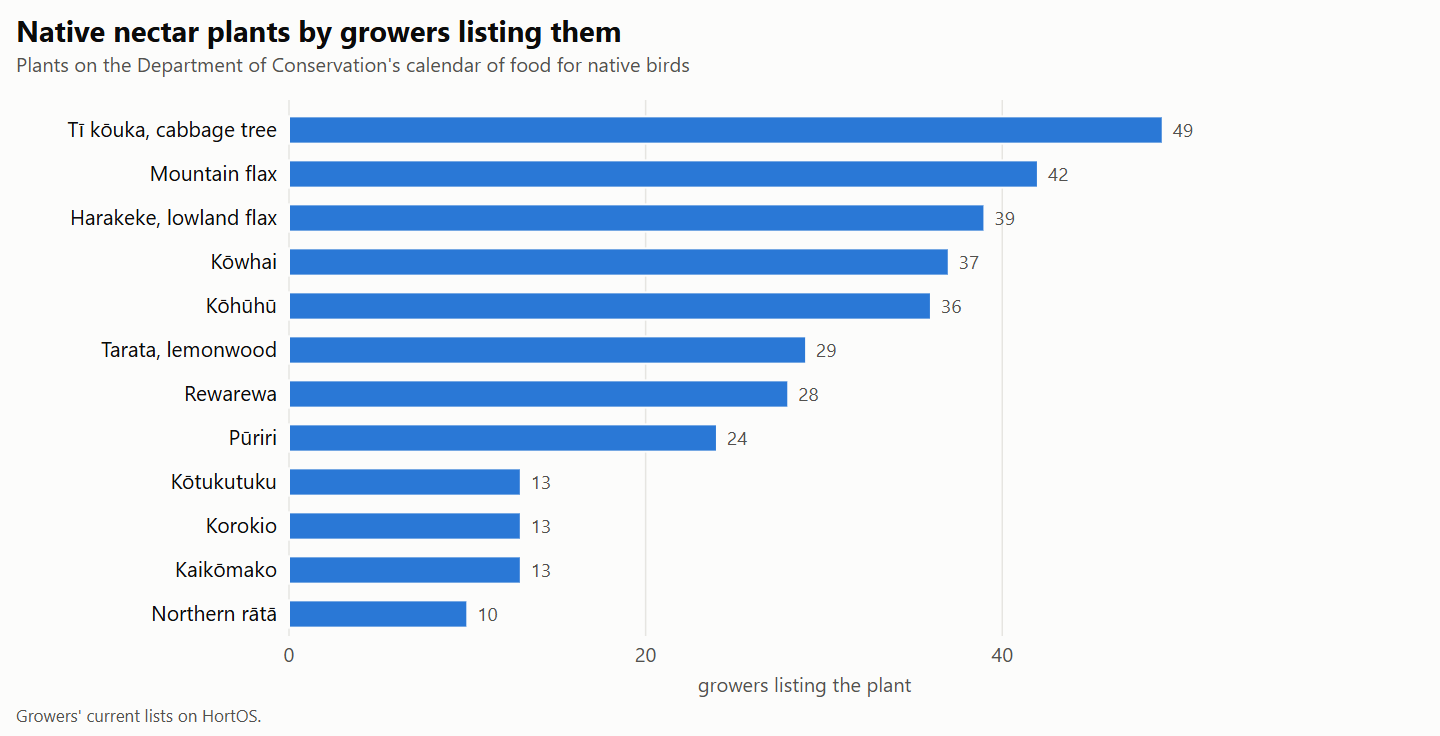
Native plants that feed tūī, kererū and korimako all year
The Department of Conservation's month by month calendar of native food plants for birds, read for tūī, kererū and korimako and counted to show its full autumn and thin winter, set beside how many New Zealand wholesale growers list the plants shown and in which regions, with what the Department says about eco-sourced plants and cultivars near bush.
Updated 24 October 2026. Grower counts are what the live nz.hortosapp.com plant pages printed; medians are not published for most New Zealand plants yet.
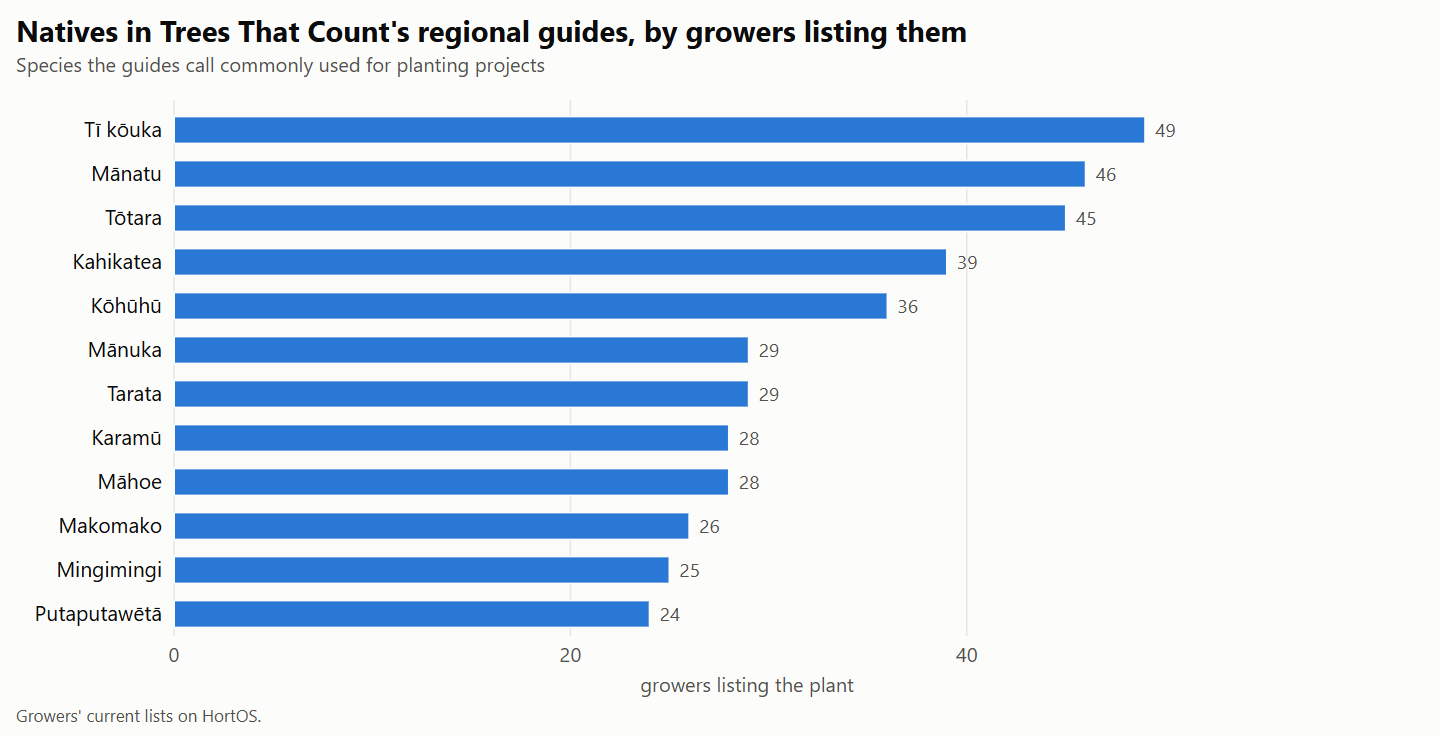
Funding for native planting in New Zealand, scheme by scheme
A dated map of who funds native planting in New Zealand, as read on 5 October 2026: Trees That Count's tree requests, regional council riparian and erosion grants, the Hill Country Erosion Programme and the forest land rules of the Emissions Trading Scheme, with how many growers list the species Trees That Count's regional guides call commonly used.
Updated 16 October 2026. Grower counts are what the live nz.hortosapp.com plant pages printed; medians are not published for most New Zealand plants yet.
Eco-sourcing native plants by ecological district in New Zealand
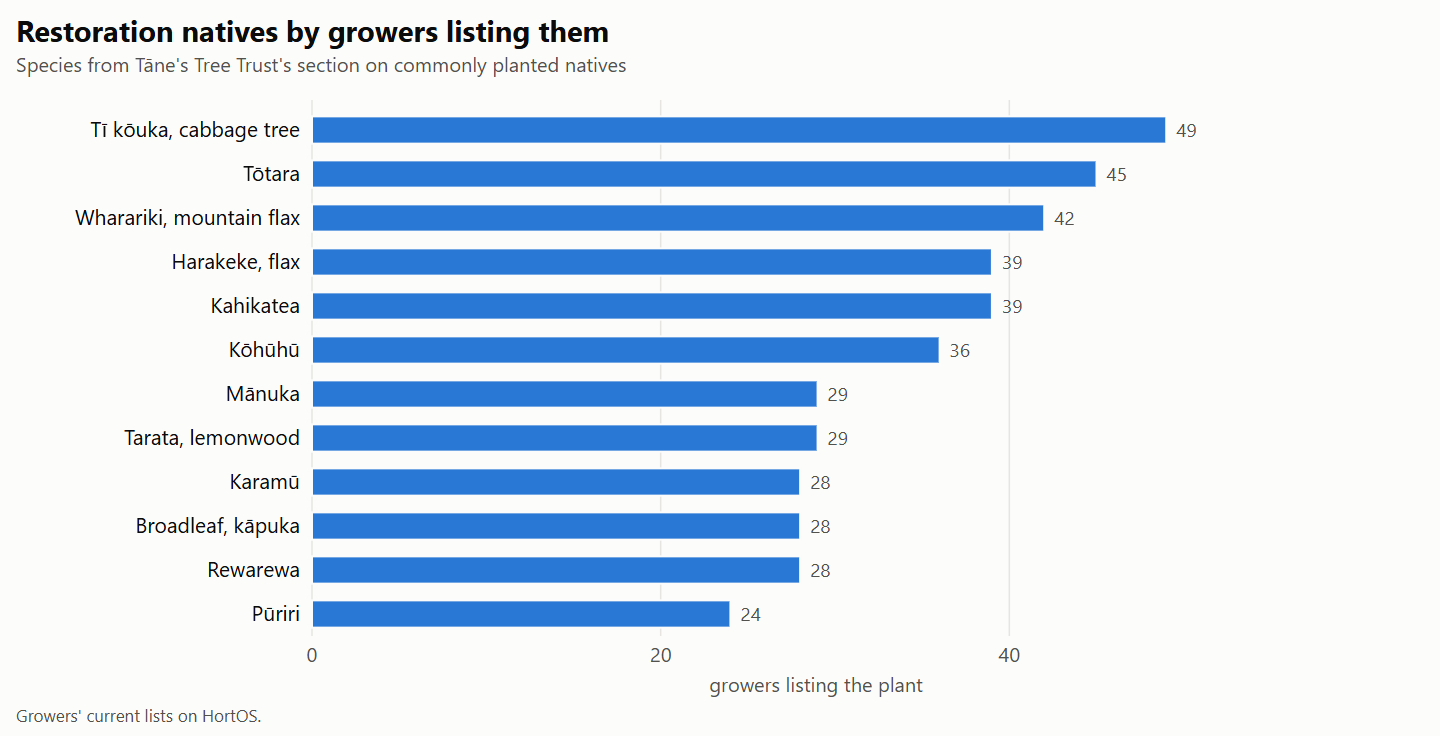
Sets out the Department of Conservation's eco-sourcing guidelines of September 2025, how an ecological district differs from a council region, and what six documents say about how close seed should be. A table counts the growers listing common restoration natives and names the regions with most growers for each, and the page says no listing shows a seed source.
Updated 11 October 2026. Grower counts are what the live nz.hortosapp.com plant pages printed; medians are not published for most New Zealand plants yet.
Native shelter belts for New Zealand farms and lifestyle blocks
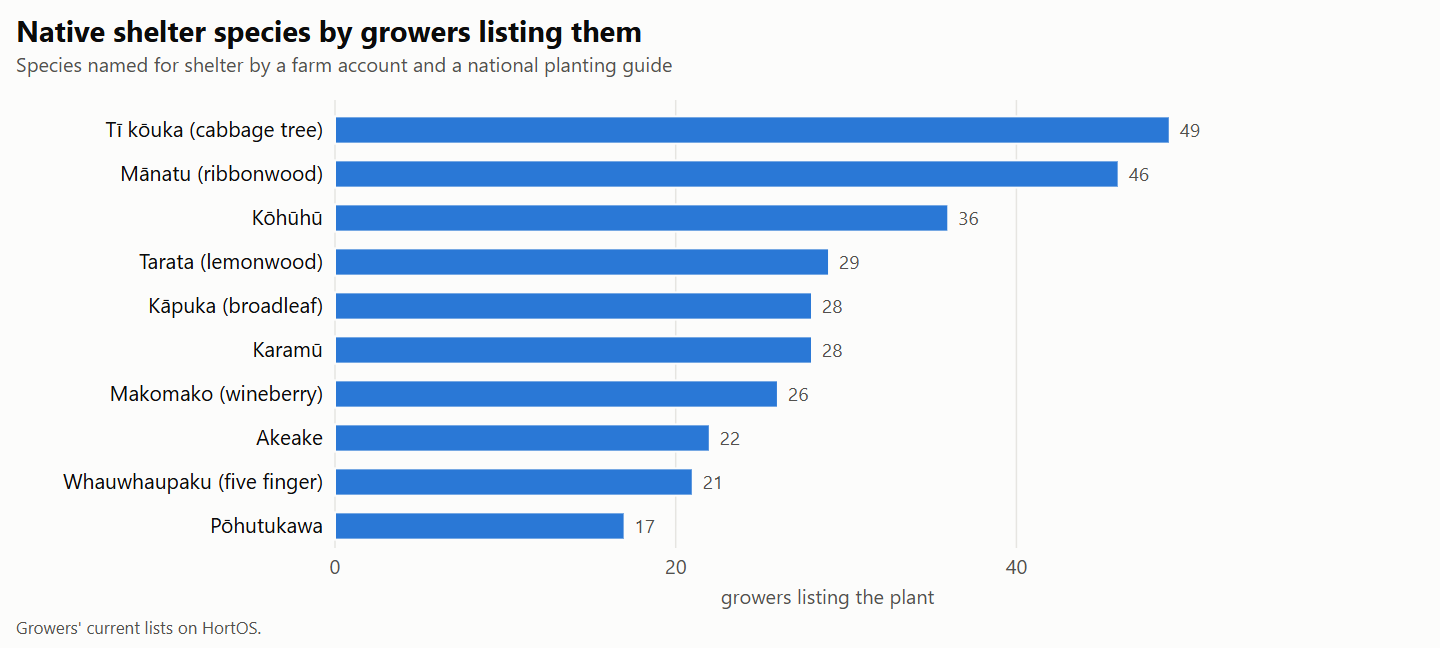
A shelter belt works best when some wind passes through it. This page sets out what a 2011 New Zealand Farm Forestry Association article says about density, length, spacing and direction, which native species a 2009 farm account and a 2023 national guide name for shelter, and how many growers list each species on HortOS.
Updated 10 September 2026. Grower counts are what the live nz.hortosapp.com plant pages printed; medians are not published for most New Zealand plants yet.