Rain Gardens and Bioswales: Siting, Soil and Plants
A rain garden is designed around the water first and the plants second, and its plants must take both a flood and a drought. This page covers what rain gardens and bioswales do, siting and sizing, the soil and the build, choosing plants for wet and dry, and looking after them.
Updated 24 October 2026. Plant counts from the live nz.hortosapp.com plant pages on 25 October 2026; median trade prices are not published for most New Zealand plants yet.
On this page
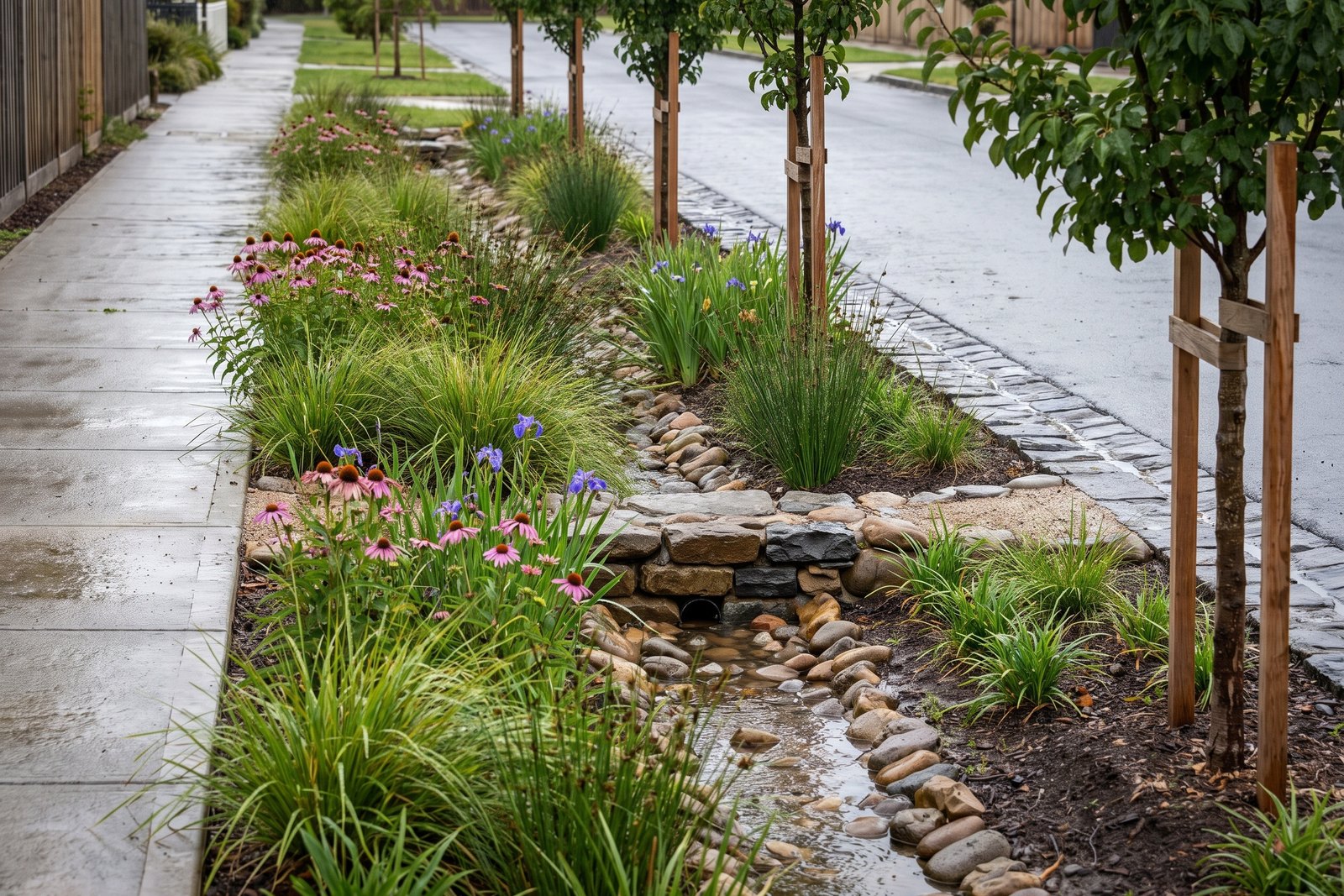
A rain garden looks like an ordinary garden bed and does a job no ordinary bed does: it catches the water running off a roof, a driveway or a street and lets it soak away slowly, cleaner than it arrived. The one idea that matters most is that a rain garden is designed around the water first and the plants second, and the plants chosen must take both a flood and a drought.
This page covers what rain gardens and bioswales do, where they can and cannot go, sizing and soil, choosing plants that take wet and dry, and looking after them. It is written for home gardeners, schools, community groups and councils planning a small one. It draws on the water agencies named below and on HortOS, a free directory of New Zealand wholesale plant growers with their published availability and trade prices. Street-scale bioswales are engineered by the council, and this page does not replace their design rules.
Quick facts
| What it does | A shallow planted depression catches runoff, slows it, filters it through soil and roots, and lets it soak away. |
|---|---|
| Bioswale | A bioswale is a planted channel that carries runoff along as well as soaking it in, often beside a road or car park. |
| Siting | Away from building foundations, septic systems and underground services, on gentle ground, where water already flows. |
| Soil | A free-draining but water-holding mix is the heart of it. A mix that drains too fast starves the plants. |
| Plants | A variety of plants that take both standing water and long dry spells, mostly natives. |
| Where the growers are | Growers listing these plants are on the region hubs: Auckland, Canterbury, Waikato. |
What a rain garden does
Sustainable Ōtautahi Christchurch has published notes from a walk around the city's rain gardens. They describe a layered build, with a gravel store at the base and a growing medium of part sand, part compost and part loam above it, through which the soil and plants filter pollutants from the stormwater.
A bioswale does the same along a line. It is a shallow planted channel that carries runoff from a road, path or car park, slowing it and soaking some of it in on the way to a drain. Small check dams of rock across a swale hold water back in steps so more of it soaks in.
Siting and sizing
The same notes say a rain garden is not possible where the water table is too high or the site is contaminated, and record that many Christchurch rain gardens have needed replanting because their soil mix drained too fast. A mix that holds some water, and organic mulch rather than gravel, served the plants better.
Watch where water runs in heavy rain before choosing the spot, and plan where the overflow goes when the garden is full. A garden that sends its overflow toward a house or a neighbour's fence does more harm than good.
Soil and the build
The soil does most of the work. It must let water through quickly enough that the surface does not stay flooded, and hold enough moisture that the plants survive between storms. Most designs replace the top layer of heavy soil with a mix of sand, compost and loam over a gravel layer, and cover it with organic mulch, which traps fine sediment and keeps roots cool better than gravel.
Leave a shallow lip of rock or a stone splash pad where water enters, so it does not scour the bed, and keep the overflow at a level that stops water ponding for more than a day or two.
Choosing the plants
The Christchurch notes recommend planting a variety of plants, for biodiversity and so the garden survives if one species fails, and note that leaf litter is a drawback of exotic plants, so evergreens can be more useful.
Think of the garden in three zones. The base holds water longest and suits plants that take wet feet for days. The sloping sides are wet only after storms. The rim and the ground around it stay dry most of the time and suit the hardiest plants. Group three or more of each species together, so the planting reads as a design rather than a collection.
The table lists plants of the kind rain gardens and bioswales use, with how many growers listed each on HortOS on 25 October 2026. Grower counts are the growers listing each plant on HortOS on 25 October 2026, in any size. Median trade prices are not published for most New Zealand plants yet.
| Plant | Growers listing it |
|---|---|
| Speckled sedge (Carex testacea) | 44 |
| Harakeke (Phormium tenax) | 39 |
| Oioi (Apodasmia similis) | 37 |
| Pūrei (Carex secta) | 36 |
| Swamp sedge (Carex virgata) | 34 |
| Silver tussock (Poa cita) | 28 |
| Mingimingi (Coprosma propinqua) | 25 |
| Tūrutu (Dianella nigra) | 25 |
| Mīkoikoi (Libertia grandiflora) | 13 |
| Kakaha (Astelia fragrans) | 3 |
Of the plants in the table, speckled sedge (Carex testacea) had the most growers listing it, 44, and kakaha (Astelia fragrans) the fewest of those shown, 3. Order each zone's plants together, so the garden is planted in one go while the soil is fresh.
A rain garden for a school or community group
A rain garden is a good project for a school or community group, because the result is easy to see. After a storm, children can watch water run off a roof into the garden, pool for a few hours and drain away while the gutter beside the street runs full. A simple rain gauge and a photograph after each storm turn it into a lesson.
Agree the site with whoever owns the ground and looks after the drains, usually the school's facilities staff or the council. Ask them about the downpipe or path the water will take, the services under the ground, and who will look after the garden over the school holidays. A small garden built well and looked after teaches more than a large one that floods its neighbour.
Looking after it
- Water while establishing. New plants need watering through their first dry season, even in a garden built to catch water.
- Clear the inlet. Check where water enters after storms, and clear leaves, litter and sediment.
- Weed by hand. Avoid sprays in a garden designed to drain into waterways.
- Top up mulch. Replace mulch washed away by storms, and keep the surface level so water spreads.
- Replace failures. Replant gaps with the species that have thrived in that part of the garden.
What to watch for
- Too close to a building. Water soaking in beside foundations can find its way inside. Keep the garden well away.
- Unmarked services. Pipes and cables run under many front gardens and berms. Have them marked before digging.
- A mix that drains too fast. Plants in pure sand die in the first dry spell. Use a mix that holds some water.
- Plants for one condition. Plants that only like wet feet die in summer, and dry-garden plants drown in winter. Choose for both.
- No overflow plan. Every garden fills in a big storm. Send the overflow where it does no harm.
Getting it right
- Watch where water runs in heavy rain, and choose a spot well away from buildings and septic systems.
- Have underground services marked, and ask the council before working on a berm or street.
- Size the garden for the area draining to it, and plan the overflow.
- Build a free-draining but water-holding soil over gravel, with organic mulch on top.
- Plant a variety of species that take wet and dry, the wettest-tolerant in the base.
- Water through the first dry season, clear the inlet after storms, and weed by hand.
A word of caution
The siting and sizing figures on this page are the agencies' named here, and the council's stormwater rules decide what may connect to a drain. Changes to stormwater pipes may need a licensed plumber. The counts are what HortOS printed on 25 October 2026, and the live pages change as growers update their lists.
Sources
- Sustainable Ōtautahi Christchurch, Notes from water sensitivity walk: rain gardens: how Christchurch rain gardens work.
- New Zealand Plant Conservation Network, Plant lists by ecological region and district: plant lists for each district.
- New Zealand Landcare Trust: catchment and community groups.
More guides
Native Plants for a Small Pollinator Patch
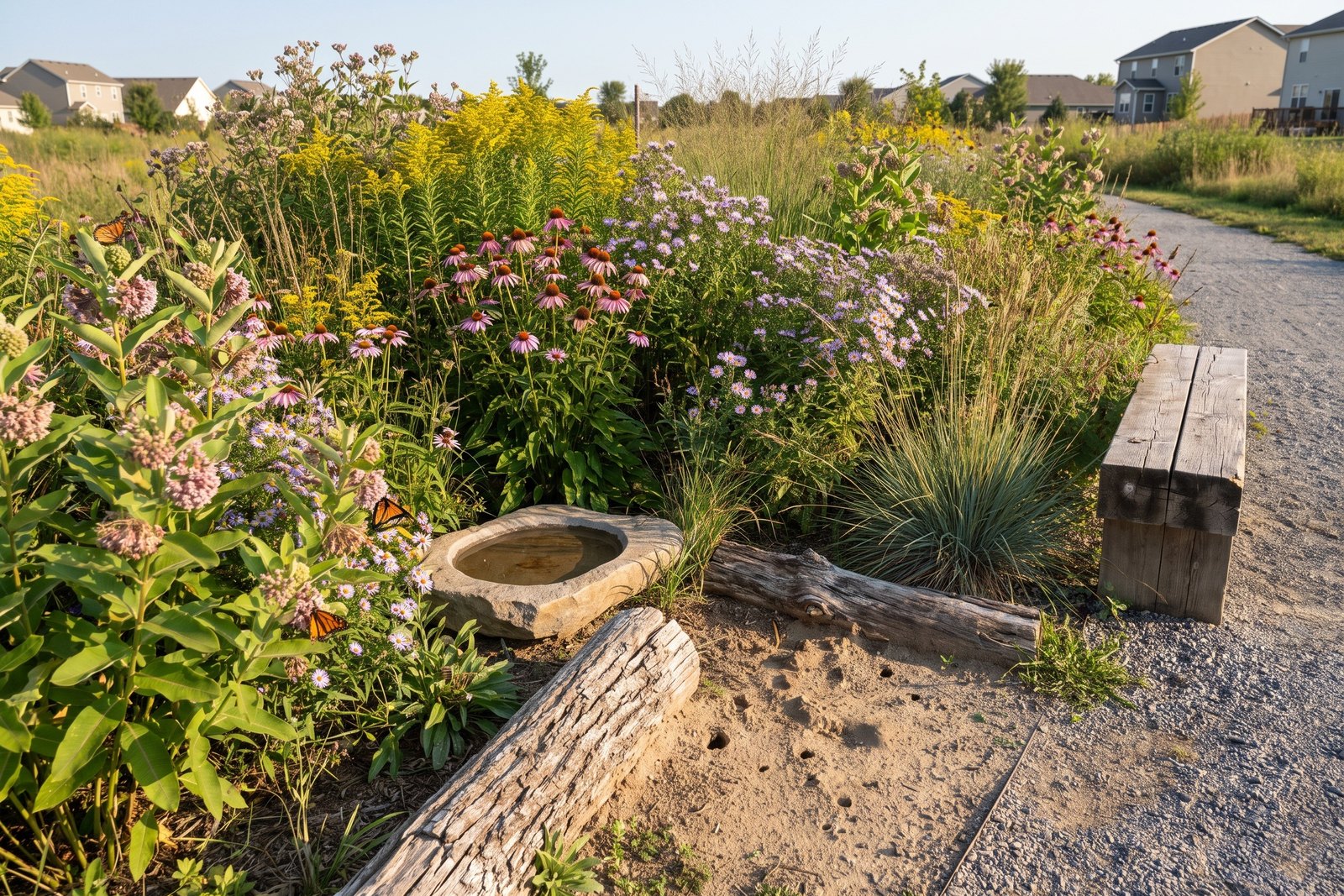
A small pollinator patch works when it does three jobs at once: flowers in sequence, host plants for caterpillars and places to nest, kept free of sprays. This page covers choosing the spot, native plants by the job they do, a flowering sequence and buying the plants from growers.

Planning a Pollinator Planting With Trade Suppliers
A pollinator planting list from a published regional guide is a wholesale order in disguise. This page shows how a club, a council or a conservation group matches the list to what growers list, chooses sizes and drifts, spreads flowering across the year, and asks the provenance, cultivar and chemical questions before the order goes in.
Restoration Planting and Local Ecotype Stock
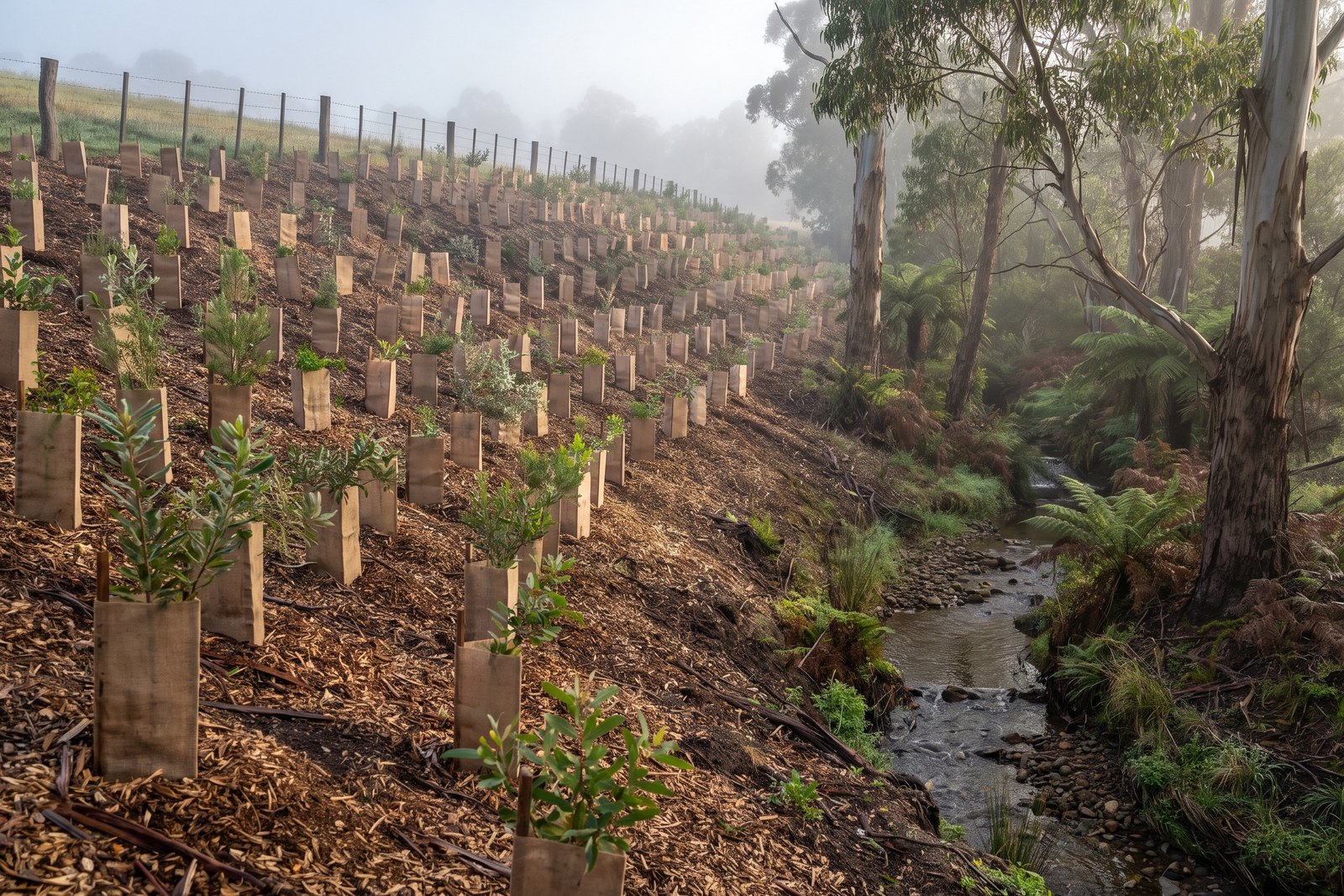
A restoration planting is decided by site preparation and seed origin before the day, and by two or three years of follow-up after it. This page covers preparing the site, local ecotype stock and seed zones, planting small stock well, the first three years and counting survival.