Restoration Planting and Local Ecotype Stock
A restoration planting is decided by site preparation and seed origin before the day, and by two or three years of follow-up after it. This page covers preparing the site, local ecotype stock and seed zones, planting small stock well, the first three years and counting survival.
Updated 24 October 2026. Plant counts from the live nz.hortosapp.com plant pages on 25 October 2026; median trade prices are not published for most New Zealand plants yet.
On this page
A restoration planting is usually judged by the number of plants that went in on the day, and should be judged by the number alive three years later. The one idea that matters most is that survival is decided before planting, by the site preparation and the seed origin, and after it, by two or three years of weeding and checking.
This page covers the work of a restoration planting: preparing the site, matching local ecotype stock to it, planting small stock well, and the follow-up that turns a planting into a stand. It draws on the restoration bodies named below and on HortOS, a free directory of New Zealand wholesale plant growers with their published availability and trade prices. Sourcing native plants for a restoration or revegetation project covers ordering and contract growing in detail.
Quick facts
| Prepare first | Control weeds across the whole site for months before planting. Planting into weeds is planting into competition the young plants rarely win. |
|---|---|
| Local ecotype | Seed or cuttings from the same district or seed zone, from many parent plants, give stock suited to the site and a broad genetic base. |
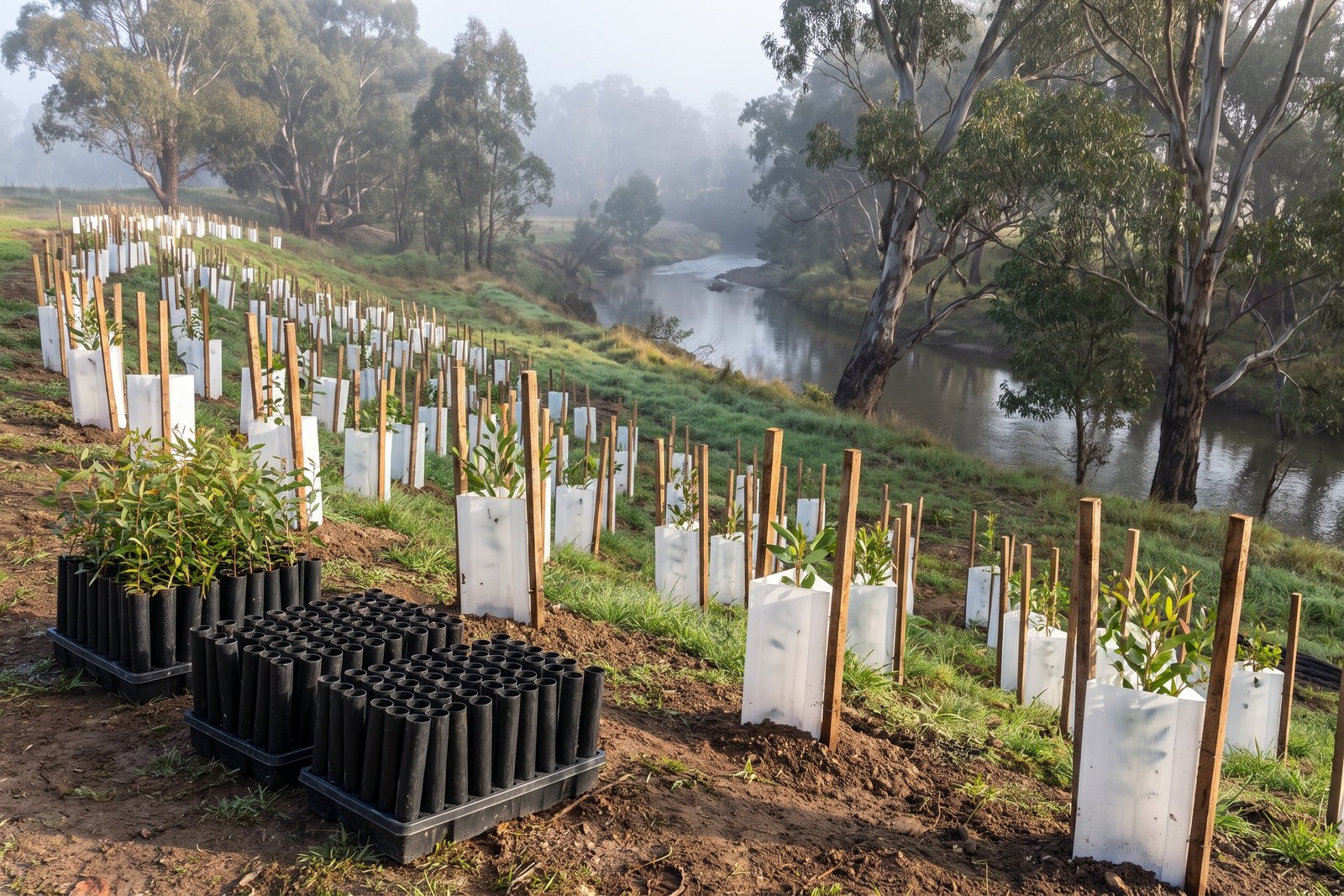
| Plant small | Most restoration is planted as root trainers and PB3 bags, which establish well and are cheap enough to plant densely. |
| Plant into moist soil | Plant in autumn and winter, when the soil is moist and will stay moist. |
| Follow up | Two or three years of weeding, guard checks and infill planting decide how many plants survive. |
| Count survival | Simple counts in marked plots at three, twelve and twenty-four months tell the group what worked. |
Preparing the site
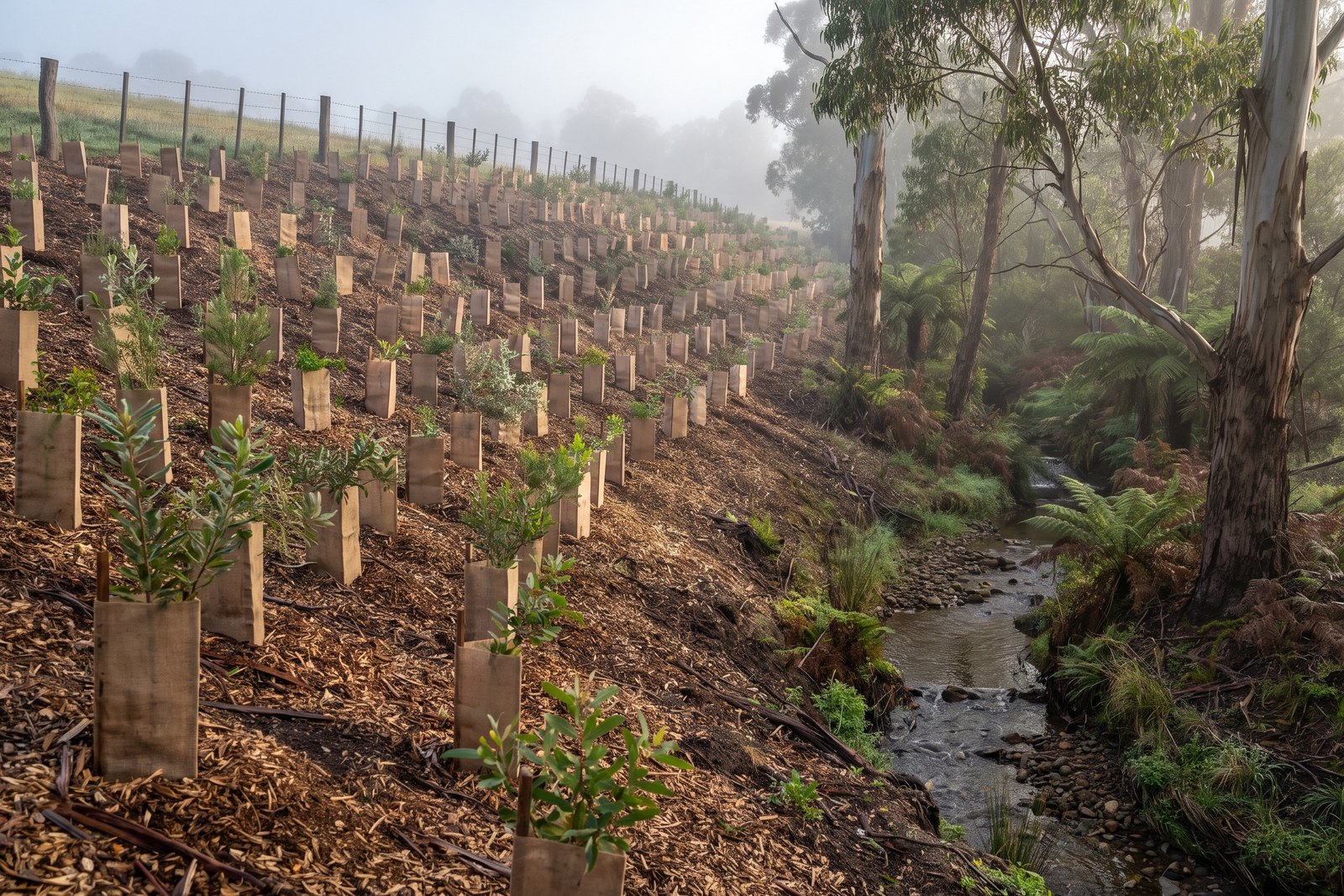
Site preparation is the part volunteers least enjoy and the part that matters most. Weeds and grasses take the water and light young plants need, and a site planted into them loses most of its plants in the first dry spell. Most groups control weeds across the whole area for one or more seasons before planting, by spraying, scalping, mulching or grazing, as the site and its managers allow.
Fence out stock and, where browsing animals are a problem, plan guards for every plant. Mark the planting zones on a map: wet margins, slopes and dry ridges need different species. Check the site with the landowner and the agency that manages the waterway or reserve before any work starts, since many restoration sites have their own rules.
Local ecotype stock
The Department of Conservation describes eco-sourcing as collecting seeds or cuttings from nearby, similar ecosystems to grow plants for restoration, and suggests using the Ecological District and Region framework as a guide to where to collect. Tāne’s Tree Trust adds that the seed should come from a large range of parent plants, which gives a broader genetic base and lowers the risk of inbreeding.
In practice a group asks three things of a grower. Where was the seed collected, how many parent plants was it collected from, and can the grower grow the group's own collected seed. A grower that keeps batch records answers all three. The answers belong in the order and in the project's records.
Planting small stock well
- Plant moist. Water the trays well the day before, and plant into moist soil. Dry roots in dry soil rarely recover.
- Firm, not packed. Set the plant at the depth it grew, firm the soil around it with a heel or hand, and leave a small hollow to catch rain.
- Guard and stake. Fit guards straight after planting where browsing animals or wind are a problem, and stake them firmly.
- Mulch where it helps. A mulch mat or a ring of mulch holds moisture and slows weeds on dry sites.
- Record as you go. Note what was planted in each zone, from which batch, so survival counts can be traced back to the stock.
The table lists species of the kind restoration projects plant, with how many growers listed each on HortOS on 25 October 2026. It shows which species are easy to buy in numbers, not which suit a site, which is the ecologist's call. Grower counts are the growers listing each plant on HortOS on 25 October 2026, in any size. Median trade prices are not published for most New Zealand plants yet.
| Plant | Growers listing it |
|---|---|
| Tī kōuka (Cordyline australis) | 49 |
| Mānatu (Plagianthus regius) | 46 |
| Harakeke (Phormium tenax) | 39 |
| Kahikatea (Dacrycarpus dacrydioides) | 39 |
| Oioi (Apodasmia similis) | 37 |
| Pūrei (Carex secta) | 36 |
| Kōhūhū (Pittosporum tenuifolium) | 36 |
| Swamp sedge (Carex virgata) | 34 |
| Mānuka (Leptospermum scoparium) | 29 |
| Karamū (Coprosma robusta) | 28 |
| Mingimingi (Coprosma propinqua) | 25 |
| Kānuka (Kunzea ericoides) | 21 |
| Akiraho (Olearia paniculata) | 12 |
Of the species in the table, tī kōuka (Cordyline australis) had the most growers listing it, 49, and akiraho (Olearia paniculata) the fewest of those shown, 12. A species few growers list is a species to grow to order, booked a season or a year ahead. Eco-sourcing by ecological district goes further on matching the seed to the site.
Ordering and timing the stock
Restoration stock is grown to a timetable, and most of that timetable runs before the planting day is set. Seed has to be collected when it ripens, cleaned and stored, and sown months before planting. Tubes grown from it usually need a full growing season in the nursery before they are large enough to plant out. For a large project that means agreeing the species, the numbers and the seed source with a grower a year or more ahead.
Put the order in writing: the species, the numbers, the pot size, the seed source and how many parent plants it came from, the delivery week and the site. Ask the grower to hold the trays at the nursery until the planting week, and to say early if a species fails to germinate so a substitute can be agreed. Order a few more than the plan needs, for infill planting in the next season.
The first three years
A planting becomes a stand in its first three years. Weed around each plant two or three times in the first growing season and less often after that. Check guards after storms and remove them when the plants are well above them. Water in a dry first summer if the site allows it. Plant gaps with the species that survived best, from the same seed source, in the next planting season.
Set up a few marked plots of the same size across the site, count the living plants in each at three, twelve and twenty-four months, and photograph them from the same point each time. The counts tell the group which species, sizes and methods to use again, and funders increasingly ask for them.
What to watch for
- Planting into weeds. A planting into grass or weeds loses most of its plants. Prepare the whole site first.
- Native read as local. A native species from far away may not suit the site. Ask for the seed source in writing.
- Big plants for a quick result. Larger stock costs more and does not establish faster on a prepared site. Plant small and dense.
- No follow-up. A planting with no weeding or guard checks after the day loses plants every month. Book the follow-up before the planting.
- No records. Without counts the group cannot show a funder what worked or learn from what failed.
Getting it right
- Agree the site, the zones and the rules with the landowner and the managing agency.
- Prepare the whole site for one or more seasons, and fence out stock.
- Settle the species and the seed source rule with an ecologist, and order or contract-grow the stock in time.
- Plant root trainers and PB3 bags into moist soil in the planting season, with guards where needed.
- Weed and check guards for two or three years, and infill gaps from the same seed source.
- Count survival in marked plots at three, twelve and twenty-four months, and keep the records.
A word of caution
Which species suit a site, and the seed source rule, are the ecologist's and the managing agency's to decide. The counts are what HortOS printed on 25 October 2026, and the live pages change as growers update their lists. A grower's list cannot show provenance or growing practice, and the grower's written answer is the record.
Sources
- Department of Conservation, Native plant restoration: planning a restoration planting.
- Department of Conservation, Eco-sourcing, collecting and propagating seeds: eco-sourcing by ecological district.
- Tāne's Tree Trust, Ecosourcing of native species for planting: local provenance and genetic diversity.
- New Zealand Plant Conservation Network, Plant lists by ecological region and district: plant lists for each district.
- Trees That Count: native trees for community planters.
More guides
Sourcing Native Plants for a Restoration or Revegetation Project
Revegetation stock is grown to order, so a restoration project that books its growing a year ahead plants what the plan says. This page covers the provenance rule and how to ask for it, the grades the trade grows, contract growing and its timetable, reading the directory for a project, and what a grower's list cannot show.
Eco-sourcing native plants by ecological district in New Zealand
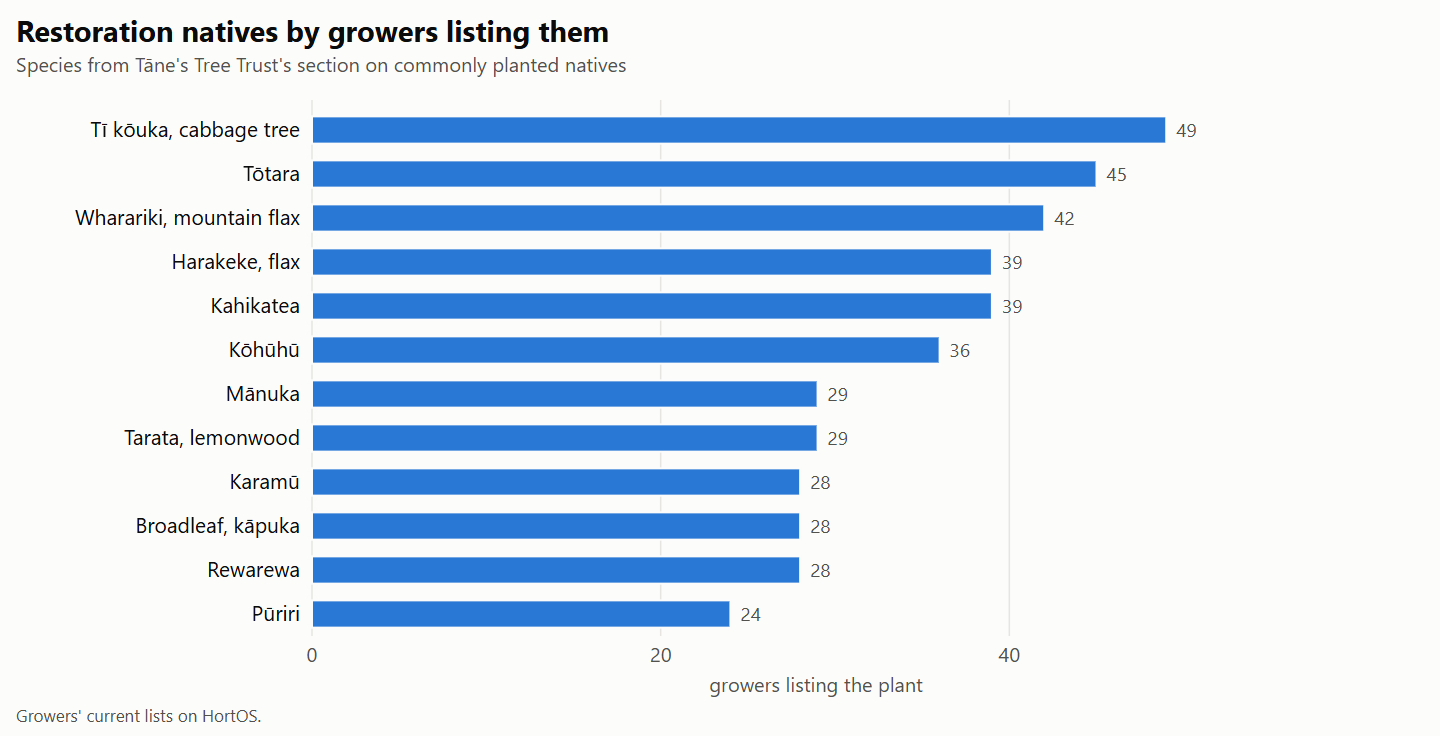
Sets out the Department of Conservation's eco-sourcing guidelines of September 2025, how an ecological district differs from a council region, and what six documents say about how close seed should be. A table counts the growers listing common restoration natives and names the regions with most growers for each, and the page says no listing shows a seed source.
Native Plants for a Small Pollinator Patch
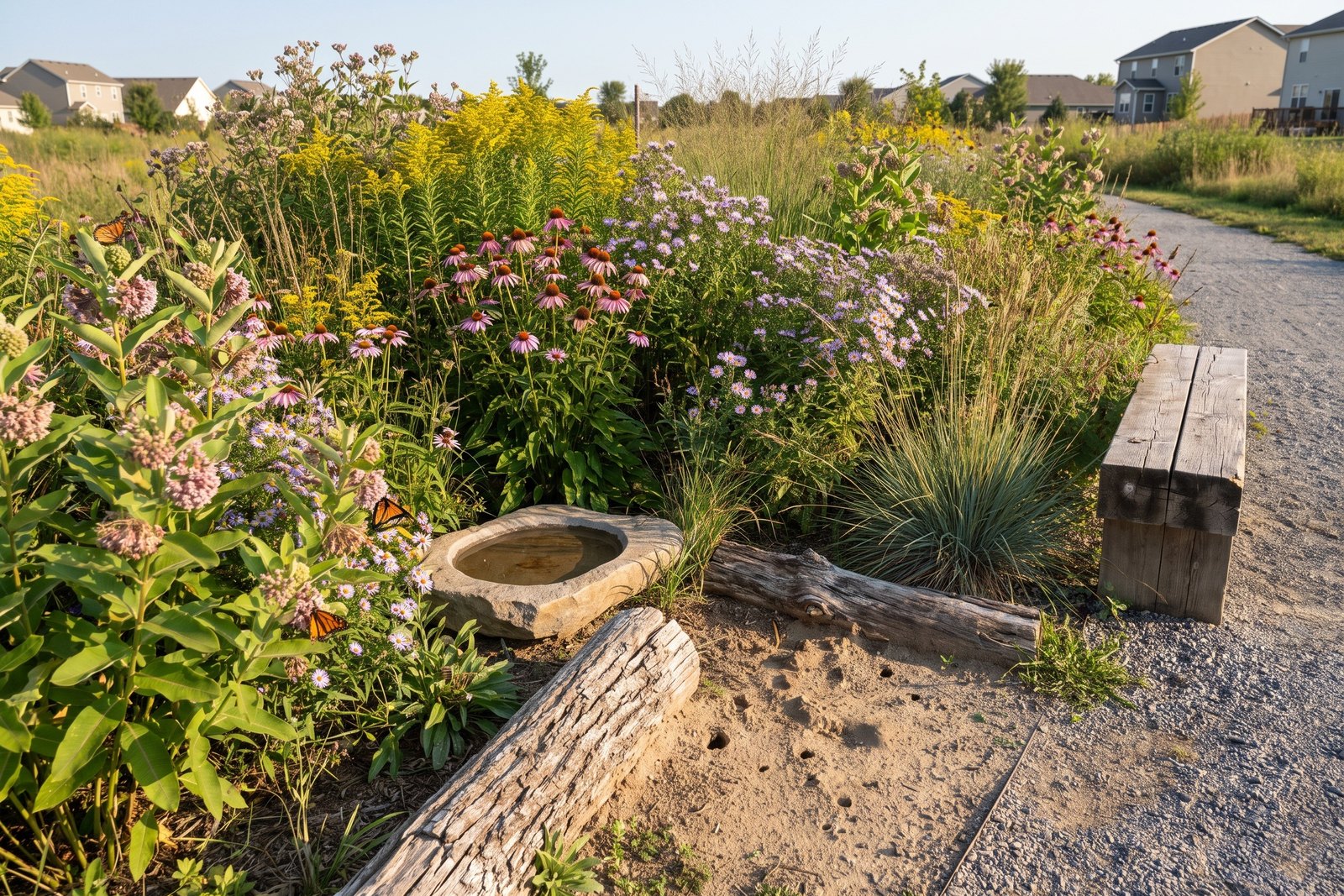
A small pollinator patch works when it does three jobs at once: flowers in sequence, host plants for caterpillars and places to nest, kept free of sprays. This page covers choosing the spot, native plants by the job they do, a flowering sequence and buying the plants from growers.