Specifying and Procuring Trees for a Street or Park Planting
A street or park planting fails at the specification more often than at the planting. This page explains the nursery stock standard to specify against, what goes in the clause, how the trade grows and grades advanced trees, where the growers are, the quote and tender process, and the inspection at the nursery and at delivery.
Updated 24 October 2026. Grower counts from the live nz.hortosapp.com regional hubs on 24 September 2026; median trade prices are not published for most New Zealand plants yet.
On this page
A street or park planting fails at the specification more often than at the planting. A clause that asks for a height and a pot gets a tall tree in a small pot. A clause that asks for a calliper, a height, a container volume and a root ball test, and names the standard they come from, gets a tree that stands up in its tenth year. The one idea that matters most is that the specification is the order, and the grower grows to it or declines it.
This page explains how a council, a landscape architect, an arborist or a school writes and procures a tree order. It covers the standard to specify against, what to put in the clause, how the trade grows and grades advanced trees, where the growers are, the tender or quote process and the inspection at the nursery and at delivery. New Zealand has no single national nursery stock standard, so a council or its landscape architect writes its own clause, usually by height, grade and container volume, and the New Zealand Arboricultural Association and the New Zealand Institute of Landscape Architects are the bodies whose members write and check them. It draws on that standard and on HortOS, a free directory of New Zealand wholesale plant growers with their published availability and trade prices. Street trees and canopy covers what advanced stock costs and who holds it; this page covers how to buy it.
Quick facts
| The standard | New Zealand has no single national nursery stock standard, so a council or its landscape architect writes its own clause, usually by height, grade and container volume, and the New Zealand Arboricultural Association and the New Zealand Institute of Landscape Architects are the bodies whose members write and check them. |
|---|---|
| The clause | Species and cultivar, calliper at the measured height, overall height, clear stem, container volume or root ball size, single leader or multi stem, the standard's grade, and the inspection right. |
| Where the trees are | On 24 September 2026 only a handful of New Zealand growers listed advanced tree stock on nz.hortosapp.com, two in Auckland and one each in Waikato, Tasman, Canterbury and Manawatu-Whanganui, so a street tree project is grown to order more often than it is bought from a list. |
| What they cost | Median trade prices are not published for most New Zealand plants yet, so a project reads each grower's own price beside its line and asks for a quote. |
| Lead time | A tree at 45 litres or #15 is two to three years in the nursery and a 200 litre or #65 tree five or more. Trees for a season are booked the season before; a run of one cultivar is grown to order. |
| Inspection | Tag the trees at the nursery before dispatch and check again at delivery. A tree that fails the root ball or the stem test is refused at the gate, not planted and argued about. |
The standard and the clause
New Zealand has no single national nursery stock standard, so a council or its landscape architect writes its own clause, usually by height, grade and container volume, and the New Zealand Arboricultural Association and the New Zealand Institute of Landscape Architects are the bodies whose members write and check them. Plant Pass, the plant production biosecurity scheme run by New Zealand Plant Producers Incorporated, is the scheme a specification may name.
A clause written to the standard has the same parts whatever the market. The species and cultivar, with the botanical name. The calliper, measured where the standard says. The overall height and the clear stem height. The container volume for container grown stock or the root ball diameter for field grown. Whether the tree is a single leader or a multi stem. The grade or class in the standard's words. Where and when the buyer may inspect, and what the buyer may refuse. A clause that names the standard and gives those figures can be priced by any grower; one that says advanced tree, 2 metres, leaves the grower to guess.
How the trade grows and grades a tree
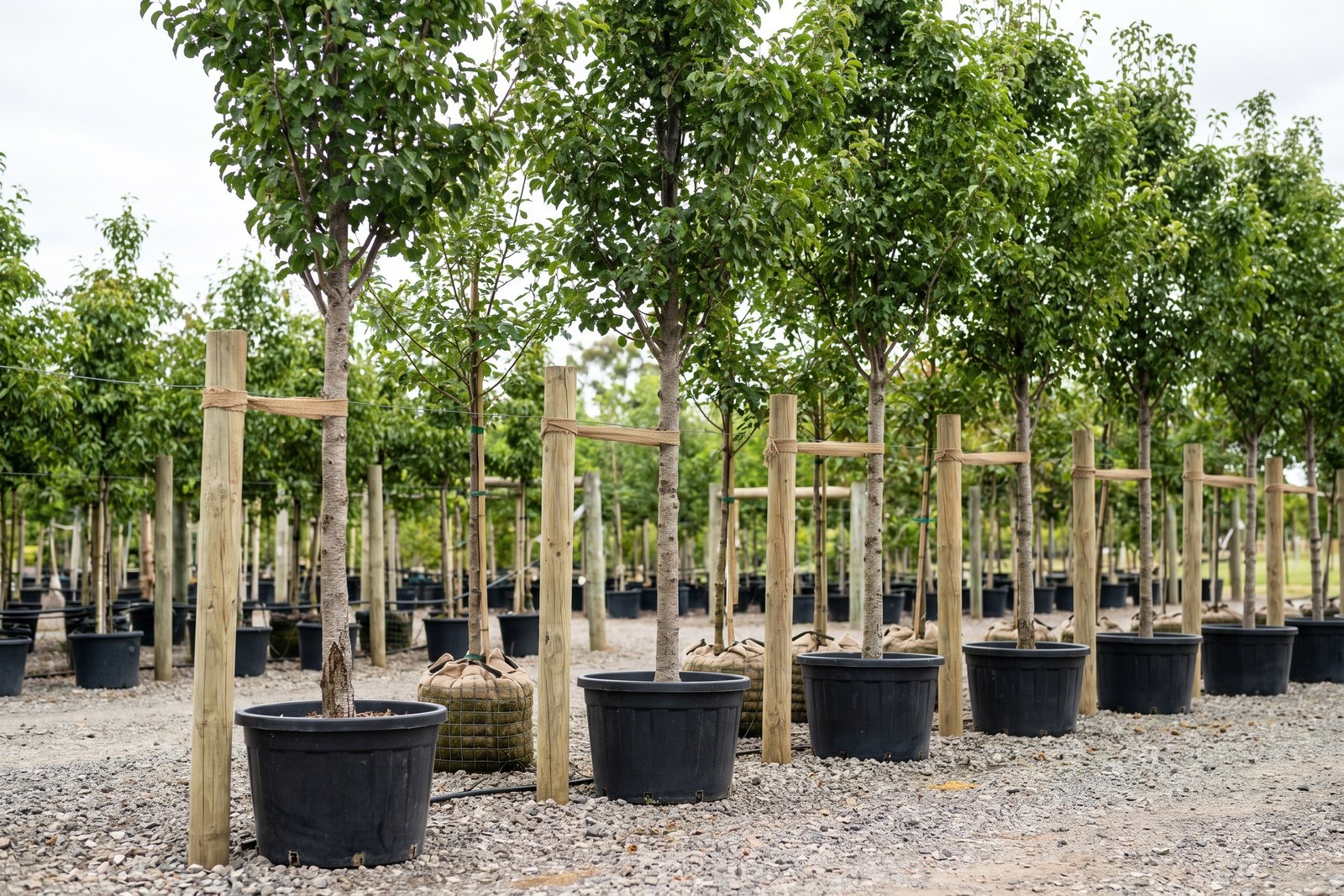
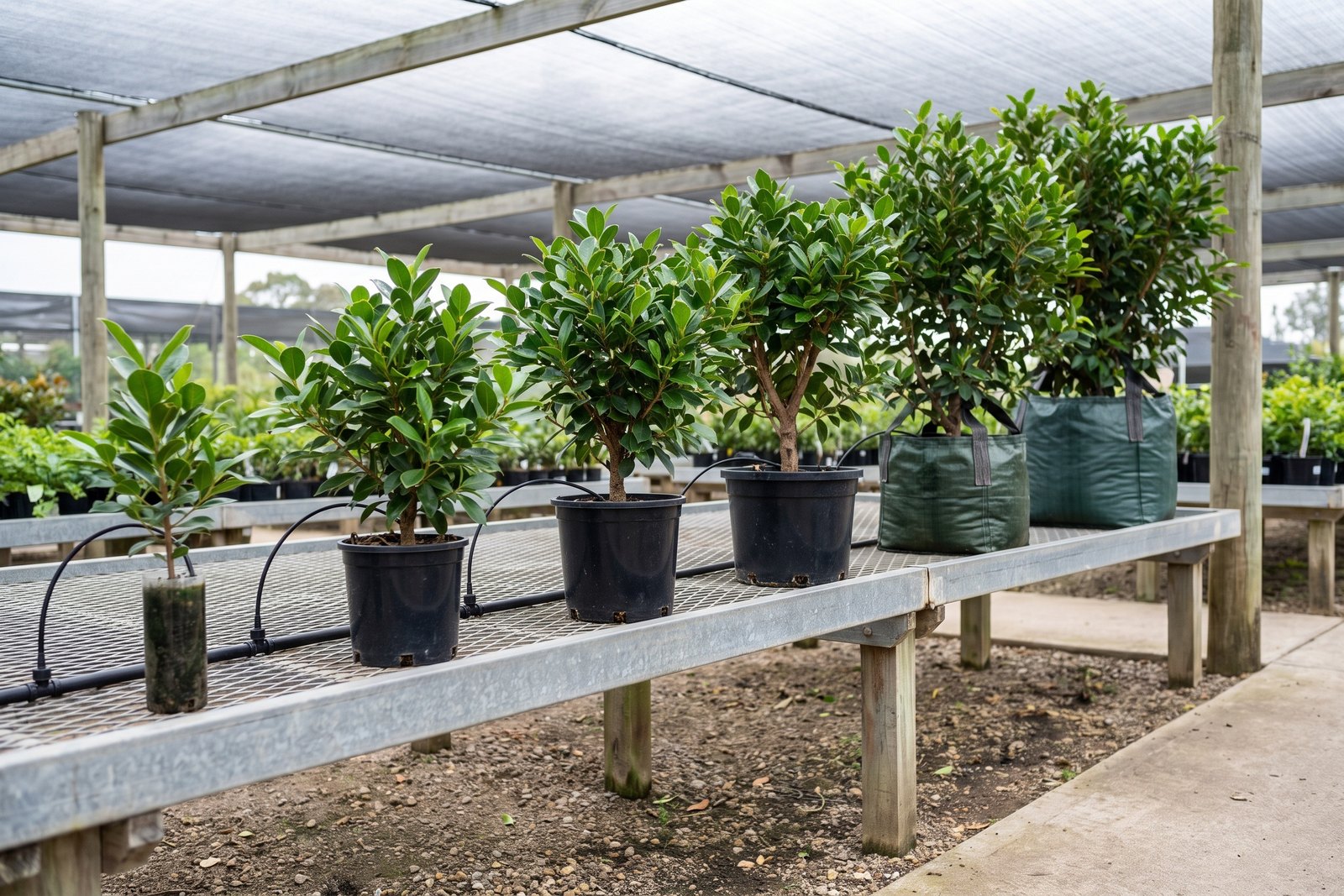
A tree reaches the sizes a street planting uses by being potted on, from a root trainer through a PB5 bag and a 5 litre pot to a 45 litre bag and larger, or by being grown in the field and dug with a root ball. Each move costs a season and the price steps up with it. Median trade prices are not published for most New Zealand plants yet, so a project reads each grower's own price beside its line and asks for a quote.
Two things on a list tell a buyer how a tree was grown. The container volume says how long the tree has had to build a root system, and the standard says what volume a tree of a given calliper should be in. The field grown or ex ground label says the tree will arrive with a root ball, bagged or in a wire basket, and needs a crane or a loader rather than a trolley. Plant grades and container sizes by market explains the size names, and what makes a nursery plant good quality the root, stem and hardening checks.
Where the trees are, and booking them
On 24 September 2026 only a handful of New Zealand growers listed advanced tree stock on nz.hortosapp.com, two in Auckland and one each in Waikato, Tasman, Canterbury and Manawatu-Whanganui, so a street tree project is grown to order more often than it is bought from a list. The region hubs (Auckland, Canterbury, Waikato, Bay of Plenty) list every grower by town, and each plant page shows the growers listing a tree by size. A specifier can therefore see before the tender whether the species and size the design calls for is grown within freight distance or must be grown to order.
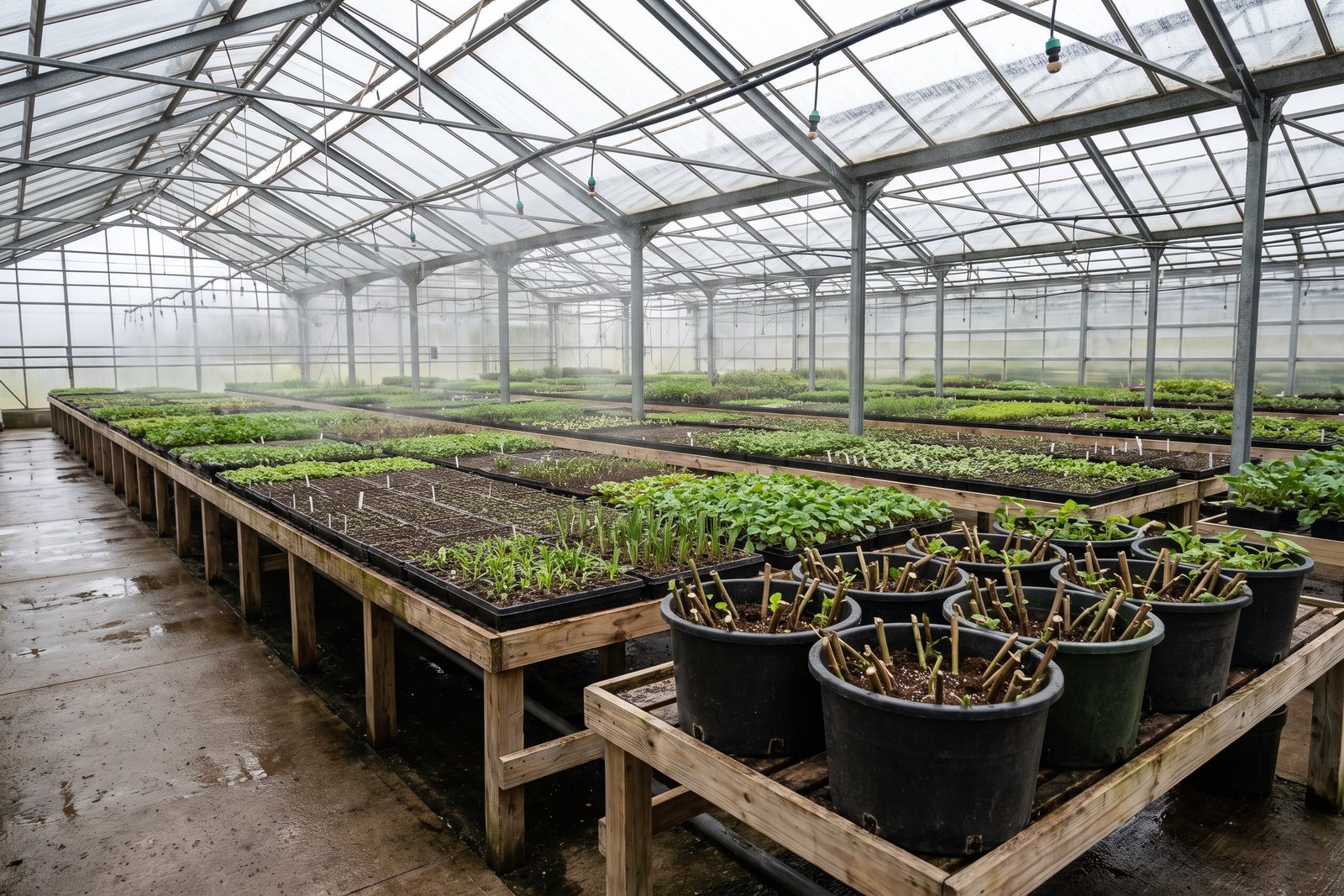
The timetable follows from the growing time. A tree at a 45 litre bag spent two to three years in the nursery. A project that wants two hundred of one cultivar at one size in one week books them the season before, and often pays a deposit to have them held and potted on. A project that wants fifty mixed trees for a park buys from current lists and takes what the lists hold. Lead times, pre-orders and contract growing explains both routes.
Tender, quote and inspection
- Price on the same clause. Send the specification, the counts and the dispatch window to three or more growers and ask for a price ex GST per tree, freight shown separately, with the growing location and the inspection date. Quotes on different clauses cannot be compared.
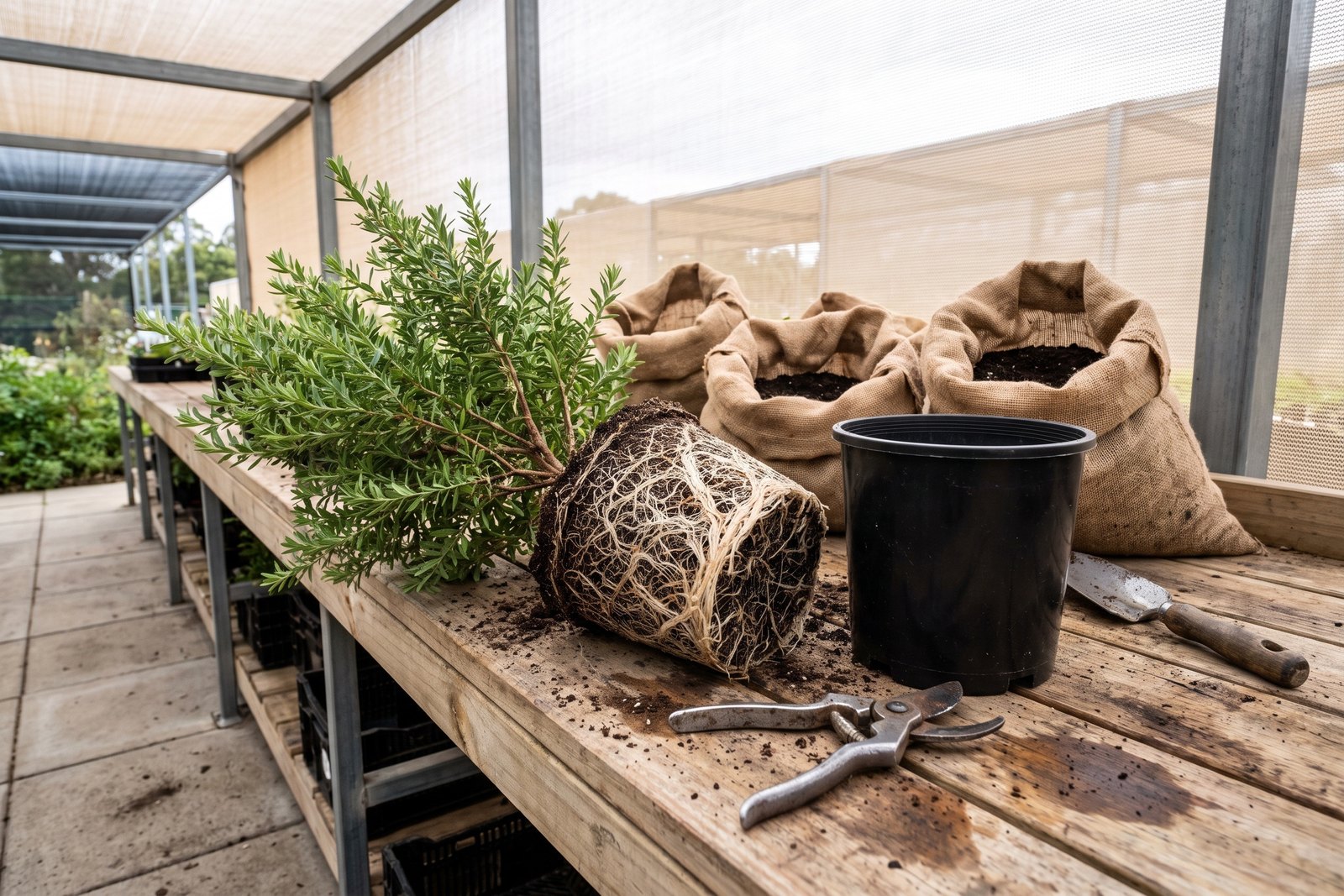
- Tag at the nursery. Visit before dispatch, or send the arborist. Check the calliper and height against the clause, the stem for wounds and included bark, the root ball by lifting a sample tree from its container, and tag the trees accepted. The tag is the contract.
- Check at the gate. Count against the docket, look at every tagged tree for transit damage and drying, and refuse a tree that fails. A refused tree goes back on the truck; a planted tree is the buyer's.
- Keep the records. The specification, the quotes, the tag list, the dispatch dockets and the planting map are what an audit, an insurer or a council committee asks for in year three.
The price check on HortOS compares the lines of a quote against the prices growers publish, which tells a procurement officer whether a tender price sits inside the range before the panel meets. Median trade prices are not published for most New Zealand plants yet, so this guide quotes none; each grower's own published price sits beside its line on the plant pages.
What to watch for
- Height without calliper. Height is the easiest figure to grow and the least useful. A tall thin tree in a small pot is the one that snaps in the second summer.
- Container volume without a check. A tree moved up a pot size the month before dispatch is in a big pot with a small root system. Lift a sample.
- One grower, one season. A single run from one grower is efficient until a batch fails. Split a large order across two growers or two seasons where the design allows.
- Pricing the tree and not the planting. A street tree's cost is the tree plus the pit, the soil, the guard, the stakes, the watering for two summers and the arborist's visits. The tree is often a third of it.
- Refusing at the planting, not the gate. A tree that is in the ground is accepted. Every refusal happens at the nursery tag or on the truck.
Getting it right
- Write the clause to the standard: species, calliper, height, clear stem, container or root ball, form, grade and the inspection right.
- Check the plant pages and the region hubs for who lists the species and size, and decide whether to buy from lists or grow to order.
- Send the same clause to three or more growers for a price ex GST with freight shown separately and a dispatch window.
- Book the trees the season before, with a deposit where the grower asks for one, and agree the inspection date.
- Tag the trees at the nursery with the arborist, and refuse at the gate anything that fails.
- Record the specification, the tags and the dockets with the planting map, and budget the two summers of watering with the trees.
A word of caution
The grower counts and prices on this page are what HortOS printed on 24 September 2026 and 21 September 2026, and the live pages change as lists arrive. The standards are their publishers' to interpret and a specification is a legal document, so the council's procurement rules and its arborist decide the clause. On stock, grades and dates the grower's word is the one that counts, and HortOS never answers on a grower's behalf.
Sources
- New Zealand Arboricultural Association: the arborists' national body.
- New Zealand Institute of Landscape Architects: the landscape architects' institute.
- Plant Pass, New Zealand's plant production biosecurity scheme: certified nursery biosecurity practice.
- Local Government New Zealand: the councils' national body.
- New Zealand Plant Producers Incorporated: the plant producers' national body.
More guides
Plant Grades and Container Sizes, Market by Market
A #3 in Florida, a 200 mm pot in Sydney, a PB5 in Hamilton and a #2 in Ontario are roughly the same plant. This page sets the four markets' size ladders side by side from plug to field grown tree, explains what each grade is and how old, and names the standard each market specifies against.
Nursery Plant Quality: Roots, Pests and Hardening Off
Quality in a nursery plant is mostly below the mix, in the roots, and a buyer who lifts one plant from each line sees what the price list cannot say. This page is the checklist: roots, stem and canopy, pests and diseases, hardening off, weeds and labels, the questions to send with the order, and the schemes that certify practice.
When to Order: Lead Times, Pre-Orders and Contract Growing
Every plant on a grower's list is a decision made a season or more ago. This page explains how long each grade takes to grow, the three ways a buyer secures stock ahead of the season, what a growing contract contains, the planting calendar in this market and how to read a current list for the year ahead.