Planning a Planting Budget for a Council or School
The plants are commonly a third to a half of a planting's real cost. This page builds a budget line by line for a park, a street, a school ground or a community site: plant lines at growers' trade prices, then site work, mulch, hardware, water for two summers, labour, delivery, replacements and maintenance, with a worked example.
Updated 24 October 2026. Grower counts from the live nz.hortosapp.com regional hubs on 24 September 2026; median trade prices are not published for most New Zealand plants yet.
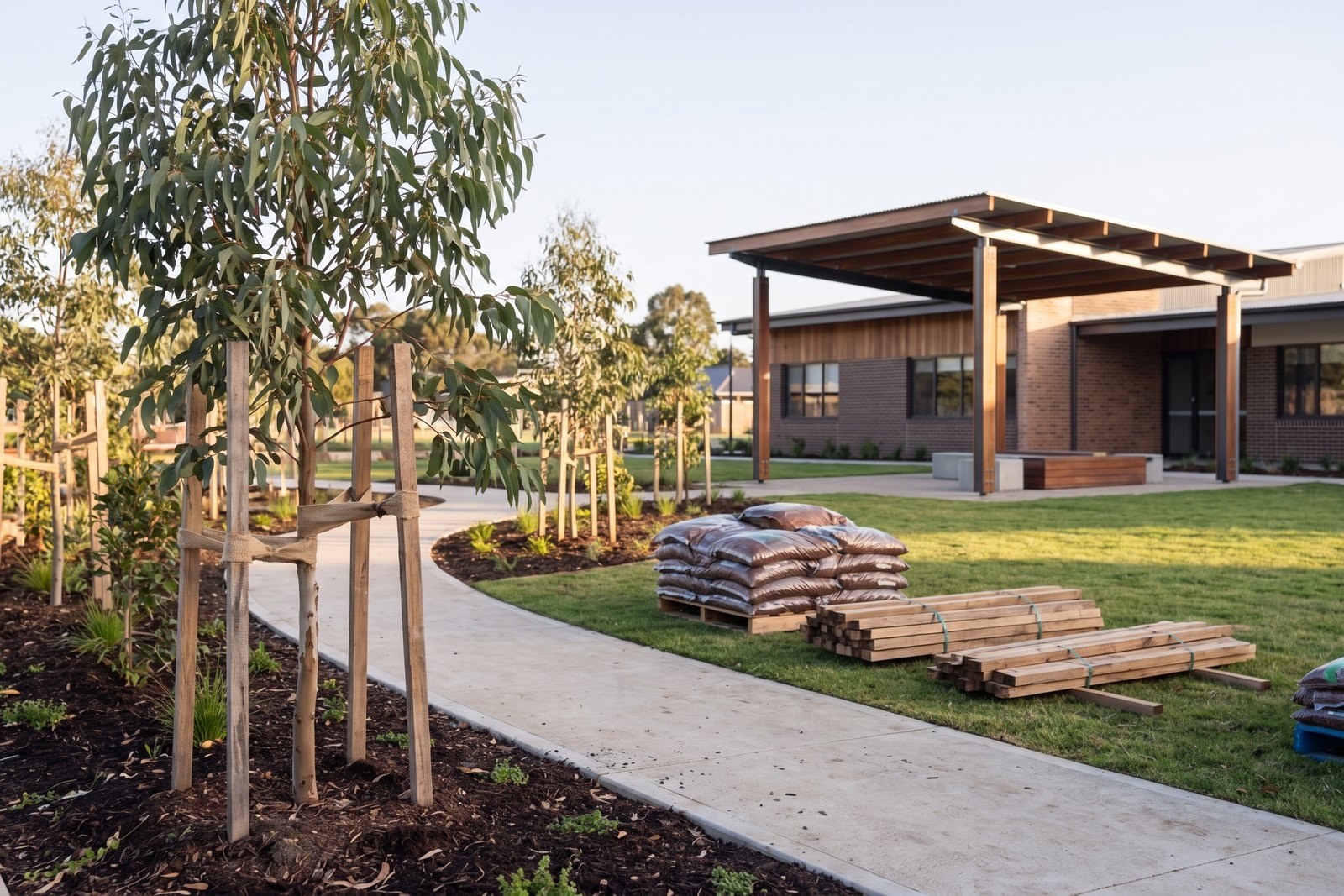
On this page
A council committee or a school council sees a planting budget as a plant list with prices beside it, and the first winter shows the rest: the stakes that were not ordered, the mulch that was, the water nobody costed, the ten per cent that died. The one idea that matters most is that the plants are commonly a third to a half of a planting's real cost, and that a budget built from the trade price of the plants alone is a budget for failure in the second summer.
This page builds a planting budget line by line for a council park, a street, a school ground or a community site. The plant lines are priced from growers' published trade prices, then everything around them is added: site preparation, soil and mulch, stakes and guards, water for two summers, labour, delivery, replacements and maintenance, with a worked example and the places the money comes from. It draws on HortOS, a free directory of New Zealand wholesale plant growers with their published availability and trade prices, and on what Inland Revenue, the local government bodies and the greening programmes publish. It is a method, not a quote: every line is a figure the project fills in from its own site.
Quick facts
| The plants are a third to a half | Across the trade's common practice a planting's plants are a third to a half of the landed cost once site work, hardware, water and labour are counted. A tree in a street pit is often less than a third. |
|---|---|
| Price the plants from the trade | HortOS publishes growers' trade prices: the price each grower publishes beside its line, since medians are not published for most New Zealand plants yet; each grower's own published price for a PB5 or a PB3. Trade prices are ex GST and exclude freight. |
| Water is a line | Two summers of watering, by truck, by volunteers or by a dripline on a tap, is the line most budgets miss and the reason most plantings fail. |
| Replacements are a line | Five to ten per cent of a planting is replaced in the first two years. Budget it and order it from the same grower at the same time. |
| Maintenance is a line | Mulch topped up, guards removed, stakes removed, formative pruning, weeds: three years of it, written and costed, or the planting is a liability by year four. |
| Where the money comes from | Trees That Count's funded native trees, Enviroschools' programme and regional council environment funds are where New Zealand groups and schools find planting money; most ask for a quote and a maintenance plan with the application. |
The plant lines
Price the plant list from what growers publish. On HortOS the plant pages show every grower's lines for a plant by size, with a median where three or more growers price a size, so a committee can put a trade figure beside each line of its list before any quote arrives. Median trade prices are not published for most New Zealand plants yet, so this guide quotes none; each grower's own published price sits beside its line on the plant pages. The price check compares the lines of a quote against the published range, and the region hubs (Auckland, Canterbury, Waikato, Bay of Plenty) show which growers near the site list the plants at all.
Two decisions set the plant lines more than the species do. The grade: a tree at a 45 litre bag costs many times a small one and establishes no faster in a prepared pit, so a budget that plants smaller and waters longer buys more canopy. And the count: a plan drawn by spacing, rounded up to the grower's trays and multiples, with the replacement allowance added at the start. Plant grades and container sizes by market explains the grades and reading a grower's price list and trade terms the words a quote uses.
Everything around the plants
| Line | What it covers | Rule of thumb |
|---|---|---|
| Site preparation | weed control, ripping or digging, soil tests, drainage | set by the site; a compacted verge costs more than a garden bed |
| Soil, compost and mulch | imported soil for pits, compost, 75 to 100 mm of mulch over the bed | mulch alone is often a tenth of the budget |
| Stakes, ties and guards | two stakes and ties per tree, a guard per tube in a reserve | a few dollars a plant, more than the tube itself |
| Irrigation and water | a dripline on a tap, a water truck, or a volunteer roster, for two summers | one of the two largest lines after the plants |
| Labour | planting day staff or contractor, or volunteer coordination | a contractor plants a tree in a pit in an hour; volunteers plant tubes at 20 to 40 an hour each |
| Delivery | freight from the grower or a trailer and a day | freight is never in the trade price |
| Replacements | five to ten per cent of the count, ordered with the first | cheap at the time, dear later |
| Maintenance | three years of mulch, weeds, pruning and guard removal | written and costed or it does not happen |
A worked example
Thirty street trees for a council street, at the quoted price a tree at trade. The plants come to quote times 30. Pits cut in a footpath, imported soil, two stakes and ties, a guard and a watering bag for each tree, a contractor to plant them and a water truck for two summers commonly bring the landed cost to about three times the plants, about three times the plants. The two summers of water alone are around about 20 per cent. The replacement allowance of three trees, the arborist's two visits and the removal of stakes and guards in year three sit on top. The plants, in this example, are about a third.
A school hedge tells the same story at the other end of the scale. Two hundred tubes of a native hedge at a few dollars each are the small half of the budget once the bed is prepared, mulched and watered through two summers by the ground staff. The fifty replacements in year two cost more in a car on a Saturday than they did in the tray. Specifying and procuring trees sets out the tree order and buying plants in bulk for a community group the school's.
Tax, procurement and phasing
- Tax. Trade prices are quoted ex GST and the grower adds GST at 15 per cent on the invoice; Inland Revenue's GST pages say which organisations must register and how a registered body claims the tax back. A council usually recovers it; a school or a club may not, and the budget shows which.
- Procurement rules. A council has quote thresholds: one quote under a figure, three above it, a tender above another. Write the plant specification once and send it to three growers, so the quotes compare. The council's procurement office knows the thresholds.
- Phasing. A planting that is too large for one budget year is split by site or by season, with the growing booked ahead so the second phase plants the same grade as the first. A grower will hold or grow to order for a confirmed second phase.
- The grant application. Trees That Count's funded native trees, Enviroschools' programme and regional council environment funds are where New Zealand groups and schools find planting money; most ask for a quote and a maintenance plan with the application. A budget written line by line as above is the one a funder reads to the end.
What to watch for
- Plants priced, nothing else. The plant list is the easy line. Write the other seven before the committee meets.
- No water line. A planting with no watering budget for two summers is a planting with a replacement budget of a hundred per cent.
- Large grades for show. Advanced stock costs many times a small grade and does not establish faster in a prepared site. Spend the difference on water and maintenance.
- Maintenance left to goodwill. Guards and stakes left on strangle trees in year three. Cost their removal now.
- One budget year for a two year job. Order the replacements with the first order, and book the second phase while the grower is propagating.
Getting it right
- Draw the plan, convert it to counts by spacing, and round up to the grower's trays with the replacement allowance added.
- Price every plant line from the published trade prices on HortOS, ex GST, and note the growers near the site that list them.
- Write the other seven lines, site work to maintenance, with a figure against each from the site, the contractor or the roster.
- Ask the treasurer how GST applies, and the procurement office which threshold the total crosses.
- Send one specification to three growers and compare the quotes as landed costs.
- Book the growing for a second phase, order the replacements with the first, and write the three year maintenance plan into the budget.
A word of caution
The proportions on this page are the trade's common experience and the worked example is illustrative; every site sets its own figures, and the project's landscape architect, arborist or ground staff should put the real numbers in. The prices are what HortOS printed on 24 September 2026 and in the September 2026 Index edition, and the live pages change as lists arrive. Tax is Inland Revenue's to rule on and procurement rules are the council's own. HortOS never answers about stock or terms on a grower's behalf.
Sources
- Inland Revenue, GST: when a body registers and claims GST.
- Local Government New Zealand: the councils' national body.
- Trees That Count: native tree planting and funding.
- Enviroschools: school environmental programme.
- Inland Revenue, not-for-profits and charities: tax for clubs and charities.
More guides
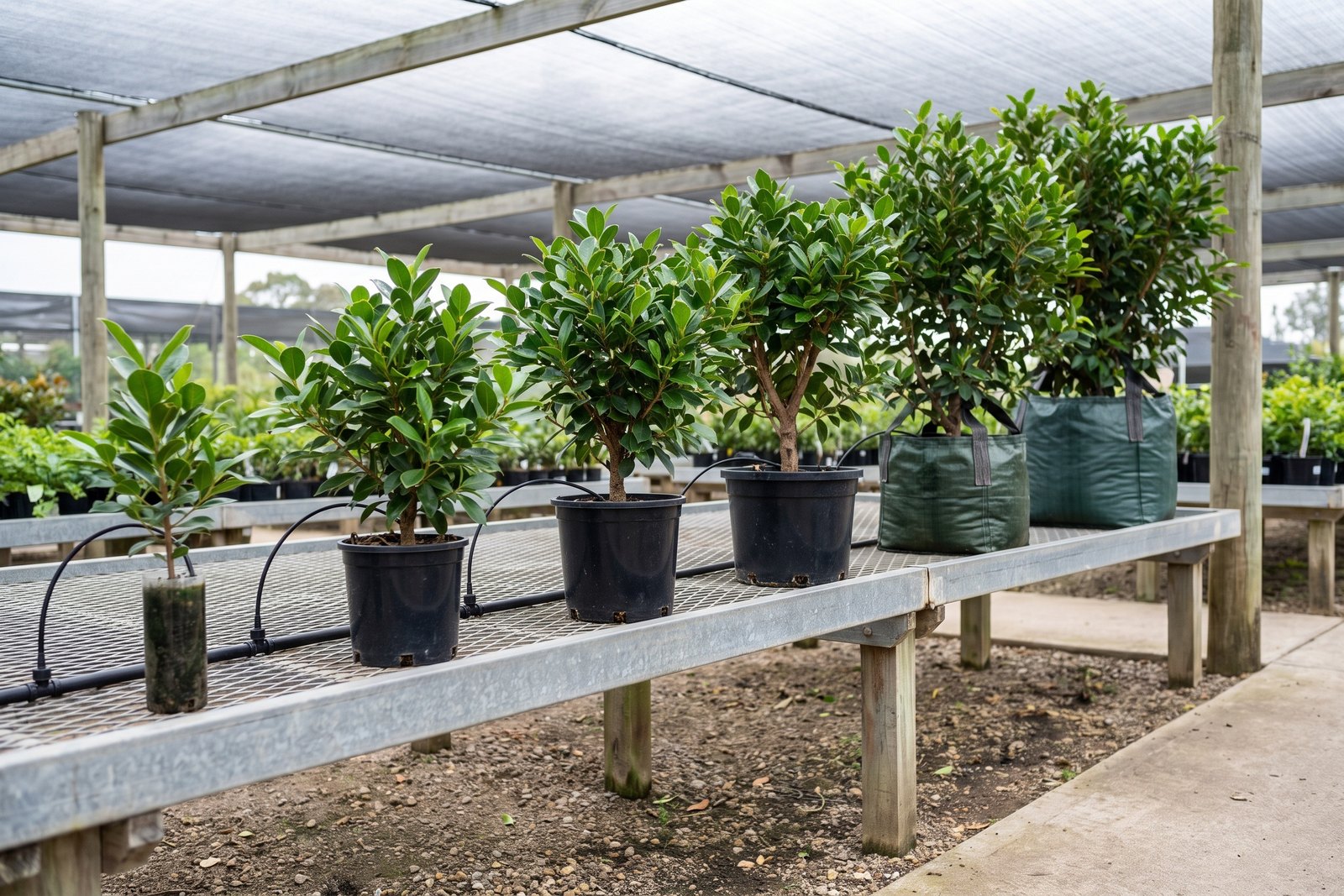
Plant Grades and Container Sizes, Market by Market
A #3 in Florida, a 200 mm pot in Sydney, a PB5 in Hamilton and a #2 in Ontario are roughly the same plant. This page sets the four markets' size ladders side by side from plug to field grown tree, explains what each grade is and how old, and names the standard each market specifies against.
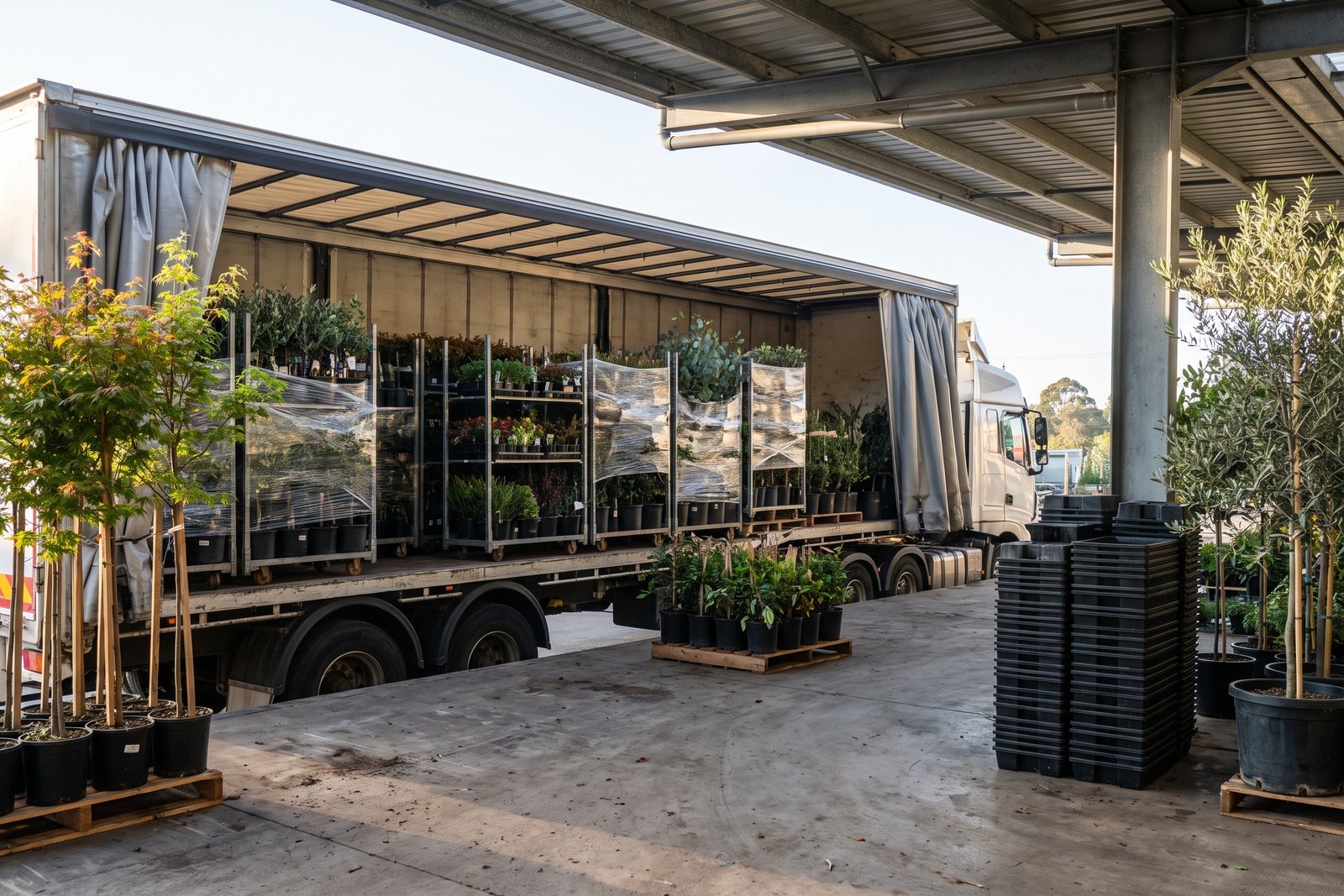
Reading a Grower's Price List and Trade Terms
A grower's price list is an offer written in shorthand, and the terms are part of the price. This page reads a trade list column by column and term by term, from the tax and freight basis to minimums, price on application, holds, substitutions, payment and claims, and turns two quotes into landed costs.
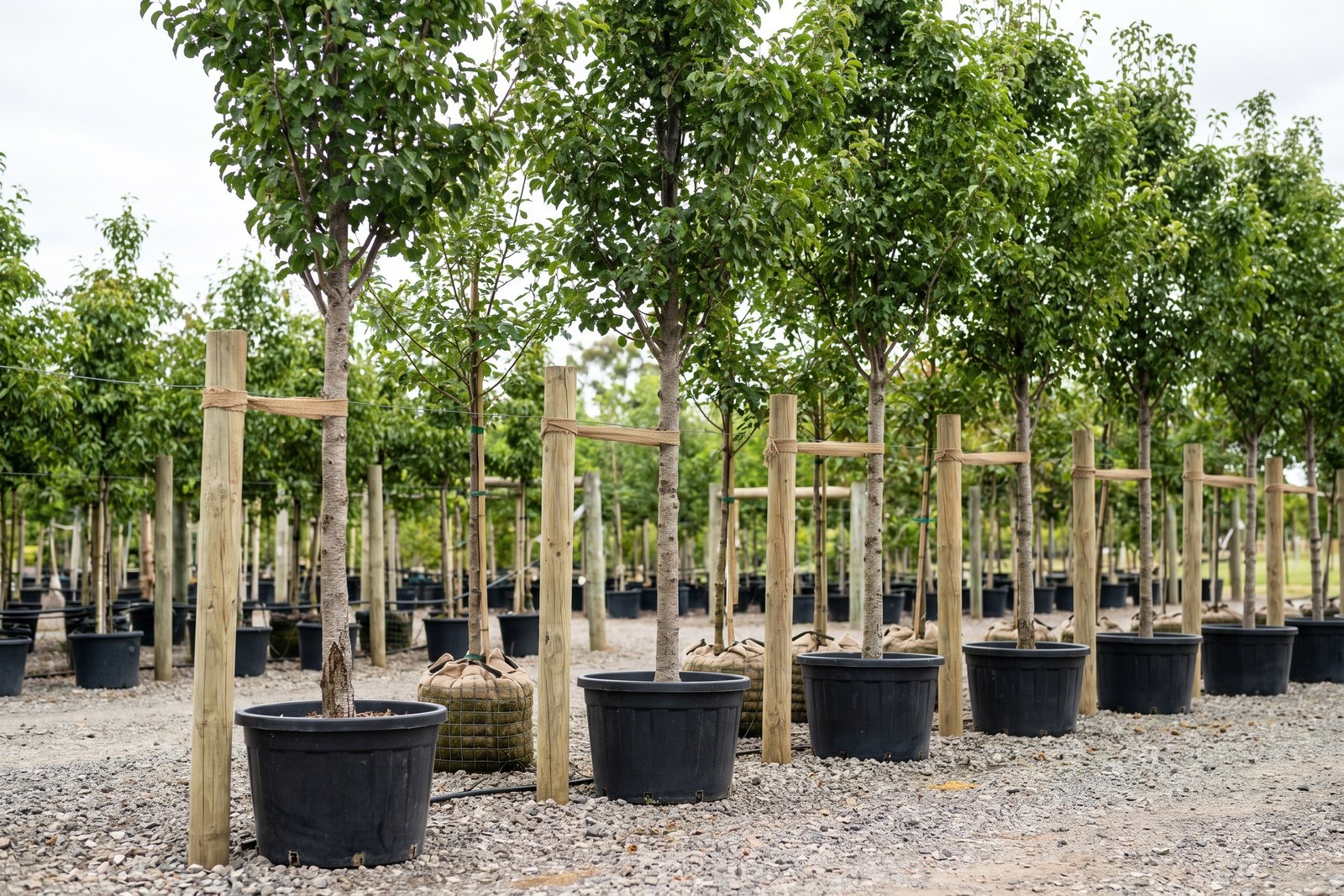
Specifying and Procuring Trees for a Street or Park Planting
A street or park planting fails at the specification more often than at the planting. This page explains the nursery stock standard to specify against, what goes in the clause, how the trade grows and grades advanced trees, where the growers are, the quote and tender process, and the inspection at the nursery and at delivery.