Citrus latifolia 'Bearss'
Citrus
One of 2 Citrus latifolia varieties: see them all
19 growers · 19 sizes · from $2.50 ex GST
- Type
- Evergreen tree
- Height
- 2.4 m to 6.1 m
- Spread
- 2.4 m to 6.1 m
- Growth
- Moderate
- Flowers
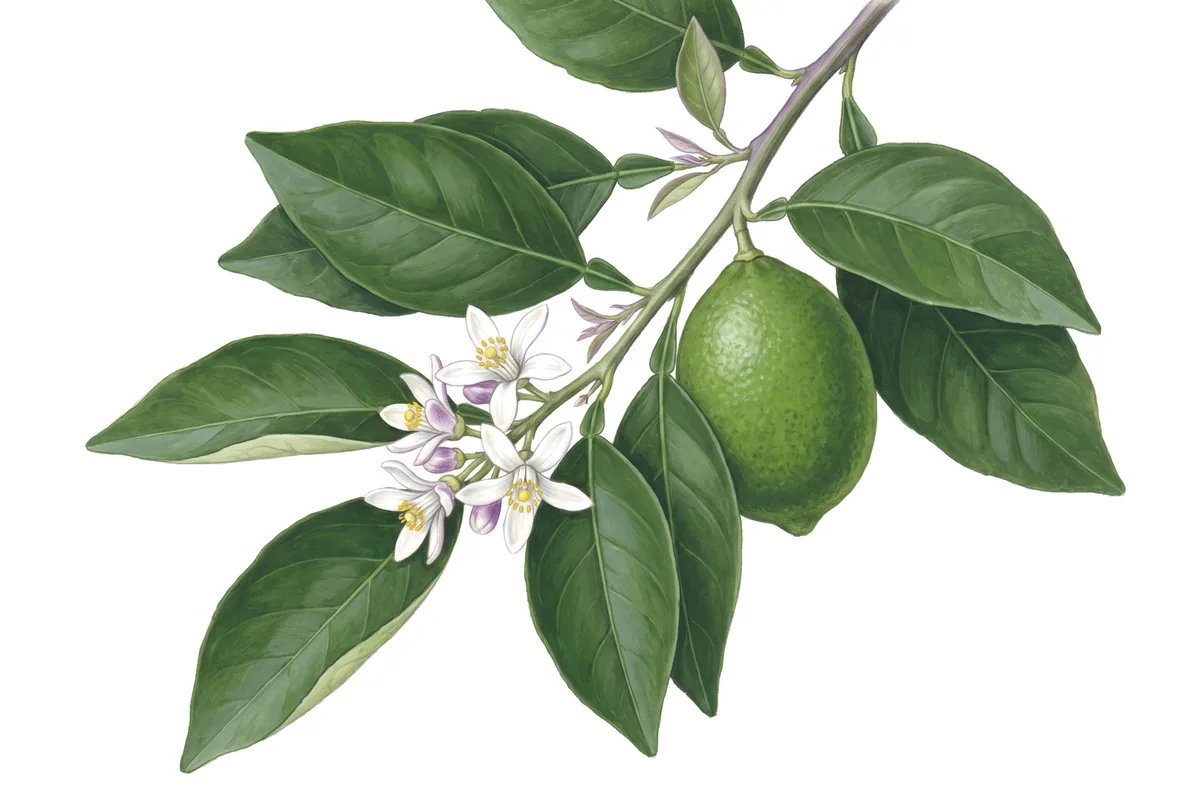
- White, all year, most in late winter to early spring
- Sun
- Full sun (the NC State toolbox, an American reference)
- In New Zealand
- Not native
Also grown by 11 nurseries (no sizes or prices listed)
Enquire with them for sizes and prices.
- Beechwood PlantsTe Puna, Bay of Plenty
- Blueskin Nurseries & CafeWaitati, Otago
- Bream Bay GreenworldRuakākā, Northland
- Diack's NurseriesMakarewa, Southland
- Kiwiflora Nursery – Christchurch Garden Centre & NurseryRd 8, Canterbury
- Midland Horticulture - Wholesale Tree and Shrub NurseryNapier, Hawke's Bay
- Pioneer NurseryColyton, Manawatū-Whanganui
- Plantlife PropagatorsAshhurst, Manawatū-Whanganui
- The Fruity GardenerOmata, Taranaki
- The Gorge NurseryCoopers Creek, Canterbury
- Trees & MoreTauranga, Bay of Plenty
Growing bearss lime
Climate. No New Zealand reference read gives the Bearss lime a frost figure or a climate statement of its own; Te Ara says New Zealand's climate is marginal for most citrus. The Riverside collection, in California, says Persian lime trees are more cold-hardy than Mexican limes and should do well where lemons grow successfully.
Position and soil. These come from the NC State toolbox, an American reference: the warmest possible position in full sun, and a sandy, loamy soil with a pH of 6.0 or higher, kept moist but well drained; the tree crops less well in heavy clay or poorly drained soil. The toolbox feeds it 3 or 4 times a year, waters regularly, above all in drought, and warns that overwatering may bring fungal infections or root rot. It prunes only to shape the tree, remove dead wood and limit its size.
Problems. The NC State toolbox reports citrus canker and citrus greening, scale, aphids, leaf miners and mites, with red alga a possible major problem, for American gardens.
Using bearss lime
The fruit is the reason to plant it. Auckland Botanic Gardens grows the Bearss lime in its orchard and names it among its best fruit trees for Auckland, varieties it says produce abundant harvests without pesticide applications. Citrus New Zealand says limes are at their best from March to May, and the NC State toolbox that limes are most often used green, for their acidity. The citrus page covers the genus, and the Meyer lemon is another citrus among the Gardens' best fruit trees.
What to check before you buy
Growers list it as Lime Bearss, Citrus lime 'Bearss Tahitian' and Citrus lime 'Bearss', and under Tahitian alone, with dwarf and espalier lines; the spelling Bearrs appears too. Auckland Botanic Gardens lists it as Citrus aurantiifolia 'Bearss', where the Riverside collection files Bearss under Citrus latifolia, which GBIF accepts as Citrus × latifolia. The table above shows the sizes growers list; New Zealand growers name small stock by the planter bag and larger trees by litres, as the guide to plant grades and container sizes sets out, and the guide to nursery plant quality covers roots and pests. Two drawbacks the references give: the wood pocket Riverside says all Persian limes carry, and, by the NC State toolbox, a plant that may cause contact dermatitis in some people.
Prices are set by each grower and shown ex GST. Availability is confirmed by the grower at order.
Common questions
- Who grows Citrus latifolia 'Bearss' wholesale in New Zealand?
- 19 wholesale growers list Citrus latifolia 'Bearss' on HortOS right now, each with their own pot sizes and trade prices. They are in Northland, Auckland, Bay of Plenty, Waikato, Tasman, Wellington, Taranaki and Southland. The growers are named on this page.
- What pot sizes does Citrus latifolia 'Bearss' come in?
- Growers on HortOS list Citrus latifolia 'Bearss' in 600mm, 2.5L, 3L, 4L, PB10, PB12, 7.5L, 12L, 15L, 17L and 9 more sizes.
- How do I order Citrus latifolia 'Bearss' from these growers?
- HortOS is for the trade. Add the lines you want to a list and send it: each grower gets their part of the order by email, confirms what they have and quotes freight, and nothing is bought until you approve it. Listing, searching and ordering are free.
- Is the Bearss lime the same as the Tahitian lime?
- By the Riverside collection, yes: it says Citrus latifolia is known as Tahitian, Bearss and Persian lime, and its notes find the fruit of its Bearss tree to seem identical to that of its Tahiti tree.
- Does the Bearss lime have seeds?
- Rarely. The 1967 description the Riverside collection quotes says Bearss flowers have no viable pollen and its fruits are regularly seedless, and Auckland Botanic Gardens describes small seedless fruit. The NC State toolbox says a few seeds may appear where trees grow among other fruit trees.
- When do Bearss limes ripen in New Zealand?
- Auckland Botanic Gardens gives an abundant supply in early winter in Auckland, and Citrus New Zealand says limes are at their best from March to May. The Riverside collection says that in California the fruit drops once fully mature, usually in late autumn to early winter.
- Where did the Bearss lime come from?
- The 1967 description the Riverside collection quotes gives an earlier account that it arose about 1895 at Porterville, California, presumably as a seedling of a tree grown from a fruit of Tahitian origin, and was introduced by a Fresno nursery company in 1905. If it is the same clone as Tahiti, the description adds, it very probably arose considerably earlier.
- How big does a Bearss lime tree grow?
- No New Zealand reference read gives a size. The NC State toolbox gives the Persian lime about 6.1 m high and wide in tropical and subtropical regions, 2.4 to 6.1 m in its table, and the Riverside collection calls the tree vigorous, medium-large and spreading.
Sources
- GBIF species match API (Citrus latifolia, accepted)
- Flora of New Zealand (Manaaki Whenua Landcare Research): taxon profile, the genus Citrus, biostatus exotic
- North Carolina State Extension Gardener Plant Toolbox: Citrus x latifolia (Persian lime), an American reference (for the plant's form, size and looks)
- North Carolina State Extension Gardener Plant Toolbox: Citrus x latifolia (Persian lime), an American reference (for how the plant grows and is used)
- University of California Riverside, Givaudan Citrus Variety Collection: Bearss lime (CRC 3772), with the 1967 description it quotes, an American reference (for the plant's names, form, looks and origin)
- University of California Riverside, Givaudan Citrus Variety Collection: Bearss lime (CRC 3772), an American reference (for how the plant grows)
- University of California Riverside, Givaudan Citrus Variety Collection: Tahiti lime (CRC 391), with its quoted 1967 description, an American reference
- Auckland Botanic Gardens (Auckland Council): the brochure Best fruit trees for Auckland, and the Orchard
- Te Ara, the Encyclopedia of New Zealand (Ministry for Culture and Heritage): Citrus, berries, exotic fruit and nuts, Citrus
- Citrus New Zealand, which represents New Zealand's citrus growers: Citrus for New Zealanders
- The HortOS catalogue for New Zealand (the names growers list the Bearss lime under on nz.hortosapp.com)
- The HortOS guides for New Zealand (plant-grades-and-container-sizes-by-market; judging-nursery-plant-quality)
The growers, sizes and prices above are live and change as lists arrive. Cite this page: HortOS, Bearss lime (Citrus latifolia 'Bearss'), https://nz.hortosapp.com/plants/citrus-latifolia-bearss.
Found a fact that is wrong? Tell us and it is checked against its source.