Cornus alba
Every Cornus alba on HortOS in one place: the plain species and 3 varieties. Pick a size to see it across all of them.
Part of Cornus: see them all
6 growers · 5 sizes · from $1.00 ex GST
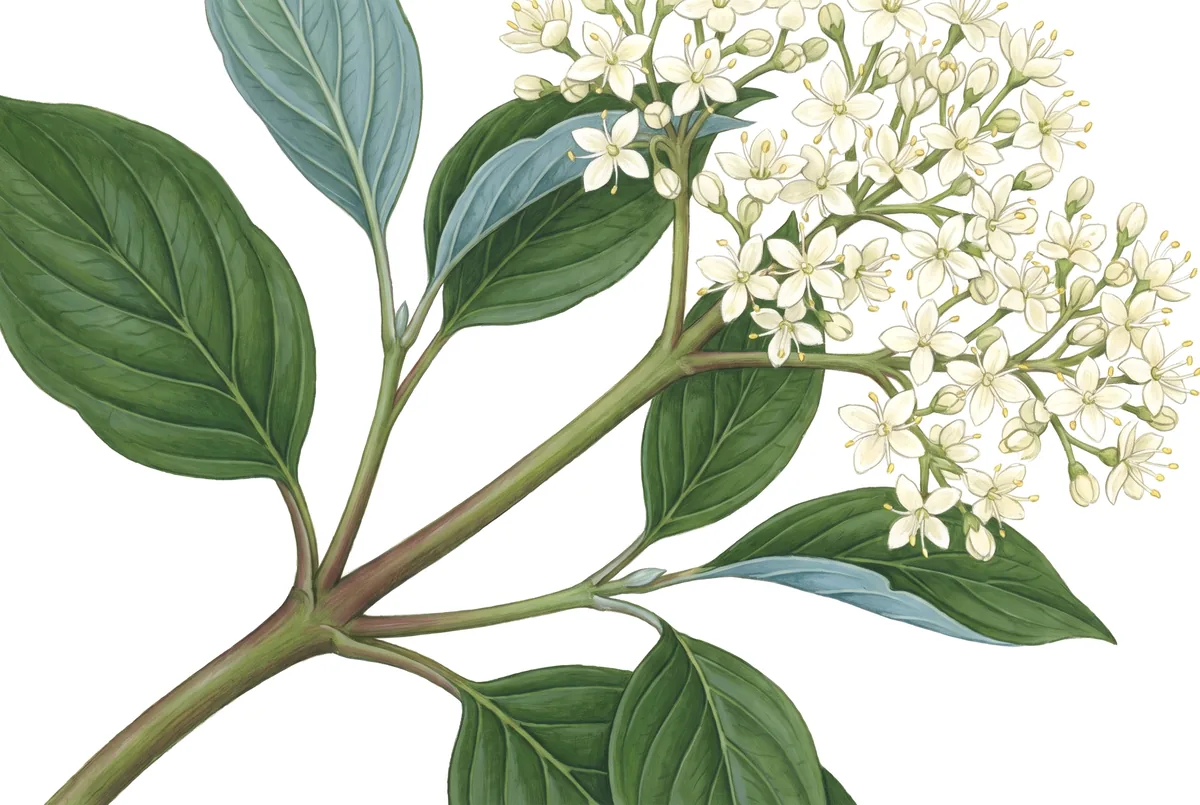
- Type
- Deciduous shrub
- Height
- 2.4 m to 3 m
- Spread
- 1.5 m to 3 m
- Growth
- Fast
- Flowers
- Creamy white, late spring to early summer
- Sun
- Full sun to part shade (North Carolina State Extension and Missouri Botanical Garden, American references)
- In New Zealand
- Not native
| Size | Grower | PricePrice ex GST | ||
|---|---|---|---|---|
| 2.5L | Nurseryman'Sibirica'2.5L | $9.50 | ||
| 3.5L | Deans Nursery'Sibirica'3.5L | $1.00 | ||
| PB6.5 | Springburn Nursery'Sibirica'PB6.5 | $7.00 | ||
| PB6.5 | Vibrant Earth LimitedElegantissimaPB6.5 | Price on application. Sign in to ask the grower. | ||
| PB18 | Leacroft NurseriesBailhaloPB18 | $39.95 | ||
| PB18 | Leacroft NurseriesPB18 | $39.95 | ||
| 35L | Leafland Nursery (Main Site)'Sibirica'35L | Price on application. Sign in to ask the grower. | ||
| PB18 | Leacroft Nurseries'Sibirica'PB18 | $29.18 |
Growing red-barked dogwood
Names. Dunedin Botanic Garden calls it red-barked dogwood; Trees and Shrubs Online adds Tatarian dogwood and Siberian dogwood.
Position, soil and water. Dunedin Botanic Garden says Cornus alba is equally at home in dry and wet conditions. Trees and Shrubs Online says it thrives in damp conditions but can establish and thrive in far drier ones, and that stem colour is best on plants sited in full sun.
Climate. Trees and Shrubs Online calls the species and its cultivars very cold-hardy but susceptible to diseases in hot climates. No New Zealand reference read gives a frost rating for it, though Dunedin Botanic Garden writes of its red stems lighting up a dull winter day among plants white with frost.
Pruning for colour. Dunedin Botanic Garden says that if old growth is removed near ground level in early spring, vigorous new growth follows with smooth bark that turns vivid red over the winter months. Trees and Shrubs Online finds the best colour on wood one or two years old, older stems fading to a muddy red-brown, and recommends annual or bi-annual coppicing; it says most gardeners cut the plant at or near ground level in late winter, and that plants cut this way repay feeding and a deep organic mulch in early spring.
Pests and propagation. North Carolina State Extension and Missouri Botanical Garden, American references, list leaf spot, blights, canker, scale, leaf miner and borers, and say plants are more prone to disease in hot summer climates. Trees and Shrubs Online says it roots easily from hardwood cuttings in late autumn or winter, or from softwood cuttings in the growing season.
Using red-barked dogwood
Red-barked dogwood is planted for winter colour. Among the dogwoods grown for their stems, Trees and Shrubs Online says Cornus alba supplies the deep reds, and calls it essential to planting schemes built around winter interest. Dunedin Botanic Garden says it even makes a great plant for the margin of a pond, and an older account quoted by Trees and Shrubs Online, finding it rampant, suggested siting it beside a pond or as an isolated lawn feature. North Carolina State Extension suggests mass planting it as a property line screen, a hedge or in a shrub border, and siting it where the red stems can be seen, near a patio or along a walkway. Dunedin Botanic Garden says the white berries persist for several weeks but are soon eaten by birds when ripe. Of its cultivars, 'Sibirica', whose stems Trees and Shrubs Online calls deep crimson, has its own page.
What to check before you buy
Growers list Cornus alba under the species name and under named cultivars, among them 'Sibirica', Bailhalo and Elegantissima, so check which form a grower lists before comparing prices: Trees and Shrubs Online describes cultivars chosen for leaf colour and variegation and stems from deep crimson to dark purple-brown, and North Carolina State Extension notes that cultivars with variegated leaves have no significant autumn colour. New Zealand growers name small stock by the root trainer or the planter bag, PB2, PB3, PB5 and PB8, and larger stock by litres, as the guide to plant grades and container sizes sets out; the table above shows the sizes growers list. For roots, pests and hardening off before stock leaves the grower, see the guide to nursery plant quality.
Cautions
Roots and suckers. North Carolina State Extension, an American reference, says it tends to sucker into large colonies, which may be objectionable, calls the plant weedy and says its suckering can make it difficult to remove. Missouri Botanical Garden advises trimming the roots with a spade and promptly removing root suckers where colonial spread is not wanted.
Used forhedging and screeningmass plantingerosion controlpollinators and wildlife
Prices are set by each grower and shown ex GST. Availability is confirmed by the grower at order.
Common questions
- Who grows Cornus alba wholesale in New Zealand?
- 6 wholesale growers list Cornus alba on HortOS right now, each with their own pot sizes and trade prices. They are in Tasman, Southland, Otago, Wellington and Manawatū-Whanganui. The growers are named on this page.
- What pot sizes does Cornus alba come in?
- Growers on HortOS list Cornus alba in 2.5L, 3.5L, PB6.5, PB18 and 35L.
- How do I order Cornus alba from these growers?
- HortOS is for the trade. Add the lines you want to a list and send it: each grower gets their part of the order by email, confirms what they have and quotes freight, and nothing is bought until you approve it. Listing, searching and ordering are free.
- Is red-barked dogwood native to New Zealand?
- No. Dunedin Botanic Garden gives its home as Siberia and north China through to Korea, and Trees and Shrubs Online adds Mongolia; in the wild it grows in mixed forests and in thickets along streams.
- How big does Cornus alba grow?
- North Carolina State Extension gives 2.4 to 3 m high and 1.5 to 3 m wide, and Trees and Shrubs Online describes a shrub to 3 m. In its natural habitat, Dunedin Botanic Garden says, it spreads by suckers into straggly thickets up to 3 m high.
- When do you cut red-barked dogwood back?
- Dunedin Botanic Garden says to remove old growth near ground level in early spring, which brings vigorous new stems that redden over winter. Trees and Shrubs Online says most gardeners cut it at or near ground level in late winter, to bring on brightly coloured, straight new growth.
- Will Cornus alba grow in wet ground?
- Dunedin Botanic Garden says it is equally at home in dry and wet conditions and makes a great plant for a pond margin. Trees and Shrubs Online says it thrives in damp conditions, as in the wild, where it grows along streams, but can also establish in far drier ground.
- Do birds eat red-barked dogwood berries?
- Yes. Dunedin Botanic Garden says the white berries persist for several weeks but are soon eaten by birds when ripe, and North Carolina State Extension says the fruit attracts birds.
- Why is a red-stemmed shrub called alba?
- Alba is Latin for white. Dunedin Botanic Garden ties the name to the small white flowers and would rather it had referred to the red bark; Trees and Shrubs Online ties it to the white fruit.
Sources
- GBIF species match API (Cornus alba)
- North Carolina State Extension Gardener Plant Toolbox: Cornus alba
- Missouri Botanical Garden Plant Finder: Cornus alba
- Dunedin Botanic Garden, Garden Life article: Defining Feature Comes to Light in Winter (Cornus alba)
- Dunedin Botanic Garden, Garden Life article: Dogwoods Suit Many Seasons and Conditions
- Trees and Shrubs Online: Cornus alba
- The HortOS catalogue for New Zealand (the lines growers list under Cornus alba)
- The HortOS guides for New Zealand (plant grades and container sizes by market; judging nursery plant quality)
- Cornell University Woody Plants Database: Cornus sericea or alba
- HortFlora, the Horticultural Flora of South-eastern Australia (Royal Botanic Gardens Victoria): Cornus alba and its cultivars
The growers, sizes and prices above are live and change as lists arrive. Cite this page: HortOS, Red-barked dogwood (Cornus alba), https://nz.hortosapp.com/plants/cornus-alba.
Found a fact that is wrong? Tell us and it is checked against its source.