Fragaria vesca
Every Fragaria vesca on HortOS in one place: the plain species and 1 variety. Pick a size to see it across all of them.
Part of Fragaria: see them all
WTC: 1 grower · 1 size · from $4.00 ex GST
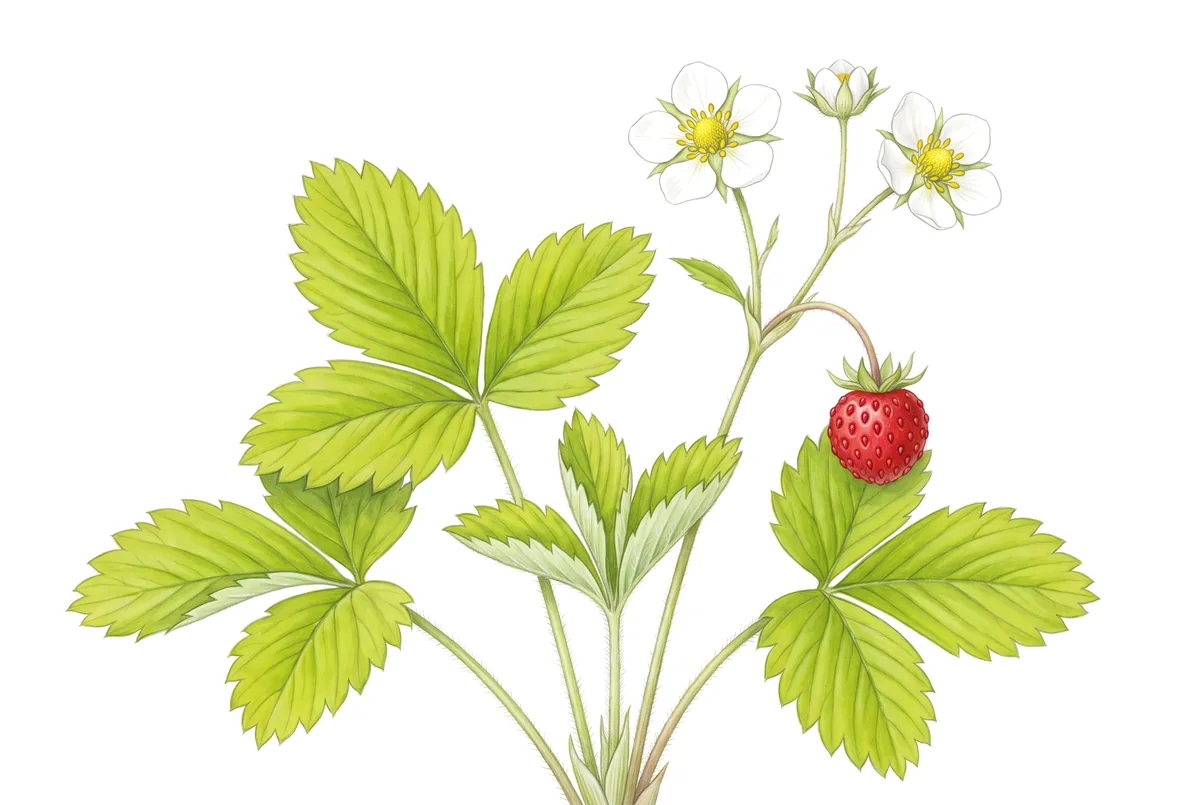
- Type
- Semi-evergreen perennial
- Height
- 0.08 m to 0.23 m
- Spread
- 0.23 m to 0.3 m
- Flowers
- White, late spring to summer
- Sun
- Full sun to part shade, best in full sun (Missouri Botanical Garden; RHS)
- In New Zealand
- Naturalised
| Size | Grower | PricePrice ex GST | ||
|---|---|---|---|---|
| Plant | Dial-a-Tree Nursery'White Alpine'Plant | $4.00 |
Also grown by 1 nursery (no sizes or prices listed)
Enquire with them for sizes and prices.
- Vibrant Earth LimitedTasman
Growing alpine strawberry
In New Zealand. NZPCN gives its home as Europe, North Africa, northern and central Asia and North America, and the Flora of New Zealand describes it in its volume on naturalised plants. That description gives a low herb from a short woody stock, up to about fifteen centimetres high, sometimes twenty-five, with greenish, hairy runners that root at the nodes and tips to make new rosettes. No New Zealand reference read gives a frost rating or the climates it suits here.
Soil, light and water. The Missouri Botanical Garden gives a humus-rich, fertile, well-drained soil of medium moisture in full sun to part shade, preferring full sun. The RHS says it grows in a wide range of soils, thrives on alkaline ones, takes part shade and fruits best in full sun.
Spread and care. Missouri says it spreads by runners that root as they go and may self-seed if the fruit is not picked. The RHS advises removing excess runners, and propagates by lifting and moving runners or by seed sown at 13 to 18 C in spring.
Pests and problems. Missouri says strawberries are open to a number of fungal diseases, to spider mites and aphids, and to leaf scorch in hot summers, and that this species has good resistance to the diseases and insects. The RHS lists aphids, slugs, glasshouse red spider mite, vine weevil, strawberry viruses, root rot and grey mould on the fruit.
Using alpine strawberry
The Missouri Botanical Garden says woodland strawberry is generally grown for its looks rather than its crop, the fruit being so small, and suggests edging, groundcover, rock gardens, open woodland and pots. The RHS suggests the edge of informal borders and groundcover, notes that it can spread, and names cottage gardens and containers; it lists it among its plants for pollinators. Missouri says flowers and fruit are usually on the plant together through summer. No reference read gives planting centres for it.
What to check before you buy
New Zealand growers list it as Fragaria vesca, and one lists Fragaria vesca 'White Alpine', white alpine strawberry, and Fragaria x ananassa 'Tioga' and Ventana are listed separately, so read the botanical name on each line. Growers here name small stock by the bag, PB2, PB3, PB5 and PB8, and larger stock by litres, as the guide to plant grades and container sizes by market sets out; the table above shows the sizes growers list. The checks on roots and pests before stock leaves the grower are in the guide to nursery plant quality.
Used forgroundcoverpots and courtyards
Prices are set by each grower and shown ex GST. Availability is confirmed by the grower at order.
Common questions
- Who grows Fragaria vesca wholesale in New Zealand?
- 2 wholesale growers list Fragaria vesca on HortOS right now, each with their own pot sizes and trade prices. They are in Northland and West Coast. The growers are named on this page.
- What pot sizes does Fragaria vesca come in?
- Growers on HortOS list Fragaria vesca in 100mm and Plant.
- How do I order Fragaria vesca from these growers?
- HortOS is for the trade. Add the lines you want to a list and send it: each grower gets their part of the order by email, confirms what they have and quotes freight, and nothing is bought until you approve it. Listing, searching and ordering are free.
- Is alpine strawberry native to New Zealand?
- No. NZPCN gives it as exotic, naturally from Europe, North Africa, northern and central Asia and North America, brought in for horticulture, and gives 1870 as the year it naturalised here. The Flora of New Zealand gives its biostatus as exotic.
- How big does alpine strawberry get?
- The Missouri Botanical Garden gives 8 to 23 cm tall and 23 to 30 cm across, spreading on by runners. The Flora of New Zealand gives plants here up to about fifteen centimetres high, sometimes twenty-five, with runners that root at the nodes and tips.
- Is the fruit edible?
- Yes. The Missouri Botanical Garden calls the bright red strawberries edible and says they can be picked through summer, though they are small. The Flora of New Zealand describes the swollen fruit as juicy, sweet and fragrant, usually red and occasionally white.
- What does the name Fragaria mean?
- NZPCN gives Fragaria from the Latin word for strawberry, from fragrans, fragrant, alluding to the fruit.
- Is alpine strawberry safe around pets?
- The ASPCA's plant lists (United States) put strawberry, Fragaria, among the plants non-toxic to cats, dogs and horses. That listing is for the genus as a whole.
Sources
- GBIF species match API: Fragaria vesca
- New Zealand Plant Conservation Network (NZPCN): Fragaria vesca
- Flora of New Zealand (Manaaki Whenua Landcare Research): Fragaria vesca, from the Flora of New Zealand, volume 4
- Missouri Botanical Garden Plant Finder: Fragaria vesca
- RHS (Royal Horticultural Society) plant finder: Fragaria vesca (F), alpine strawberry
- ASPCA Animal Poison Control: the plant lists for cats, dogs and horses (toxic and non-toxic)
- The HortOS catalogue for New Zealand (the names growers list Fragaria vesca and the other strawberries under)
- The HortOS guides for New Zealand (plant grades and container sizes by market; nursery plant quality)
The growers, sizes and prices above are live and change as lists arrive. Cite this page: HortOS, Alpine strawberry (Fragaria vesca), https://nz.hortosapp.com/plants/fragaria-vesca.
Found a fact that is wrong? Tell us and it is checked against its source.