Fragaria x ananassa 'Camarosa'
11 growers · 2 sizes · from $4.99 ex GST
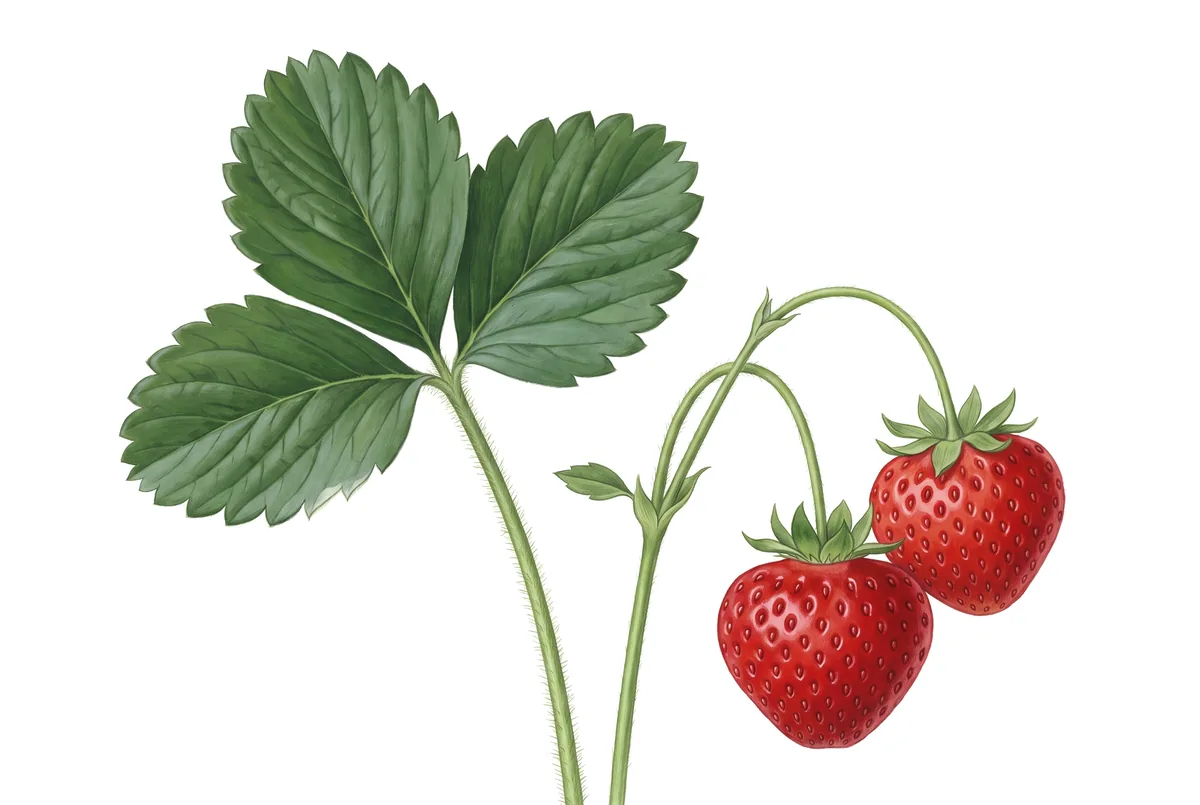
- Type
- Evergreen perennial
- Sun
- Full sun to part shade (the NC State plant toolbox)
- In New Zealand
- Not native
Also grown by 3 nurseries (no sizes or prices listed)
Enquire with them for sizes and prices.
- Awapuni Nurseries LimitedLongburn, Manawatū-Whanganui
- Crafted Earth - Plant Nursery and Road StallMotueka, Tasman
- Making Gardens AffordableRangiora, Canterbury
Growing strawberry Camarosa
Climate and planting. The patent says 'Camarosa' is typical of short-day types and fruits over a long period when grown appropriately in arid, subtropical climates, and that it is more adapted to early-season planting, with less supplemental chilling, than 'Chandler'. It says the cultivar will be of special interest for winter plantings where 'Chandler' has succeeded and summer plantings where 'Pajaro' has, and says it performs best under the nursery treatments, pre-plant chilling, plant densities and feeding that suit 'Chandler'. No New Zealand reference read describes how it grows here.
Diseases and pests. In its California trials, by the patent, it was moderately susceptible to common leaf spot (Ramularia tulasnei) and relatively resistant to powdery mildew. When treated properly it was at least as tolerant of two-spotted spider mite as 'Chandler', and it was tolerant of the strawberry viruses met in California.
The plant. The patent describes fruiting plants that are larger, more erect and more vigorous than those of 'Chandler', forming more branch crowns, with a runner output in the nursery equal to or greater than that of 'Chandler'. The general needs of strawberries, soil, water and the life of a planting, are on the species page.
Using strawberry Camarosa
The patent calls the fruit outstanding for both the fresh market and processing, because of its firm flesh and very dark internal colour, and useful for home gardens. It reports very good flavour, somewhat less aromatic than 'Chandler' but with a better balance of acid. In its trial at the University of California's South Coast Research and Extension Center, 'Camarosa' gave a larger total yield per plant than 'Chandler' and 'Oso Grande', and more fruit early in the season.
NC State Extension calls it one of the main cultivars grown in North Carolina, June-bearing, with a single high yield of large, firm fruit. No New Zealand reference read gives its season, its yield or a planting distance.
What to check before you buy
In the HortOS catalogue for New Zealand, growers list it as Strawberry Camarosa, beside lines of the plain strawberry and of other cultivars; check the cultivar name on each line before comparing prices. The table above shows the sizes growers list, and the guide to plant grades by market explains the PB and litre grades. For roots, pests and hardening off, see the guide to nursery plant quality. The patent's figures come from Californian trials; no New Zealand reference read reports how it performs here.
Used forediblefruit and orchardgroundcoverpots and courtyards
Prices are set by each grower and shown ex GST. Availability is confirmed by the grower at order.
Common questions
- Who grows Fragaria x ananassa 'Camarosa' wholesale in New Zealand?
- 11 wholesale growers list Fragaria x ananassa 'Camarosa' on HortOS right now, each with their own pot sizes and trade prices. They are in Bay of Plenty, Waikato, Auckland, Southland, Wellington, Taranaki and Northland. The growers are named on this page.
- What pot sizes does Fragaria x ananassa 'Camarosa' come in?
- Growers on HortOS list Fragaria x ananassa 'Camarosa' in 90mm and 100mm.
- How do I order Fragaria x ananassa 'Camarosa' from these growers?
- HortOS is for the trade. Add the lines you want to a list and send it: each grower gets their part of the order by email, confirms what they have and quotes freight, and nothing is bought until you approve it. Listing, searching and ordering are free.
- What kind of strawberry is Camarosa?
- A short-day, or June-bearing, cultivar, by its United States plant patent, which compares it throughout with 'Chandler'. NC State Extension also calls it June-bearing, with a single high yield of large, firm fruit.
- Who bred the Camarosa strawberry?
- The University of California. Its plant patent says it came from a cross made in 1988 between the cultivar 'Douglas' and an advanced breeding selection, first fruited in 1989 at the South Coast Research and Extension Center near Irvine, where it was selected and propagated by runners.
- What is the fruit of Camarosa like?
- Typically a very flat cone, by the patent, at least as glossy as 'Chandler' and darker inside, with firm flesh about as firm as 'Oso Grande'. The achenes on the surface run from light red to dark red and sit level with it or slightly sunken.
- What do the leaves of Camarosa look like?
- Each leaf has three leaflets, the middle one 80 to 117 mm long and 70 to 92 mm wide, by the patent, which finds them larger, longer and narrower than in 'Chandler', with few, semi-rounded teeth. The leaf is concave, darker green than 'Chandler' and distinctly lighter beneath.
- How does Camarosa compare with Chandler?
- The patent gives 'Camarosa' greater total and early yields, larger and firmer fruit and a more vigorous, more erect plant, with flavour somewhat less aromatic but a better acid balance.
Sources
- GBIF species match API (the hybrid, Fragaria x ananassa)
- United States Plant Patent PP8,708, Strawberry plant called 'Camarosa', assigned to the Regents of the University of California, its breeder
- North Carolina Extension Gardener Plant Toolbox (NC State University): Fragaria x ananassa, with its note on 'Camarosa'
- The HortOS catalogue for New Zealand (the names growers list strawberries under on nz.hortosapp.com)
- The HortOS guides for New Zealand (plant grades by market; nursery plant quality)
The growers, sizes and prices above are live and change as lists arrive. Cite this page: HortOS, Strawberry Camarosa (Fragaria x ananassa 'Camarosa'), https://nz.hortosapp.com/plants/fragaria-x-ananassa-camarosa.
Found a fact that is wrong? Tell us and it is checked against its source.