Prunus persica nucipersica
Flowering Cherry / Flowering Plum
Part of Prunus: see them all
No grower lists this plant right now
- Type
- Deciduous tree
- Height
- 4 m to 10 m
- Spread
- 4.6 m to 7.6 m
- Flowers
- White, spring
- Sun
- Full sun
- Frost
- A frost below -2 C can damage the tree once its buds have started growing
- In New Zealand
- Not native
Growing nectarine
Climate. Te Ara, the encyclopedia of New Zealand, says stone fruit needs winter chilling for its flowers to develop into fruit, that cool or windy spring weather harms pollination and fruit set, that warm days and cool nights are needed for the flavour to develop, and that hail can seriously damage the fruit. Stone fruit benefits, it says, from dry weather at harvest, when rain can damage the fruit and encourage disease. No New Zealand reference read gives a frost figure for the nectarine.
Where it grows. Te Ara says stone fruit grows throughout New Zealand in home gardens, while most commercial production comes from Hawke's Bay and Central Otago, with small amounts in Canterbury and Nelson. NZPCN, the New Zealand Plant Conservation Network, calls the peach light demanding.
Pests and problems. The account of 'Goldmine' in the Journal of the American Pomological Society, by a stone fruit specialist of the Department of Scientific and Industrial Research, says leaf curl and rust can be a problem on that variety unless precautions are taken, and that it is more susceptible to brown rot than most peaches. Te Ara says the department worked through the mid-20th century on ways to control the fungal, bacterial and viral diseases and the insect pests of stone fruit.
Using nectarine
Nectarines are grown for their fruit. Te Ara says nectarines are the first stone fruit harvested here, in the shops from late November, and that the stone fruit harvest is over by early March. It says that from about 2000 the trade moved from yellow-fleshed peaches and nectarines to white-fleshed varieties, some of them bred in New Zealand and sweeter for their low acid.
New Zealand has raised nectarines of its own. The Royal New Zealand Institute of Horticulture's New Zealand Garden Journal names Goldmine as one of the most valuable fruit cultivars to originate here, a seedling of 1893 in Parnell, Auckland, and 'Fillery' as a seedling raised at Warkworth, probably from a peach stone planted in 1949, and named in 1963.
What to check before you buy
Growers list nectarines under Nectarine and a variety name, among them Snow Queen, Goldmine, Fantasia, Flavourzee, Button Bright, Mabel, Nectar Babe, Queen Giant and Red Gold, so read the variety on each line. Small stock is named by the planter bag, PB2, PB3, PB5 and PB8, and larger stock by litres, as the guide to plant grades by market explains; the table above shows the sizes growers list. For roots, pests and hardening off, the guide to nursery plant quality sets out what to check. NZPCN gives the peach, the species the nectarine belongs to, as naturalised in New Zealand since 1869, on hillsides, roadsides and waste ground.
Cautions
The ASPCA lists the peach, Prunus persica, the species the nectarine belongs to, as toxic to dogs, cats and horses. It names cyanide in the stems, leaves and seeds, and says they are particularly toxic while wilting.
Used forfruit and orchardedible
Prices are set by each grower and shown ex GST. Availability is confirmed by the grower at order.
Common questions
- What is the difference between a nectarine and a peach?
- The skin. The Journal of the American Pomological Society account calls the nectarine simply a smooth-skinned peach, and says a single branch from a mutant peach bud may bear nectarines, that nectarines may come from peach stones and peaches from nectarine stones, and that there are no intermediate forms. The Flora of New Zealand files both under Prunus persica.
- What is a peacherine?
- The references read differ. Te Ara calls peacherines a cross between a Golden Queen peach and a nectarine, grown in small quantities in some parts of New Zealand and in the shops from late February. The Journal of the American Pomological Society account says the word belongs to the jargon of New Zealand nurserymen and that botanically there is no such plant.
- When do nectarines flower in New Zealand?
- The Flora of New Zealand gives Prunus persica as flowering from August to October, and NZPCN gives the same months. The Journal of the American Pomological Society account gives 'Goldmine' in full bloom in Auckland from 10 to 15 September.
- What do the leaves and flowers look like?
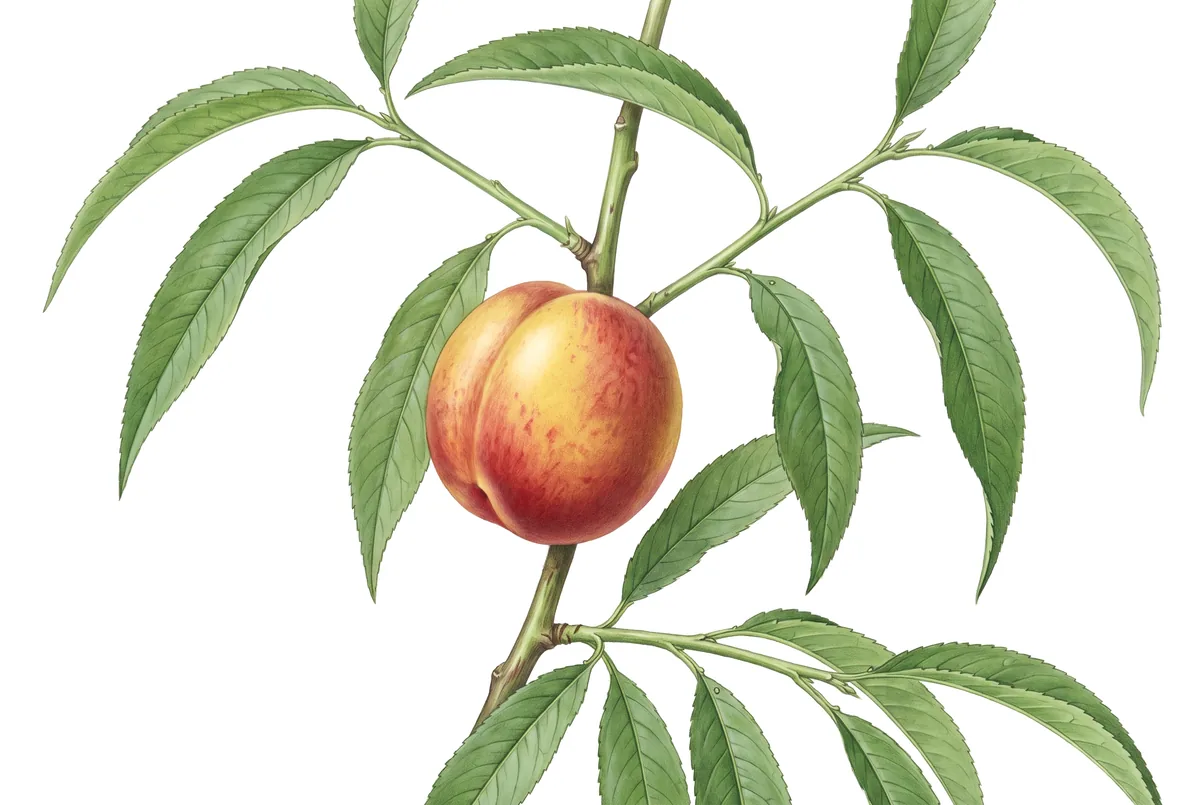
- The Flora of New Zealand, describing Prunus persica, gives more or less thin leaves, lance-shaped to narrowly elliptic, mostly 70 to 150 mm long and 12 to 40 mm wide, finely toothed and often wavy. The flowers are usually single, occasionally paired, and not fragrant, with five pale pink petals 12 to 16 mm long.
- Where do nectarines come from?
- Te Ara says peaches came from China and nectarines from central Asia, that none of the stone fruits is native to New Zealand, and that European settlers brought them here; among the first fruit trees imported, it says, were peaches and nectarines raised in England. NZPCN gives China as the peach's origin.
Sources
- GBIF species match API (Prunus persica var. nucipersica, a synonym of Prunus persica)
- Flora of New Zealand (Manaaki Whenua Landcare Research): Prunus persica
- New Zealand Plant Conservation Network (NZPCN): Prunus persica
- ASPCA Animal Poison Control, Toxic and Non-Toxic Plants: Peach (Prunus persica)
- Te Ara, the Encyclopedia of New Zealand (Ministry for Culture and Heritage): Stone fruit and the summerfruit industry
- Royal New Zealand Institute of Horticulture, New Zealand Garden Journal, volume 26 number 2: The origin of fruit grown in New Zealand
- Journal of the American Pomological Society, volume 19 number 1: The Goldmine Nectarine
- The HortOS guides for New Zealand (plant grades by market; nursery plant quality)
- The HortOS catalogue for New Zealand (the nectarines growers list)
The growers, sizes and prices above are live and change as lists arrive. Cite this page: HortOS, Nectarine (Prunus persica var. nucipersica), https://nz.hortosapp.com/plants/prunus-persica-nucipersica.
Found a fact that is wrong? Tell us and it is checked against its source.