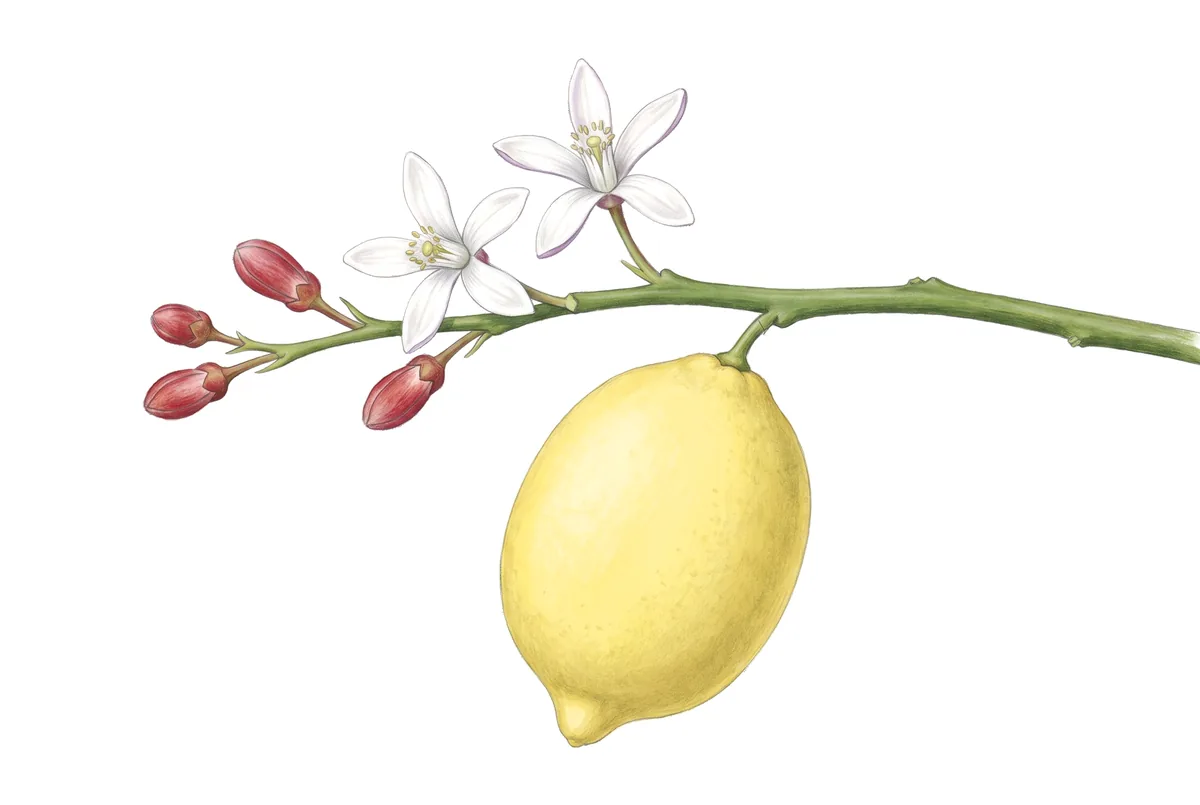
- Type
- Evergreen tree
- Height
- 3 m to 6.1 m
- Spread
- 3 m to 4.6 m
- Growth
- Moderate
- Flowers
- White, through the year where the climate suits it, by North Carolina State Extension; a seasonal bloomer by the Missouri Plant Finder
- Sun
- Full sun, sheltered from wind, by the Missouri Plant Finder and North Carolina State Extension
- Drought
- Tolerant
- Hardiness
- Cold sensitive (NZPCN)
- In New Zealand
- Naturalised
Growing lemon
Climate. Te Ara, the Encyclopedia of New Zealand, calls the country's climate, with its temperate summers and cold winters, marginal for most citrus, which are usually grafted onto hardy rootstocks here. Northland Regional Council's sheet on growing citrus says they grow best in a subtropical climate with warm summers and frost-free winters, and names lemons among the three major citrus crops of Northland. NZPCN calls the lemon cold sensitive. Christchurch City Council's tree species list gives it as tolerant of light frost. No New Zealand reference read gives a frost figure in degrees.
Position and soil. Auckland Botanic Gardens, on its Meyer lemon page, says that unlike most citrus, lemons tolerate both sandy and clay soils, and chooses a sheltered site in full sun with good drainage: the sunnier the position, the sweeter the fruit. The Northland sheet calls excellent drainage the main need on any soil, and irrigation essential in Northland.
Feeding and water. The Gardens calls citrus heavy feeders, fed with a citrus fertiliser through spring and summer, and says the first summer and autumn after planting are critical: water thoroughly in dry periods, or growth is poor and the fruit drops.
Pruning. Only for shape, best after flowering, by the Gardens, which also removes any shoots from below the graft, since they may take over the tree. The American references prune very little.
Pests and problems. The Gardens calls lemons fairly tough but more susceptible than other citrus to borer beetle and to verrucosis scab on the fruit, and names magnesium deficiency and aphids with sooty mould for citrus generally. American references add mealybugs, red spiders and scale.
Using lemon
The lemon is planted for its fruit. Te Ara names lemons with mandarins and oranges as the main citrus grown in New Zealand, and places the country's orchards in Northland, Gisborne and the Bay of Plenty. It says Yen Ben is the lemon grown for export, mainly to Japan, and that Meyer lemons are popular with home gardeners. Citrus New Zealand says lemons are available all year, with the bulk of the crop picked from June to March, and NZPCN records fruit on the tree throughout the year.
In gardens, Christchurch City Council's list gives it as a small tree of about 3 m for a sheltered border. The Missouri Plant Finder lists it for fruit, as an accent or specimen tree and for large containers; North Carolina State Extension says the lemon dislikes root disturbance, so a tree is best planted in its final place while young, and a potted one moved into a bigger container with great care. The genus is on the citrus page, and the Meyer lemon has its own.
What to check before you buy
Growers list lemons as Citrus lemon, Lemon and Citrus limon, mostly by variety, and some lines name a dwarf tree, a standard by its stem height or a thornless form; read the whole line. The table above shows the sizes growers list. New Zealand growers name small stock by the planter bag, PB2 to PB8, and larger stock by litres, as the guide to plant grades and container sizes sets out, and the guide to nursery plant quality covers roots and pests. Te Ara says citrus here are usually grafted, and the Gardens says shoots from below the graft should come off. The drawbacks the references give are thorns, cold, and the borer and scab the Gardens names.
Cautions
Toxicity. The ASPCA, a United States register, lists lemon, under the name Citrus limonia, as toxic to dogs, cats and horses, from its essential oils and psoralens. North Carolina State Extension says the plant may give some people contact dermatitis. Thorns. The Missouri Plant Finder and North Carolina State Extension say the twigs usually carry sharp thorns, and the Flora of New Zealand describes citrus as usually thorny.
Prices are set by each grower and shown ex GST. Availability is confirmed by the grower at order.
Common questions
- Is the lemon naturalised in New Zealand?
- Yes, by NZPCN, which gives 1992 as the year it naturalised and finds it usually in native forest remnants beside old bullock trails or along roadsides, more rarely in towns. It says viable seed is only occasionally produced, and that the fruit is spread by gravity and by people throwing fruit away or spitting out seeds.
- Where do lemons grow best in New Zealand?
- Northland Regional Council says citrus grow best with warm summers and frost-free winters, and Te Ara places the citrus orchards in Northland, Gisborne and the Bay of Plenty. Christchurch City Council lists the lemon for a sheltered border, tolerant of light frost.
- How big does a lemon tree grow?
- 3 to 6.1 m high and 3 to 4.6 m wide by the Missouri Plant Finder and North Carolina State Extension, two American references. Christchurch City Council's tree list gives about 3 m.
- When are lemons in season in New Zealand?
- Citrus New Zealand says lemons are available all year, with most of the crop picked from June to March, and NZPCN says the tree carries fruit throughout the year.
- Do lemons grow in clay soil?
- Auckland Botanic Gardens says that, unlike most citrus, lemons tolerate both sandy and clay soils, given a sheltered, sunny site with good drainage. Northland Regional Council calls excellent drainage the main need of citrus.
- What is the lemon's origin?
- NZPCN gives it as unknown, believed to be a hybrid of the lime and the citron. The Missouri Plant Finder gives Asia, and North Carolina State Extension says some research points to northern India.
- Is a lemon tree toxic to pets?
- The ASPCA lists lemon as toxic to dogs, cats and horses, from its essential oils and psoralens. It says the fruit is edible but the skins and plant material can cause problems.
Sources
- GBIF species match API (Citrus x limon)
- New Zealand Plant Conservation Network (NZPCN): Citrus limon, lemon
- Flora of New Zealand (Manaaki Whenua Landcare Research): taxon profile, Citrus x limon, and the genus Citrus with its description from the Flora of New Zealand Volume 4
- Missouri Botanical Garden Plant Finder: Citrus limon
- North Carolina State Extension Gardener Plant Toolbox: Citrus x limon
- University of California Riverside, Givaudan Citrus Variety Collection: Frost nucellar Eureka lemon (CRC 3005), with the collection's general Eureka notes and the 1967 description it quotes (a Californian reference written for the Eureka variety, not the species)
- ASPCA Animal Poison Control Center, Toxic and Non-Toxic Plants: Lemon
- Te Ara, the Encyclopedia of New Zealand (Ministry for Culture and Heritage): Citrus, berries, exotic fruit and nuts, Citrus
- Northland Regional Council: Growing Citrus, an information sheet
- Citrus New Zealand, which represents New Zealand's citrus growers: Citrus for New Zealanders
- Auckland Botanic Gardens (Auckland Council), Plants for Auckland: Citrus x meyeri, Meyer lemon, its notes on lemons and citrus
- Christchurch City Council, tree species list (the spreadsheet linked from its Tree planting guide), the row for Citrus limon
- The HortOS catalogue for New Zealand (the names growers list lemons under on nz.hortosapp.com)
- The HortOS guides for New Zealand (plant-grades-and-container-sizes-by-market; judging-nursery-plant-quality)
The growers, sizes and prices above are live and change as lists arrive. Cite this page: HortOS, Lemon (Citrus x limon), https://nz.hortosapp.com/plants/citrus-lemon.
Found a fact that is wrong? Tell us and it is checked against its source.