Gleditsia triacanthos
Honey Locust
Every Gleditsia triacanthos on HortOS in one place: the plain species and 7 varieties. Pick a size to see it across all of them.
Part of Gleditsia: see them all
7 growers · 10 sizes · from $45.00 ex GST
- Type
- Deciduous tree
- Height
- 10 m to 25 m
- Growth
- Fast
- Flowers
- Yellowish-green, spring to summer
- Sun
- Full sun; growth is slow in shade
- Drought
- High
- Hardiness
- Hardy, withstanding droughts and drained swamp conditions (Northland Regional Council)
- In New Zealand
- Not native
Also grown by 2 nurseries (no sizes or prices listed)
Enquire with them for sizes and prices.
- Easy Big TreesMakarewa, Southland
- Leafland Nursery (Main Site)Palmerston North, Manawatū-Whanganui
Growing honey locust
Climate and site. Northland Regional Council calls honey locust hardy, withstanding droughts and drained swamp conditions, and says it fixes nitrogen. It calls the tree moderately slow growing, where North Carolina State Extension, an American reference, calls it rapidly growing.
Light and soil. No New Zealand reference read says how much sun it needs. North Carolina State Extension says to plant it in full sun in well-drained, moist soil high in organic matter; it tolerates partial shade but does not grow in full shade, takes a wide variety of soils and moisture conditions, and once established is highly tolerant of salt, wind and drought.
Seed and spread. NZPCN says it reproduces exclusively by seed, which is long-lived and forms a large seed bank, usually kept in persistent pods for several years, and is spread by wind, by gravity and by people. The New South Wales flora, an Australian reference, says it also suckers freely, often forming dense thickets. Biota of New Zealand gives its occurrence here as casual, with collection records from the North Auckland, Wellington and Canterbury land districts.
Pests. The same American reference names borers, webworms and locust leafminers as possible problems, and leaf spot, canker, witches' broom, powdery mildew and rust among the diseases honey locusts are susceptible to.
Using honey locust
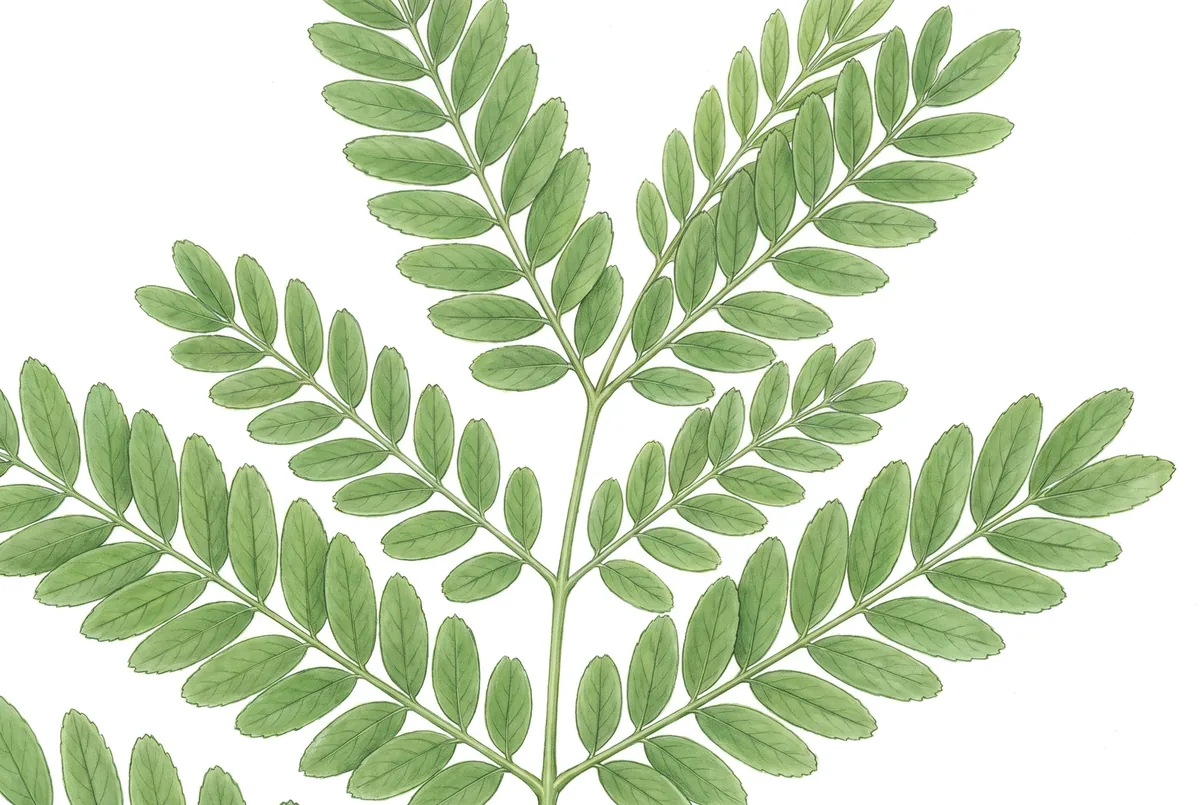
Streets. Carterton District Council lists honey locust among its suitable trees for core street plantings, a deciduous tree with small green leaves turning yellow, and Hutt City Council's urban forest plan for its Central Ward proposes the thornless honeylocust, Gleditsia triacanthos inermis, among the main street tree species there. For a street or park order, the guide to specifying and procuring trees sets out what goes in the clause: species and cultivar, calliper, height, clear stem, container volume or root ball, and single leader or multi stem.
On the farm. Northland Regional Council says that when the leaves fall they leave pods that make good stock food, that the spring pollen is good bee food, and that the timber is durable in the ground and useful for furniture, though the form of the tree varies.
What to check before you buy
New Zealand growers list the species and named forms of its var. inermis, 'Emerald Kascade' and 'Emerald Cascade', 'Sunburst', 'Ruby Lace', 'Limelight' and 'Skyline', some under the Gleditsia name alone, so read the full name on each line: the facts on this page are the species'. North Carolina State Extension calls var. inermis the thornless variety and the source of every cultivar of the species, and Northland Regional Council says pod bearing varies between cultivars. Business Queensland, an Australian government page, says grafted thornless varieties go on to produce thorns or give thorny offspring. Growers name small stock by the root trainer or the planter bag, PB2, PB3, PB5 and PB8, and larger stock by litres, as the guide to plant grades and container sizes sets out; the table above shows the sizes growers list.
Cautions
North Carolina State Extension, an American reference, says the trunk and branches carry stout thorns with one or three branches, and does not recommend the species for landscapes because of its thorns and seed pods. Queenstown Lakes District Council's planting guide for trees gives debris and thorns as its reasons for marking Gleditsia species unsuitable, with thornless varieties on application.
Prices are set by each grower and shown ex GST. Availability is confirmed by the grower at order.
Common questions
- Who grows Gleditsia triacanthos wholesale in New Zealand?
- 7 wholesale growers list Gleditsia triacanthos on HortOS right now, each with their own pot sizes and trade prices. They are in Manawatū-Whanganui, Waikato, Northland, Otago, Auckland and Tasman. The growers are named on this page.
- What pot sizes does Gleditsia triacanthos come in?
- Growers on HortOS list Gleditsia triacanthos in 2.6L, 17L, 25L, PB60, 35L, 45L, 60L, 80L, 160L and 1.5m tall.
- How do I order Gleditsia triacanthos from these growers?
- HortOS is for the trade. Add the lines you want to a list and send it: each grower gets their part of the order by email, confirms what they have and quotes freight, and nothing is bought until you approve it. Listing, searching and ordering are free.
- Is honey locust native to New Zealand?
- No. North Carolina State Extension gives its native range as central and eastern North America. The Flora of New Zealand and NZPCN give its biostatus here as exotic.
- How big does honey locust grow in New Zealand?
- Carterton District Council's list of suitable street trees gives it as 6 m by 5 m. The New Zealand Tree Register records a notable honey locust in Whakatane, in the Bay of Plenty, measured at 26.2 m tall with an average crown spread of 18 m.
- Why is it called honey locust?
- North Carolina State Extension says the pods turn black when ripe and hold a sweet-tasting, sticky substance that gives the tree its common name.
- Is there a thornless honey locust?
- Hutt City Council calls Gleditsia triacanthos inermis the thornless honeylocust, and the Queenstown Lakes District Council planting guide lists thornless varieties as on application.
- Does honey locust spread from seed?
- NZPCN says it reproduces exclusively by seed, and that the seed is long-lived and forms a large seed bank.
Sources
- GBIF species match API
- Flora of New Zealand (Manaaki Whenua Landcare Research): Gleditsia triacanthos
- New Zealand Plant Conservation Network (NZPCN): Gleditsia triacanthos
- PlantNET, the New South Wales flora online (Royal Botanic Garden Sydney): Gleditsia triacanthos
- Business Queensland (Queensland Government): Honey locust, restricted invasive plant under the Biosecurity Act 2014
- North Carolina State Extension Gardener Plant Toolbox: Gleditsia triacanthos (an American reference)
- Biota of New Zealand (Manaaki Whenua Landcare Research), plant names: Gleditsia triacanthos
- Northland Regional Council: Brief tree descriptions (planting and establishment)
- Carterton District Council: Urban Street Tree Policy, list of suitable trees
- Hutt City Council: Urban Forest Plan, Central Ward theme, street trees
- Queenstown Lakes District Council: QLDC Planting Guide, Trees
- New Zealand Tree Register (NZ Notable Trees Trust): a notable honey locust in Whakatane
- The HortOS catalogue for New Zealand (the rows growers list under the species and the genus)
- The HortOS guides for New Zealand (specifying and procuring trees; plant grades and container sizes by market)
The growers, sizes and prices above are live and change as lists arrive. Cite this page: HortOS, Honey locust (Gleditsia triacanthos), https://nz.hortosapp.com/plants/gleditsia-triacanthos.
Found a fact that is wrong? Tell us and it is checked against its source.