Ulmus glabra
Elm
Every Ulmus glabra on HortOS in one place: the plain species and 3 varieties. Pick a size to see it across all of them.
Part of Ulmus: see them all
6 growers · 8 sizes · from $65.17 ex GST
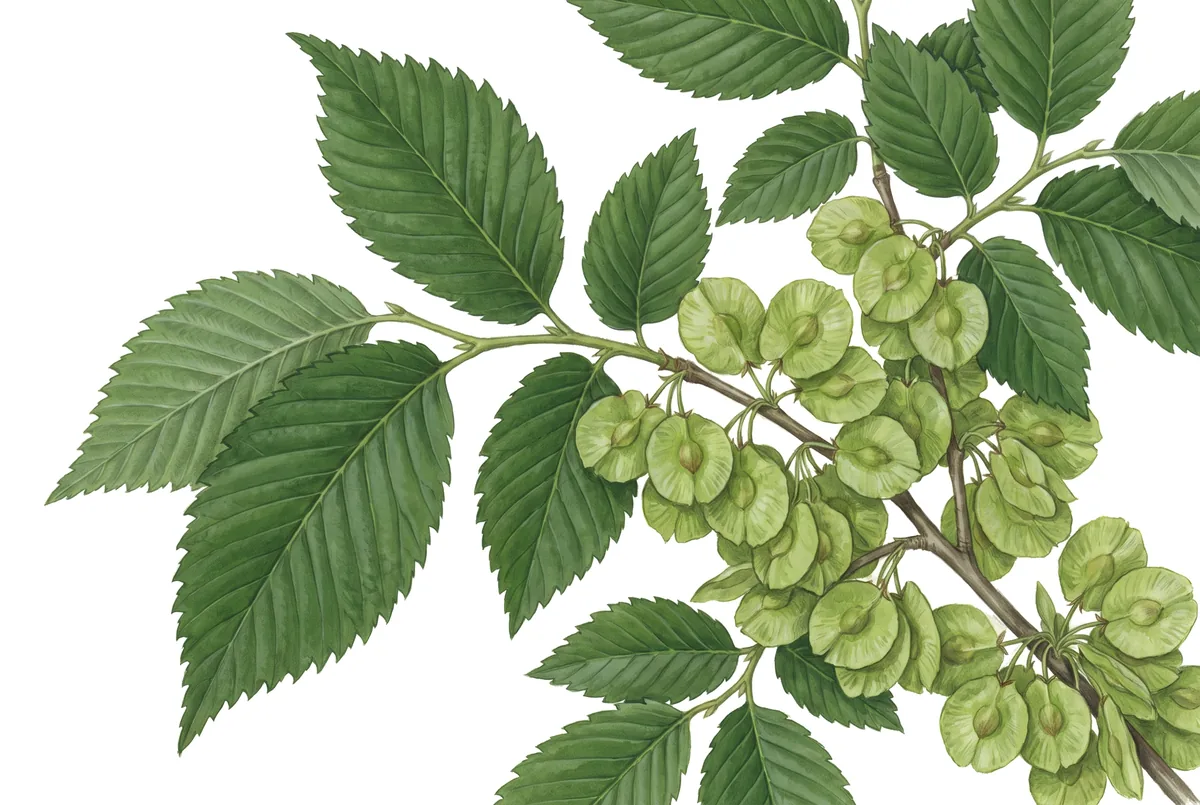
- Type
- Deciduous tree
- Height
- 21 m to 30 m
- Spread
- 15 m to 21 m
- Growth
- Moderate
- Flowers
- Reddish green, early spring
- Sun
- Full sun; tolerates light shade
- Drought
- Tolerant
- In New Zealand
- Not native
Growing scotch elm
In New Zealand. No New Zealand reference read gives its hardiness or says which regions suit it. Queenstown Lakes District Council's planting guide for trees accepts elms, listed as Ulmus varieties, for streets and for parks and reserves, and gives debris as the reason they may be unsuitable.
Sun and soil. The Missouri Botanical Garden says to grow it in average, medium moisture, well-drained soil in full sun, that it tolerates light shade, prefers rich, moist loam, adapts to both wet and dry sites and is generally tolerant of urban conditions; North Carolina State Extension tags it drought tolerant. The RHS says any well-drained soil in full sun or partial shade.
Pests and diseases. North Carolina State Extension calls the species susceptible to Dutch elm disease, and both American references list phloem necrosis, wetwood, cankers and rots, with borers, leaf miner, beetles, mealybugs, caterpillars and scale. The RHS, for Britain, names Dutch elm disease, coral spot, honey fungus and Phytophthora, and aphids, bark beetles, horse chestnut scale and elm gall mites.
Propagation. The RHS gives seed, softwood cuttings in summer, and chip budding or grafting.
Using scotch elm
The Missouri Botanical Garden says it was once widely planted in the United States as a shade tree for large lawns and parks and is no longer used there because of Dutch elm disease; it could still be used as a specimen for a large lawn, though Missouri calls planting it today a questionable proposition. Trees and Shrubs Online, writing for Britain, says that grown in the open it makes a thick, rather short trunk under a head of branches that often hang at their tips.
The trade here lists the weeping form, which has its own page, weeping wych elm. For a street or park order, the guide to specifying and procuring trees sets out what goes in the clause and how the trees are inspected.
What to check before you buy
Check which form a line is before comparing prices: Biota of New Zealand records 'Pendula', 'Lutescens' and 'Camperdown' here, and the Missouri Botanical Garden says 'Camperdownii' is topgrafted and 'Pendula' grown on its own roots or topgrafted. In the Auckland region, read Auckland Council's rules on elm material, set out under cautions, before an order moves. The table above shows the sizes growers list, and the guide to plant grades and container sizes sets out the New Zealand ladder from PB bags to litre grades. What to check in the roots, the stem and the canopy before stock leaves the grower is in the guide to nursery plant quality.
Cautions
Dutch elm disease. Auckland Council's pest page lists the disease as an unwanted organism under sustained control across the Auckland region. Its rules say no one may move any untreated Dutch elm plant material within the region or store elm wood, and an infected elm must be destroyed when an authorised person directs it.
Prices are set by each grower and shown ex GST. Availability is confirmed by the grower at order.
Common questions
- Who grows Ulmus glabra wholesale in New Zealand?
- 6 wholesale growers list Ulmus glabra on HortOS right now, each with their own pot sizes and trade prices. They are in Tasman, Manawatū-Whanganui, Canterbury and Otago. The growers are named on this page.
- What pot sizes does Ulmus glabra come in?
- Growers on HortOS list Ulmus glabra in 25L, 35L, 45L, 60L, 80L, 135L, 160L and 2-2.2m tall.
- How do I order Ulmus glabra from these growers?
- HortOS is for the trade. Add the lines you want to a list and send it: each grower gets their part of the order by email, confirms what they have and quotes freight, and nothing is bought until you approve it. Listing, searching and ordering are free.
- Is it Scotch elm or wych elm?
- Both. The Flora of New Zealand gives Scotch elm and wych elm as its names, and NZPCN gives Scotch elm. Trees and Shrubs Online says the names wych or witch, of Anglo-Saxon origin, were first applied to other elms too, and to other trees with flexible branches.
- How big does wych elm grow?
- The Missouri Botanical Garden and North Carolina State Extension give the figures above, 21 to 30 m by 15 to 21 m, and the RHS a tree reaching about 45 m, with a dome-shaped crown and spreading branches.
- Does wych elm grow wild in New Zealand?
- Biota of New Zealand gives its biostatus as exotic and its occurrence as casual, with databased collection records from the Canterbury and Wellington land districts. NZPCN and the Flora of New Zealand give it as exotic.
- Does wych elm sucker?
- Trees and Shrubs Online says it does not produce suckers, unlike Ulmus carpinifolia and the English elm, Ulmus procera, and that on that account it is valued as a stock for other elms.
- What does Dutch elm disease do to an elm?
- Auckland Council describes a fungus of elms and Zelkova spread mainly by elm bark beetles and also by people moving elm wood. Infected trees wilt, the leaves curl, yellow or brown and drop early, and the tree dies as its water-conducting tissue clogs, sometimes within a few days.
Sources
- GBIF species match API
- New Zealand Plant Conservation Network (NZPCN): Ulmus glabra
- Flora of New Zealand (Landcare Research): taxon profile, Ulmus glabra
- Missouri Botanical Garden Plant Finder: Ulmus glabra
- North Carolina State Extension Gardener Plant Toolbox: Ulmus glabra
- Royal Horticultural Society (RHS), plant profile: Ulmus glabra
- Biota of New Zealand (Manaaki Whenua Landcare Research): Ulmus glabra
- Auckland Council (Tiaki Tamaki Makaurau, Conservation Auckland): pest search, Dutch elm disease (Ophiostoma novo-ulmi), with its Regional Pest Management Plan status and rules
- Queenstown Lakes District Council: planting guide, trees
- Trees and Shrubs Online (International Dendrology Society): Ulmus glabra
- The HortOS guides (specifying and procuring trees; plant grades and container sizes by market; judging nursery plant quality)
The growers, sizes and prices above are live and change as lists arrive. Cite this page: HortOS, Scotch elm (Ulmus glabra), https://nz.hortosapp.com/plants/ulmus-glabra.
Found a fact that is wrong? Tell us and it is checked against its source.