Acaena inermis
Every Acaena inermis on HortOS in one place: the plain species and 2 varieties. Pick a size to see it across all of them.
Part of Acaena: see them all
13 growers · 11 sizes · from $2.35 ex GST
- Type
- Evergreen perennial
- Height
- 0.04 m
- Spread
- 0.5 m
- Flowers
- White, late spring to summer
- In New Zealand
- Native
| Size | Grower | PricePrice ex GST | ||
|---|---|---|---|---|
| 35F | Matukituki Nativespurpurea35F | Price on application. Sign in to ask the grower. | ||
| RX90 | Titoki NurserypurpureaRX90 | Price on application. Sign in to ask the grower. | ||
| 50mm | Kerikeri Plant Productionpurpurea50mm | Price on application. Sign in to ask the grower. | ||
| 70mm | Liner Plants NZ (1993) Ltdpurpurea70mm | $2.35 | ||
| 200mm | Te Kahuri Nurseriespurpurea200mm | $7.00 | ||
| 0.5L | Tūaropaki Native Plant NurseryBidibidi0.5L | $3.95 | ||
| 1L | Grow Hqpurpurea1L | $4.50 | ||
| 1L | Tūaropaki Native Plant NurseryBidibidi1L | $4.95 | ||
| 1L | Nurserymanpurpurea1L | $5.20 | ||
| 1L | Queenstown Nurserypurpurea1L | $8.87 | ||
| 1L | Treeline Native Nurserypurpurea1L | $70.00 | ||
| 1.5L | Growing Plantspurpurea1.5L | $8.00 | ||
| 1.5L | Matukituki Nativespurpurea1.5L | Price on application. Sign in to ask the grower. | ||
| PB3 | Springburn NurserypurpureaPB3 | $7.00 | ||
| PB3 | Trees For CanterburypurpureaPB3 | $17.50 | ||
| 2L | Kerikeri Plant Productionpurpurea2L | Price on application. Sign in to ask the grower. | ||
| 2.5L | Nurserymanpurpurea2.5L | $9.50 | ||
| 2.5L | Queenstown Nurserypurpurea2.5L | $12.00 |
Also grown by 1 nursery (no sizes or prices listed)
Enquire with them for sizes and prices.
- Trees For CanterburyCanterbury
Growing spineless bidibid
In the wild. NZPCN gives its home as the montane to alpine zone, 300 to 1000 m above sea level, in grasslands and riverbeds. It grows in the central North Island and through the South Island, mostly in the east and occasionally in the west.
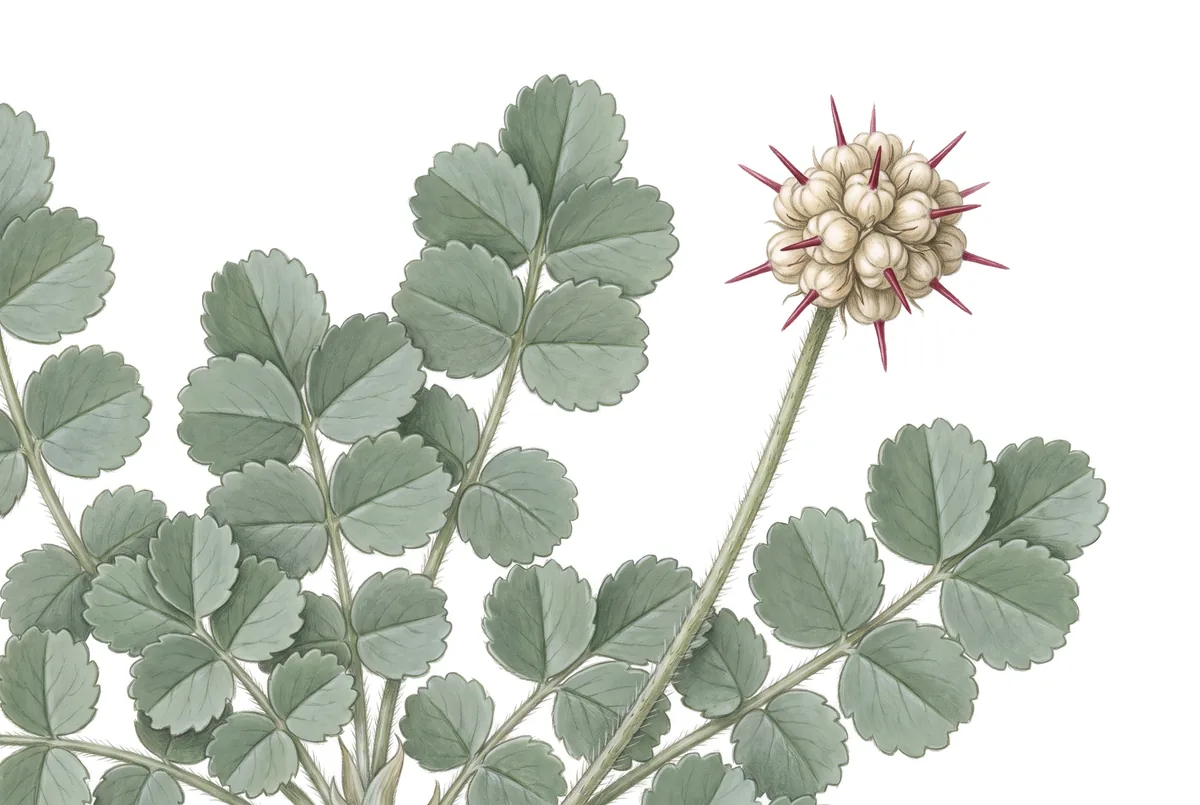
How it spreads. The plant is rhizomatous. The Flora of New Zealand describes mat-forming stems about 1.2 mm thick and under 15 cm long that soon root and become covered by soil, with erect branchlets under 4 cm; NZPCN adds that the stems are sparsely hairy and root at the nodes, and calls the plant evergreen.
In the garden. No New Zealand reference read gives sun, soil, water or frost guidance for the species, and none gives it a climate rating. For the purple form, 'Purpurea', the RHS advises any well-drained soil in full sun or part shade in British gardens, says its creeping habit lets it spread in a border, and suggests pulling out rooted stems to restrict it. Those are the RHS's words for one form in Britain, not a New Zealand reading of the species.
Using spineless bidibid
Otari Native Botanic Garden in Wellington lists spineless bidibid among the plants it grows in its Brockie Rock Garden, its Eastern Drylands and its parterre, and grows the purple form 'Purpurea' at its Leonard Cockayne Centre. No New Zealand reference read names a garden or landscape use for the species. The RHS, writing of 'Purpurea' for British gardens, calls it useful ground cover between paving stones because it tolerates being trodden on, and suggests it for gravel and rock gardens, containers, and banks and slopes. No reference read gives a planting distance.
For restoration work, the guide to eco-sourcing by ecological district gives the Department of Conservation's rule that seed comes from as near the site as possible, and no further than the neighbouring ecological district. A listing is not proof of local provenance, so ask the grower.
What to check before you buy
In the HortOS catalogue for New Zealand, growers list the species as Acaena inermis, the purple form as Acaena inermis purpurea, and one line as Acaena inermis Bidibidi; check which form a line is before comparing prices. The table above shows the sizes growers list. The guide to plant grades by market explains that New Zealand growers name small stock by the root trainer or the planter bag, PB2 to PB8, and the guide to nursery plant quality covers roots, pests and hardening off. NZPCN rates the species Not Threatened nationally, and Regionally At Risk, Regionally Declining in Otago.
Prices are set by each grower and shown ex GST. Availability is confirmed by the grower at order.
Common questions
- Who grows Acaena inermis wholesale in New Zealand?
- 13 wholesale growers list Acaena inermis on HortOS right now, each with their own pot sizes and trade prices. They are in Otago, Auckland, Tasman, Northland, Taranaki, Waikato, Southland and Bay of Plenty. The growers are named on this page.
- What pot sizes does Acaena inermis come in?
- Growers on HortOS list Acaena inermis in 35F, RX90, 50mm, 70mm, 200mm, 0.5L, 1L, 1.5L, PB3, 2L and 1 more sizes.
- How do I order Acaena inermis from these growers?
- HortOS is for the trade. Add the lines you want to a list and send it: each grower gets their part of the order by email, confirms what they have and quotes freight, and nothing is bought until you approve it. Listing, searching and ordering are free.
- Is spineless bidibid a New Zealand native?
- Yes. NZPCN and the Flora of New Zealand give it as endemic to New Zealand. NZPCN finds it in montane to alpine grasslands and riverbeds of the central North Island and the South Island.
- Does spineless bidibid have spiny fruit?
- Some plants do, but the spines carry no barbs. NZPCN says the name inermis means unarmed. By the Flora of New Zealand each fruit is about 2 mm across, with four rounded shoulders that are either bare or carry one to four stout red spines under 1.3 cm long, with no barbs or hairs at the tip; NZPCN says they ripen dry and pale brown to cream.
- How big does Acaena inermis grow?
- NZPCN describes a loose mat about 4 cm high and up to 0.5 m or more across. The Flora of New Zealand gives stems under 15 cm long, rooting as they go, and leaves 1.5 to 7 cm long, each with 11 to 15 leaflets.
- When does spineless bidibid flower?
- NZPCN gives flowering from November to January, sometimes into March, and fruit from November to May; the Flora of New Zealand gives flowering from November to January and fruit from January to April. The flowers are white, about 20 to a round head 4 to 6 mm across.
- What colour are the leaves?
- The Flora of New Zealand gives dull grey-glaucous, purplish brown or pale olive green on both surfaces, and NZPCN dull green, grey, olive or purplish. The RHS describes the form 'Purpurea' as having bronze-purple foliage.
- How is it told from other bidibids?
- NZPCN compares it with Acaena caesiiglauca, which spreads by stolons, has up to 11 leaflets with sharp, hair-tipped teeth, 50 to 70 florets to a head and barbed spines, and with Acaena tesca of the lower South Island east of the Alps, whose heads are almost stemless, with about 10 florets, and whose leaflets have sharp, hair-tipped teeth.
- What other names does it go by?
- The Flora of New Zealand gives blue mountain bidibid, spineless bidibid and spineless piripiri. Among its synonyms it lists three names that placed the plant as a variety of Acaena microphylla: var. inermis, var. pallideolivacea and var. robusta.
Sources
- GBIF species match API
- Flora of New Zealand (Manaaki Whenua Landcare Research): Acaena inermis, from Flora of New Zealand volume IV (1988)
- New Zealand Plant Conservation Network (NZPCN): Acaena inermis
- Otari Native Botanic Garden (Wellington City Council), Plant species grown at Otari Native Botanic Garden
- RHS Plant Finder (Royal Horticultural Society): Acaena inermis 'Purpurea'
- The HortOS catalogue for New Zealand (the names growers list spineless bidibid under on nz.hortosapp.com)
- The HortOS guides for New Zealand (eco-sourcing by ecological district; plant grades by market; nursery plant quality)
The growers, sizes and prices above are live and change as lists arrive. Cite this page: HortOS, Spineless bidibid (Acaena inermis), https://nz.hortosapp.com/plants/acaena-inermis.
Found a fact that is wrong? Tell us and it is checked against its source.